Students stocking a shared kitchen
You want portions that housemates can take individually, with a flavour mix that suits the people sharing the cupboard and a pack count they are likely to use.


For several housemates, a mixed box gives everyone more flavours to choose from; for a first shop or a small cupboard, a smaller variety pack is less of a commitment. Choose a protein-led or fruit-and-nut pack for someone who wants that particular format, but check the exact bar’s ingredients, allergens and nutrition before putting it in a shared cupboard.
You want portions that housemates can take individually, with a flavour mix that suits the people sharing the cupboard and a pack count they are likely to use.
You need to check each bar’s ingredients, allergen information and dietary-suitability statements before buying for other people. A claim on one flavour does not establish what is in another.
You want to compare protein, fibre and other nutrition information for the portion you would actually eat, alongside the ingredients and bar size.
Decide who will eat the bars and for how long, then check the exact flavours and labels before choosing a pack size.
| Priority | What to check | Your needs |
|---|---|---|
| Pack size | Count the bars or snacks, check whether a wrapper contains two bars, and consider how many people will share them. | For a first-week shop, I would rather try a smaller pack than commit the flat to a large box. Nature Valley UK describes a 10-bar Crunchy Variety Pack; an Amazon.co.uk listing describes a Graze assortment of 56 snacks. |
| Flavour mix | Look at the flavours in the exact assortment and whether everyone who will use the cupboard wants them. | If several housemates are choosing snacks, I want a mix they will actually eat. If the pack is mainly for me, a single flavour may be enough. |
| Ingredients and allergens | Read each flavour’s ingredient list, allergen information and any may-contain statement. Check dietary claims on the exact product. | Before I share a box, I need to know whether anyone must avoid ingredients such as peanuts, tree nuts, soya or oats. A vegan or gluten-free description does not answer every allergen question. |
| Nutrition per bar | Compare serving sizes and the nutrition panel on the same basis; read protein or fibre figures alongside sugars and saturated fat where stated. | If protein is my reason for choosing a bar, I want the amount for one bar—not just a claim on the front of the pack. A larger bar and a smaller one need their portions checked before comparison. |
A mixed box can include ingredients that some housemates need to avoid. The Graze assortment listed by Amazon.co.uk includes oats, almonds and soya, with a may-contain gluten statement.
Ask housemates about allergies and dietary needs before buying a shared case. Keep the packaging so each flavour’s information remains available.
A front-of-pack claim does not show the full ingredient list or put nutrition figures on a comparable serving basis.
Check the nutrition panel for one bar, then read its ingredients and allergen statement before deciding whether it suits the intended eater.
Alpen’s product-availability information names several bar lines that are no longer made, so an older product name is not a dependable moving-in shopping choice.
Confirm the exact pack and its current label before adding it to the shared shopping list.
These examples show different snack-bar formats and label considerations; a brand name alone cannot establish the ingredients of every pack.
Graze is relevant to mixed-snack shopping: an Amazon.co.uk listing describes a 56-snack variety box.
Nature Valley UK lists Crunchy variety and Protein bar formats, including a 10-bar Crunchy Variety Pack.
A UK retailer listing describes TREK Original Oat protein flapjacks in a pack of 16 bars, each weighing 50 g.
Eat Natural’s peanut-and-dark-chocolate protein bar is a fruit-and-nut-style option with nutrition stated per 40 g bar.
nākd. describes its fruit-and-nut bars as suitable for vegan and gluten-, wheat- and dairy-free diets.
Check an Alpen bar’s exact current product name before relying on it for a move-in shop.
These options include small protein-bar, fruit-and-nut and oat-square packs, plus a 10-bar variety pack to consider for a shared cupboard.
 No image available
A four-bar pack to consider when one person wants to try a protein-led bar rather than stock a shared cupboard. Nature Valley UK states 10 g protein per bar for its Peanut & Chocolate format; check the pack’s allergen information before sharing.
 No image available
This four-bar pack is a smaller-format protein-bar choice rather than a substantial shared supply. Check the exact bar’s nutrition panel and nut and other allergen information before buying for housemates.
 No image available
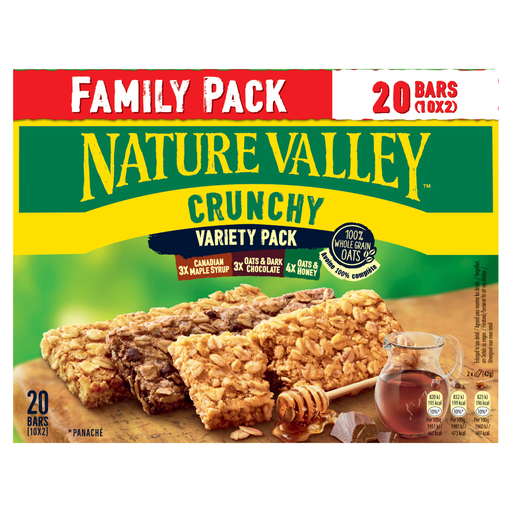
A 10-pack variety format to consider when housemates want to try different flavours without buying a large box. Check the contents of each wrapper and the labels for the included flavours before sharing.
 No image available
A four-bar fruit-and-nut pack for someone who wants to try this flavour. Because the format contains nuts, check the exact pack’s ingredients and allergen statement before placing it in a shared cupboard.
 No image available
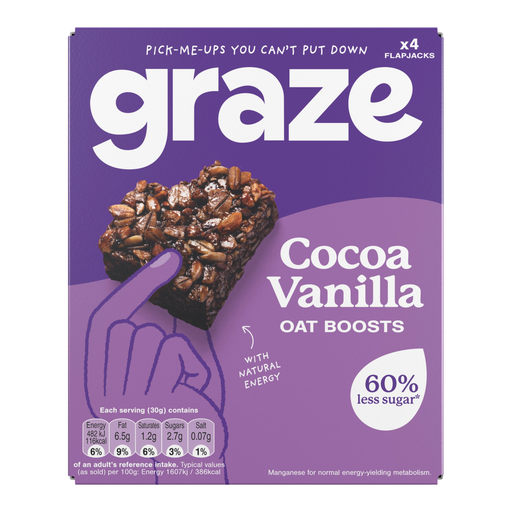
A four-pack of oat squares for trying this cocoa-and-vanilla format. If protein content matters to your choice, compare the per-bar nutrition figure rather than relying on the product name; check the allergen statement before sharing.
Choose the count around the number of eaters and whether this is a first-week trial or a regular shared supply. Nature Valley UK describes a 10-bar variety pack, while an Amazon.co.uk listing describes a 56-snack Graze assortment; check whether bars are paired within each wrapper when working out portions.
No. A protein-led bar is a choice for someone who specifically wants that format, not a substitute for checking ingredients and portions. Eat Natural states 7.8 g protein per 40 g peanut-and-dark-chocolate bar, but that product contains peanuts and soya and may contain milk and several tree nuts.
Not necessarily. Those descriptions address particular dietary criteria, not every allergen. nākd. describes its fruit-and-nut bars as suitable for vegan and gluten-, wheat- and dairy-free diets, but the format contains nuts; check the exact flavour and any may-contain statement.
Read the exact product’s ingredients, allergen information, any may-contain statement and serving size. If nutrition affects the choice, use the figures for the portion you intend to eat rather than comparing front-of-pack wording alone.
Confirm the exact product first. Alpen’s product-availability information lists several former bar lines as no longer made, so check a current listing and the pack label before relying on a particular multipack.