What should you compare?
Start with workout timing, then compare nutrition per individual bar before deciding how many portions to buy for yourself or others.
| Priority | What to check | Your needs |
|---|
| Timing and portion |
Check the weight of one bar and its carbohydrate and fat per bar. University College London Hospitals NHS Foundation Trust distinguishes its 60–90 minute carbohydrate-and-protein advice from faster-acting carbohydrate advice for 15–30 minutes beforehand in glucose-management contexts. |
If I am eating close to exercise, I want to judge one portion on its own rather than assume that a larger flapjack is the right size. |
| Nutrition per bar |
Compare carbohydrate, protein and fat using the same per-bar basis; bar weights differ between multipacks. A protein figure alone does not show whether a bar meets the minimal-fat condition in the University College London Hospitals NHS Foundation Trust’s 60–90 minute guidance. |
When a bar is standing in for a missed pre-training snack, I want to see what one serving provides, not just the claim on the front of the pack. |
| Sharing and allergens |
Read the ingredients and allergen statement for every flavour, including any may-contain wording. Check dietary claims on the particular product rather than assuming they apply across a brand. |
Everyone sharing the pack needs a bar they can assess against their own ingredient requirements. |
| Pack format |
Compare the number of bars, weight per bar, total net weight and whether portions are individually wrapped. A higher bar count can still mean smaller portions. |
For several people or repeated training days, I want enough separate portions without overlooking how much food each bar contains. |
Joybuy snack-bar options
These cereal-bar, protein-bar and flapjack multipacks offer different portion and pack formats for pre-workout planning or sharing. Use the individual product label to compare nutrition and allergens for the timing you have in mind.
 Image unavailable
Grenade Soft Core Double Chocolate Protein Bar, 12 x 50g
The 12 individually sized bars offer portions for repeated training days or sharing. For a snack 60–90 minutes before exercise, compare the pack’s carbohydrate, protein and fat per bar with the minimal-fat condition in the University College London Hospitals NHS Foundation Trust’s guidance, and check its allergen label.
View on Joybuy
 Image unavailable
Trek Cocoa Oat Protein Flapjack, 16 x 50g
The 16-bar, single-flavour pack is a format to consider when several people want separate 50g portions. This Cocoa Oat pack is not the same product as Trek’s variety pack; check its own per-bar nutrition and allergen statement before sharing or choosing it for a particular workout time.
View on Joybuy
 Image unavailable
Special K Dark Chocolate Snack Bar, 6 x 21.5g
Each bar is a 21.5g portion, so compare its per-bar carbohydrate and fat if you want a smaller snack close to exercise. Check the ingredients and allergens before offering bars from the six-pack to others.
View on Joybuy
 Image unavailable
Nature Valley Protein Peanut & Chocolate Bar, 4 x 40g
This four-pack offers fewer 40g portions than Nature Valley’s separately listed eight-pack. If you want a carbohydrate-and-protein snack before training, check the nutrition of this four-pack itself, particularly fat per bar, and read its peanut and other allergen information.
View on Joybuy
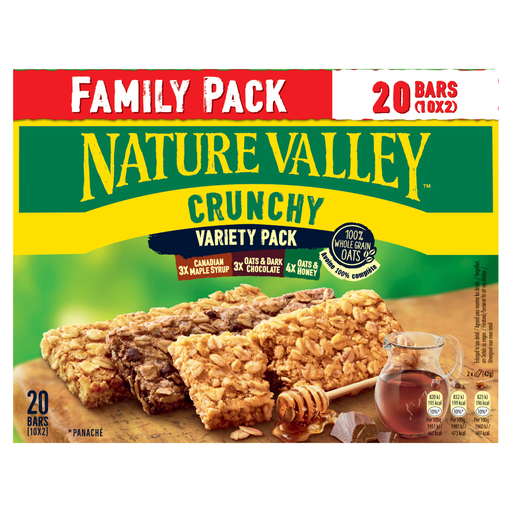 Image unavailable
Nature Valley Crunchy Family Variety Pack, 10 x 42g
The ten-bar variety format allows several people to choose a flavour or provides portions for repeated use. Check nutrition and allergens for the particular bars in the pack rather than assuming every flavour has the same ingredients or suits the same pre-workout timing.
View on Joybuy
Common questions
Should I choose a protein bar immediately before a workout?
Not on its protein claim alone. University College London Hospitals NHS Foundation Trust describes faster-acting carbohydrate for a 15–30 minute pre-exercise window in glucose-management contexts, while its 60–90 minute guidance describes carbohydrate and protein with minimal fat. Check the bar’s portion and per-bar nutrition against when you plan to eat it.
What matters when a multipack is for sharing?
Check the number and weight of individual bars, ingredients and allergens for each flavour, and the date on the pack. UK guidance from the Department for Environment, Food & Rural Affairs and the Food Standards Agency says prepacked food must display ingredients including allergens, net quantity and a best-before or use-by date.
Does gluten-free mean an oat bar is suitable for someone avoiding oats?
No. The Food Standards Agency says oats must still be emphasised as an allergen in gluten-free food. Check the ingredient and allergen statement for the specific bar, not just its gluten-free wording.
Can I count on an older Alpen bar listing?
Check the current listing before treating it as an available multipack. Alpen’s UK product-availability information identifies several former bar lines as no longer being made; that does not establish the status of every bar bearing the Alpen name.


