Students packing a lecture-break snack
Check how many separate portions a box contains and whether the stated serving is one bar or a twin-bar pack. That matters when you want to take one portion in a bag rather than carry the whole box.


For a small break between lectures, start with a multipack whose individual portions fit the space and time you have; if protein, flavour variety or a dietary requirement matters more, compare exact variants rather than relying on the type of bar. A snack bar is not automatically a substitute for lunch: check the stated portion and nutrition information, then read the current wrapper for ingredients and allergens.
The right pack depends on whether the bar is a small break-time snack, a way to compare particular nutrients, or a purchase governed by dietary requirements.
Check how many separate portions a box contains and whether the stated serving is one bar or a twin-bar pack. That matters when you want to take one portion in a bag rather than carry the whole box.
Look for the declared grams per serving on the exact variant. A claim on the front of a pack does not tell you how its other nutrition values compare.
Check the current wrapper for the individual flavour. Vegan, gluten-free and dairy-free descriptions address different requirements and do not establish that a bar is suitable for someone avoiding nuts or soya.
Choose a pack format that works for your lecture day, then compare what one stated portion contains. If an ingredient or allergen determines what you can buy, check the exact variant before choosing between flavours.
| Priority | What to check | Your needs |
|---|---|---|
| Separate portions | Count the individually wrapped packs, not just the bars. Check the weight and stated serving of each pack; a twin-bar serving differs from a single bar. | I want to take one portion to a lecture without opening the rest of the box. |
| Nutrition | Compare values per 100g across different bar sizes, then use the per-portion figures for what you expect to eat. Read sugars and saturates alongside energy, salt, protein and fibre; NHS food-label guidance explains the distinction between per-100g and per-portion information. | If the bar is part of my lunch, I want to know what the portion contributes rather than judge it by an oat or fruit description. |
| Protein and fibre | Check grams per serving on the exact bar. For example, Tesco lists 7.6g protein and 6.8g fibre per 45g Nakd Peanut Butter Protein Bar; that figure does not describe other Nakd variants. | Protein or fibre may matter to my choice, but I still want to compare the rest of the nutrition panel. |
| Flavour and serving format | Read which flavours are in the box and how many packs of each it contains. Tesco lists five 42g twin-bar packs in three flavours for the Nature Valley Crunchy Variety Pack. | Several flavours appeal to me, provided each pack is a portion I would actually take to university. |
| Dietary suitability | Read the ingredients, allergen declaration and any ‘may contain’ wording on the current wrapper. Check vegan, gluten-free or dairy-free statements for that variant rather than applying them to a whole brand. | I need the particular flavour to match my dietary requirements, including ingredients or precautionary warnings I must avoid. |
A convenient pack format says nothing by itself about how a bar fits into the rest of lunch. Action on Salt and Sugar’s 2025 review reported that 37% of snack bars sold in supermarkets would be high in sugars and 55% high in saturated fat under UK traffic-light thresholds; those are rates for products, not student preferences.
Decide what role the bar will play in your lunch, then compare its stated portion and nutrition panel with the other packs you are considering.
The two descriptions are not equivalent. Tesco lists 13g total sugars per 45g Nakd Peanut Butter Protein Bar.
Use the ‘of which sugars’ value on the nutrition table when comparing bars, whatever wording appears on the front of the pack.
A vegan or gluten-free description does not establish that a bar is free from peanuts, other nuts or soya. Tesco’s listing for the Nakd Peanut Butter Protein Bar, for example, includes a precautionary warning for soya and nuts.
For an allergy or coeliac requirement, read the ingredients and precautionary statements on the exact current wrapper.
Tesco lists the Nature Valley Crunchy Variety Pack as five 42g twin-bar packs, while the Graze Cocoa Vanilla Oat Boost pack contains four 30g bars. The number of bars and the number of separately packed occasions are not necessarily the same.
Check both the pack count and the stated serving before planning how many lecture days a box will cover.
These examples show why the exact range and flavour matter; a feature listed for one bar should not be assumed for every product bearing the same brand.
Graze’s Cocoa Vanilla Oat Boost is an example of a compact oat-flapjack multipack: Tesco lists four 30g bars.
The Crunchy Variety Pack listed by Tesco contains five 42g twin-bar packs across Oats & Honey, Canadian Maple Syrup and Oats & Dark Chocolate.
Morrisons lists a Salted Caramel & Nuts Protein Packed multipack with three individually wrapped bars.
The Peanut Butter Protein Bar provides a concrete per-bar comparison: Tesco lists 7.6g protein, 6.8g fibre and 13g sugars per 45g bar.
TREK offers plant-based protein bars in flapjack and other bar formats.
Older Alpen bar names need a current-product check before they are used to plan a grab-bag purchase.
These multipacks cover compact Graze oat bars, a Nature Valley flavour-variety pack and an Eat Natural fruit-and-nut bar. Compare the portion format and exact flavour before deciding which belongs in your lecture bag.
 No image available
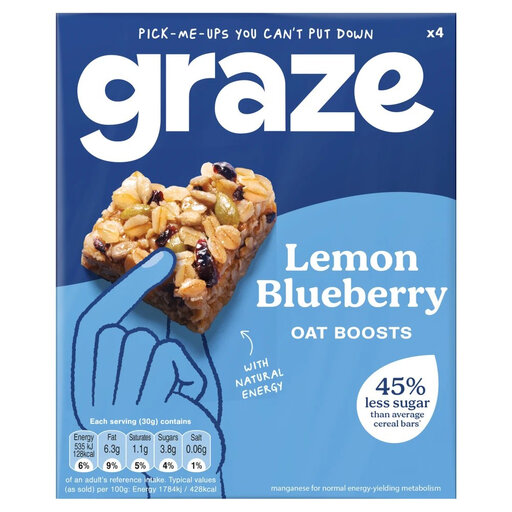
Four 30g oat bars offer a compact portion to consider for a short lecture break. Check the Lemon Blueberry wrapper for its nutrition, ingredients and allergen warnings; details for other Graze flavours do not establish those for this one.
 No image available
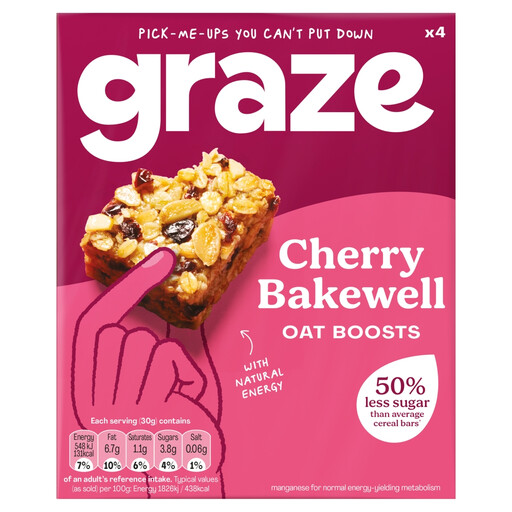
This Cherry Bakewell multipack contains four 30g oat bars, so its portion format can be compared directly with the Lemon Blueberry pack. Check this flavour’s own nutrition panel and allergen declaration, particularly if almonds or other nuts affect your choice.
 No image available
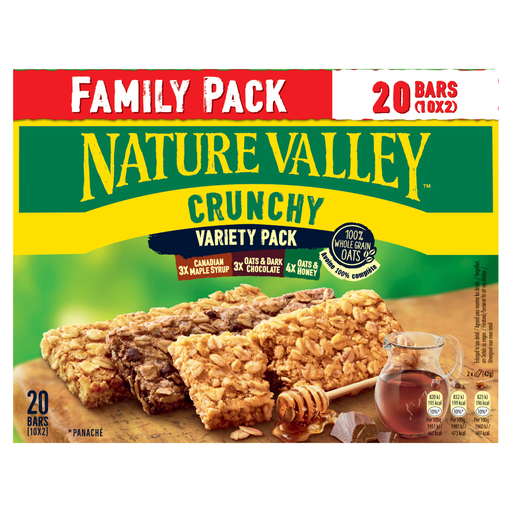
This 10 x 42g Crunchy Family Variety Pack is an option when you want several snack occasions from one box. Confirm its flavour mix, individual wrapping and stated serving on this pack; the separately listed five-pack does not establish those details for the family pack.
 No image available
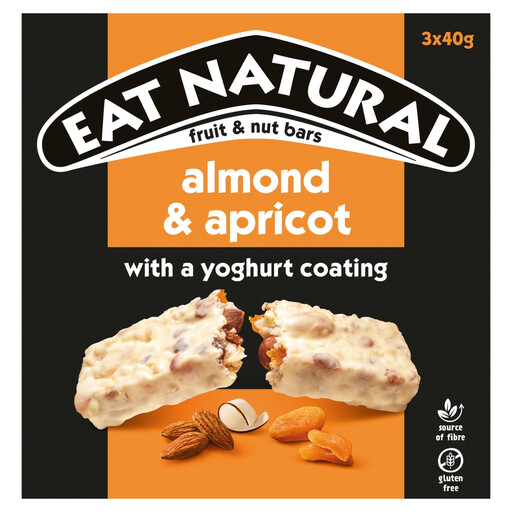
This 120g three-pack offers an almond, apricot and yoghurt flavour rather than an oat-bar option. Check its individual portion size and current allergen declaration before packing it, especially if almonds or milk are relevant to your requirements.
Compare nutrition per 100g first, then check the stated portion for the amount you plan to eat. NHS food-label guidance distinguishes per-100g information from per-portion figures; a twin-bar pack may be a different eating occasion from a single bar.
No: the wording does not tell you the total sugars value. Tesco lists 13g sugars per 45g Nakd Peanut Butter Protein Bar, so compare the ‘of which sugars’ figure on the exact products you are considering.
Choose by the declared protein per serving if protein is a priority, but check the rest of the panel and decide what else your lunch needs. Action on Salt and Sugar’s 2025 review found protein claims on 53% of the snack bars in its UK retailer sample; a claim alone does not describe the complete nutrition profile.
No. A dietary description does not rule out peanuts or other nuts. Check the ingredients and any ‘may contain’ statement on the exact current wrapper rather than relying on the brand or a different flavour.
Count the separate packs and check the serving inside each one, not just the number of bars printed on the box. For example, Tesco lists the Nature Valley Crunchy Variety Pack as five 42g twin-bar packs, whereas its Graze Cocoa Vanilla Oat Boost listing is for four 30g bars.