Parents and carers packing weekday lunches
A separately portioned bar can go alongside the main lunch item. Check the nutrition information for the amount the pupil will eat, rather than assuming every wrapper contains one labelled serving.


Choose a snack-bar multipack as an addition to a secondary-school packed lunch, not a replacement for its main item: NHS lunchbox guidance suggests basing that item on foods such as bread, rice, pasta or potatoes. A four-bar Graze Honey Oat Boost pack offers 30 g single bars, while Nature Valley’s Crunchy Variety Family Pack contains ten 42 g twin-bar portions. Compare the amount the pupil will eat, then check the exact flavour’s ingredients, allergen statement and the school’s lunchbox rules.
A separately portioned bar can go alongside the main lunch item. Check the nutrition information for the amount the pupil will eat, rather than assuming every wrapper contains one labelled serving.
Count the portions that work for each lunchbox. Nature Valley’s Crunchy Variety Family Pack, for example, contains 20 bars arranged as ten twin-bar portions, according to Nature Valley UK.
Check the exact flavour’s ingredients and allergen statement alongside the pupil’s requirements and the school’s current policy. Being individually wrapped does not remove an ingredient or a may-contain warning.
Start with the number and size of portions the household will use. Then compare nutrition and ingredients for those portions before deciding which flavours can go in the lunchbox.
| Priority | What to check | Your needs |
|---|---|---|
| Usable portions | Check the number of wrappers, bars per wrapper and labelled serving weight. Nature Valley UK lists its Crunchy Variety Family Pack as 20 bars in ten 42 g twin-bar portions. | I’m sharing one pack across several lunches, so I need to know how many portions we would actually use. |
| Nutrition | Read sugars, saturated fat and energy for the stated serving and per 100 g. Compare those figures with the amount the pupil is likely to eat; a twin-bar serving and a single bar are different quantities. | A claim about oats, protein, fibre or no added sugar is not enough for me to judge the whole bar. |
| Allergens and school rules | Read the exact flavour’s contains and may-contain statements, then check the school’s current lunchbox policy. The Department for Education’s July 2026 guidance for England says schools should consider food brought from home in their allergy-safety arrangements. | Before I pack a bar, I need to know whether its ingredients fit the pupil’s requirements and the school’s rules. |
| Dietary labels | Confirm vegan, gluten-free or other stated suitability on the particular pack. Check the full ingredient and allergen information separately; one dietary label does not answer every allergy question. | If a specific dietary characteristic matters, I want it confirmed for the flavour I’m buying. |
| Flavour variety | Identify each flavour in a mixed pack and check its label. Count only the portions whose flavours and ingredients work for the people sharing it. | Variety helps our household only if the intended pupils can use the different portions. |
Protein, fibre or no-added-sugar wording does not tell you the bar’s total sugars or saturated fat. Action on Sugar’s 2025 audit of UK supermarket snack bars found that some products described as high in fibre would also be high in sugars under voluntary traffic-light criteria.
Compare the exact product’s sugars, saturated fat, energy and ingredients for the serving the pupil would eat.
Individually wrapped bars can still contain peanuts, other nuts, milk or soya, or carry may-contain warnings. A dietary label addresses only the characteristic it states.
Read the current allergen statement for the exact flavour and check the pupil’s requirements and the school’s policy before packing it.
A larger bar count does not necessarily mean the same number of separately wrapped servings. Nature Valley UK lists its 20-bar Crunchy Variety Family Pack as ten twin-bar portions.
Count the portions your household would use and compare their labelled weights, rather than comparing pack counts alone.
These examples show why the precise pack and flavour matter more than the brand name alone, particularly when comparing serving sizes and allergens.
Tesco lists Graze Honey Oat Boost as a four-pack of 30 g flapjack bars.
Nature Valley UK lists its Crunchy Variety Family Pack as 20 bars in ten twin-bar portions.
Alpen’s UK product pages list muesli, while its snack-bar category does not list a pack to compare here.
Tesco lists Eat Natural Salted Caramel fruit-and-nut protein bars in a three-pack of individually wrapped 40 g bars.
Tesco lists Nakd Peanut Butter Protein Bars as a multipack of three 45 g bars, marked vegan and gluten-free.
Tesco lists TREK Original Oat Protein Flapjacks as three individually wrapped 50 g bars, marked vegan and gluten-free.
These multipacks offer different bar sizes and pack formats for adding a snack to a secondary-school lunch. Compare each exact flavour and serving before choosing one for a pupil.
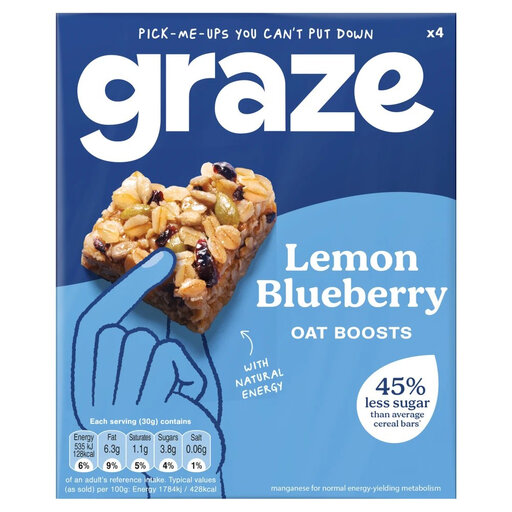 No image available
The four-bar format allows for one 30 g bar to be packed alongside the main lunch item. Check the Lemon Blueberry flavour’s nutrition and allergen information against the pupil’s needs.
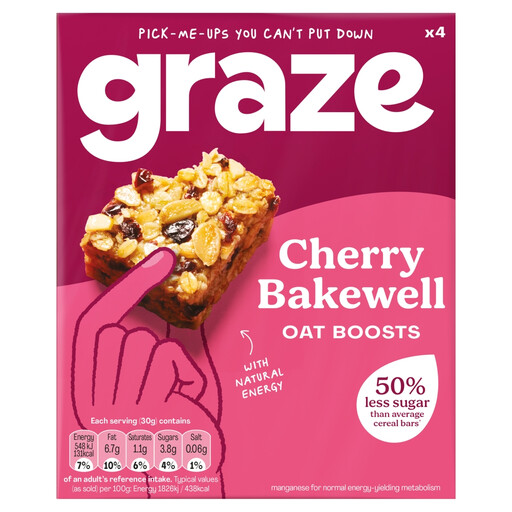 No image available
This is another four-pack of 30 g bars for lunches where that portion size works. Check the Cherry Bakewell ingredients and allergen statement rather than assuming they match another Graze flavour.
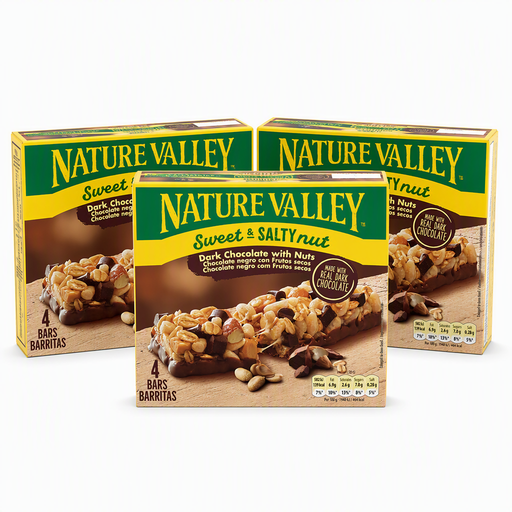 No image available
The 360 g pack is described as three groups of four 30 g bars, a format to compare with the household’s lunchbox needs. Because this is a nut variety, check its exact ingredients, allergen statement and the school’s rules.
 No image available
Each bar in this three-pack weighs 50 g. Compare the nutrition information for the amount the pupil would eat, and check the exact pack’s ingredients and allergen warnings before adding it to a lunchbox.
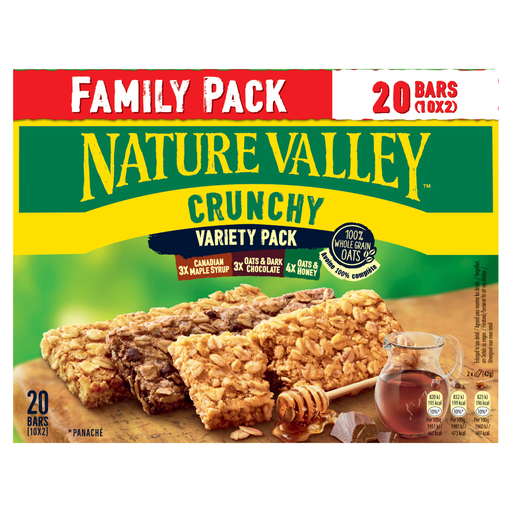 No image available
Nature Valley UK describes this pack as 20 bars arranged in ten twin-bar portions. Its nutrition information lists 11.3 g sugars per 42 g two-bar portion; the pack contains oats and soya and may contain nuts, peanuts and wheat. Check that each intended flavour works for the pupil and the school.
No. NHS lunchbox guidance suggests basing the main item on foods such as bread, rice, pasta or potatoes and adding vegetables. A bar can be an accompaniment rather than the whole lunch.
Start with the labelled serving and the amount the pupil would eat, then use per-100-g figures for a like-for-like nutrition comparison. Nature Valley UK labels two bars weighing 42 g as a portion in its Crunchy Variety Family Pack; a single 30 g or 50 g bar is a different serving size.
No. Tesco’s listing for the Nakd Peanut Butter Protein Bar carries a no-added-sugar claim but gives 13 g sugars per 45 g bar. Read the total “of which sugars” figure and ingredients as well as the claim.
Check the individual school’s current policy and the pupil’s requirements before packing one. The Department for Education’s July 2026 allergy-safety guidance for England says schools should consider packed lunches in their arrangements and set clear expectations for food brought from home; it does not establish one identical lunchbox rule for every UK school.
No. Those labels describe particular dietary characteristics, not every ingredient or cross-contact warning. For example, Tesco lists peanuts as an ingredient in Nakd Peanut Butter Protein Bars, despite their vegan and gluten-free labelling. Read the full declaration for the exact pack.