Desk workers and commuters
An individually wrapped bar can go in a bag or desk drawer without preparation. Check the weight and nutrition of one bar, particularly when comparing packs with different portion sizes.


Choose a smaller oat bar when you want a 30g portion, a fruit-and-nut bar when you prefer that recipe, or a protein bar when its protein content matters to your choice. These are different formats, not nutrition ratings: compare the exact bars per serving and per 100g, and check ingredients and allergens before buying.
An individually wrapped bar can go in a bag or desk drawer without preparation. Check the weight and nutrition of one bar, particularly when comparing packs with different portion sizes.
If protein or fibre is important to your choice, compare the amounts per bar alongside the rest of the nutrition panel. Nature Valley UK specifies 10g protein and 4g fibre per bar for its Protein Peanut & Chocolate product; those figures do not describe every protein bar.
Check the exact flavour and pack rather than relying on the brand name. Joybuy’s Nature Valley Protein Peanut & Chocolate listing declares milk, peanuts and soy and says it may contain tree nuts; a Tesco listing describes a specific Eat Natural Dark Chocolate multipack as gluten-free.
Choose when: You want a smaller single-bar portion; Tesco lists Graze Oat Boost flavours in 4 x 30g packs.
Keep in mind: A 30g bar is not necessarily lower in sugars or saturated fat than a larger alternative.
Choose when: You prefer a fruit-and-nut recipe; Tesco lists Nakd varieties in 4 x 35g packs.
Keep in mind: Check total sugars and the exact nut and allergen declaration.
Choose when: Protein per bar is a particular priority, rather than a reason to assume the whole nutrition profile suits you.
Keep in mind: Protein content does not establish the bar’s sugars, saturated fat or allergen suitability.
Once you have a format in mind, compare the portion you would eat and the label values used to compare different-sized bars.
| Priority | What to check | Your needs |
|---|---|---|
| Single-bar portion | Check the number of bars, individual wrapping and weight per bar. Do not treat the multipack weight as one serving. | I want to take one bar to work or on a journey without dividing up a larger pack. |
| Comparable nutrition | Use per-100g values to compare bars of different sizes, then look at per-bar values for the portion you would eat. UK nutrition labels give values per 100g; portion information may also be shown. | When one bar is 30g and another is 40g, I want to understand both the like-for-like difference and what eating one bar means. |
| Sugars and saturated fat | Read sugars and saturated fat alongside energy and salt on the exact flavour’s label. Use the ingredient list as well; total sugars are not the same measure as added sugars. | A protein, oat or fruit name is not enough for my decision; I want to compare the full nutrition panel. |
| Protein and fibre | Check declared grams per bar and the bar’s weight. Compare the other label values rather than using protein alone as an overall rating. | If protein or fibre matters to me, I want to know how much the particular bar provides. |
| Ingredients and allergens | Read the current ingredient and allergen declaration, including any “may contain” statement. Check a gluten-free claim on the exact product where relevant. | I need the flavour and pack I buy to fit my dietary requirements, not merely another product from the same brand. |
In its November 2025 review of 458 snack bars from 10 major UK retailers, Action on Salt and Sugar classified 37% as high in sugars and 55% as high in saturated fat under UK front-of-pack thresholds. Those are results for the products reviewed, not for every bar or shopper.
Compare the exact pack’s sugars, saturated fat, salt and energy per 100g, then check the figures for one bar.
Pack formats in the UK listings include 30g Graze Oat Boost bars, 35g Nakd bars and 40g Nature Valley Protein bars. A per-bar nutrient figure describes a different-sized serving in each case.
Compare nutrition per 100g first, then decide whether the individual portion fits your mid-morning break.
“Of which sugars” includes sugars from different sources, including fruit and milk as well as ingredients such as sugar or honey.
Use the total-sugars figure for a consistent label comparison and read the ingredient list for more context.
Joybuy’s Nature Valley Protein Peanut & Chocolate listing declares milk, peanuts and soy and says the product may contain tree nuts. The Food Standards Agency explains that precautionary allergen wording communicates possible unintended allergen presence.
Read the current statement for the exact flavour and pack, especially when an allergy or other dietary requirement affects the choice.
These are examples of UK-listed formats and product lines, not a claim that every flavour has the same ingredients or nutrition.
Tesco lists several Graze Oat Boost flapjack flavours in 4 x 30g packs.
Nature Valley UK lists Crunchy, Sweet & Salty Nut and Protein bars. It specifies 10g protein and 4g fibre per bar for Protein Peanut & Chocolate.
Tesco lists Nakd Cocoa Orange, Cashew Cookie and Bakewell Tart fruit-and-nut bars in 4 x 35g packs.
Tesco describes an Eat Natural Dark Chocolate 4 x 33g multipack as gluten-free bars containing nuts, dried fruit and seeds with dark chocolate.
Tesco includes Trek as a brand filter in its UK protein-bar category.
Alpen’s UK product site presents muesli; a snack-bar multipack should be assessed from its own current product information.
These multipacks cover oat-bar formats and a protein-bar option for a mid-morning break. Compare the individual bar weights and check each flavour’s current label before choosing.
 No image available
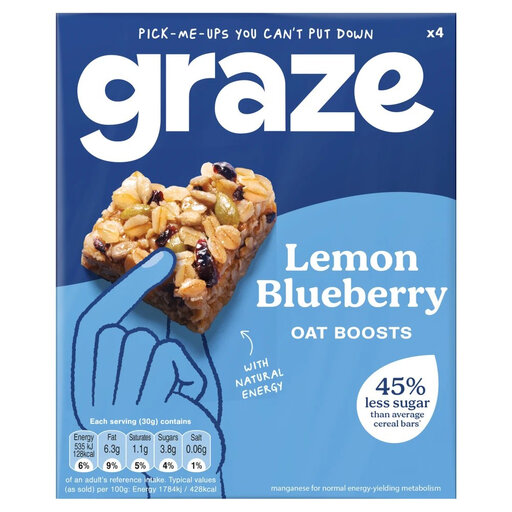
The 30g bar size offers a smaller single-bar option for a mid-morning break. Check the Lemon Blueberry pack’s nutrition and allergen statement if either affects your choice.
 No image available
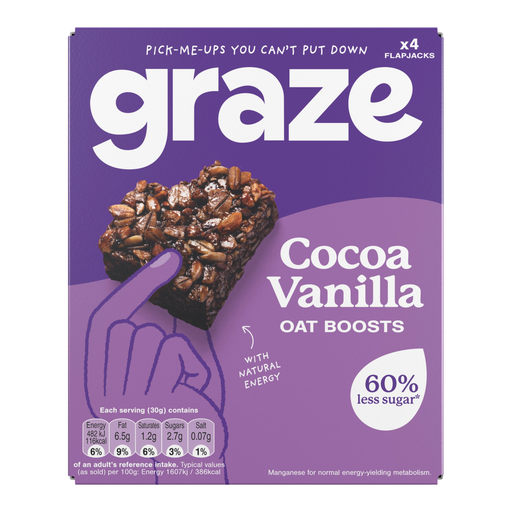
This is another 30g-per-bar format for a break away from home. If the protein wording matters to you, compare the declared amount per bar with its other nutrition values.
 No image available
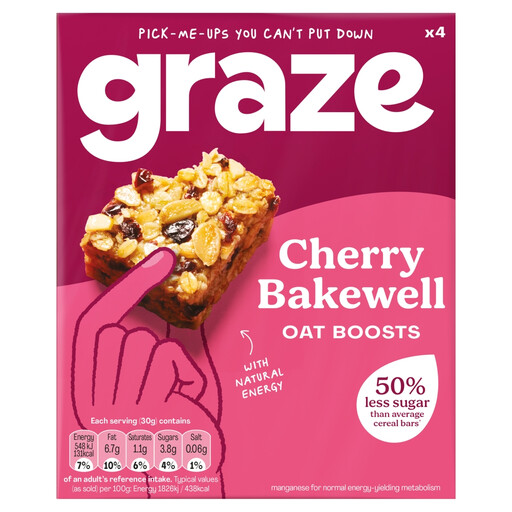
The 4 x 30g format lets you compare another Oat Boost flavour at the same stated bar weight. Check its own ingredients and allergen statement rather than assuming they match another flavour.
 No image available
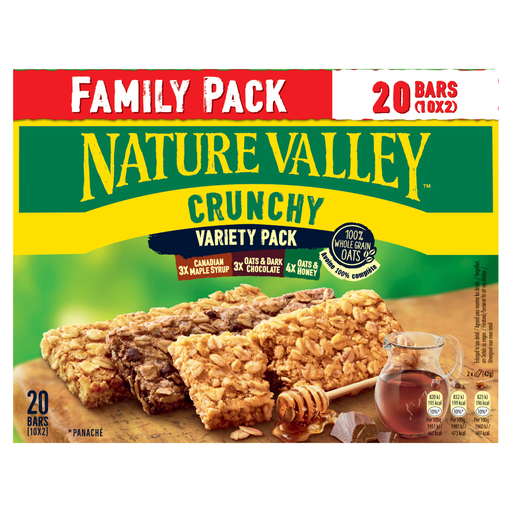
This variety pack offers a crunchy format with a stated 42g per bar, larger than the 30g Graze options shown here. Compare nutrition per 100g as well as per bar, and check the label for each included variety.
 No image available
Consider this 40g protein-bar format if declared protein per bar is relevant to your choice. Read the Salted Caramel Nut pack for its full nutrition and allergen information; figures for another Nature Valley flavour do not apply to it.
Use both: per 100g gives a like-for-like comparison between different-sized bars, while per-bar figures describe the portion you plan to eat. Check the weight of the bar too, as pack formats vary.
No. A protein bar is worth considering when its declared protein content matters to you, but also check sugars, saturated fat, salt, ingredients and allergens on the same pack. Joybuy’s Nature Valley Protein Peanut & Chocolate listing, for example, declares milk, peanuts and soy and says it may contain tree nuts.
The NHS describes more than 22.5g sugars, 5g saturated fat or 1.5g salt per 100g of food as high for the respective nutrient. These per-100g measures help you interpret labels; also check the amount in the bar you would eat.
No. The total-sugars figure includes sugars from all sources, including those naturally present in fruit or milk and those from ingredients such as sugar or honey. Read the ingredient list alongside the nutrition panel.
Use the current statement for the exact flavour and pack you intend to eat, including any “may contain” wording. The Food Standards Agency explains that precautionary allergen wording communicates possible unintended allergen presence; another flavour’s statement may differ.