Occasional late-night snackers
If you want one bar at a time, compare its serving size and sugars rather than assuming an oat or fruit bar is suitable immediately before bed.


A sweet snack bar is not a tooth-friendly bedtime default: Lancashire and South Cumbria NHS Foundation Trust advises avoiding sugary foods and drinks at bedtime because saliva flow is lower. For occasional late-night hunger, compare the portion and total sugars per bar, then check the exact product’s ingredients and allergen statements. A protein or no-added-sugar claim does not settle those questions.
The useful distinction is whether you want a small occasional portion, need a particular dietary label, or prefer a larger bar.
If you want one bar at a time, compare its serving size and sugars rather than assuming an oat or fruit bar is suitable immediately before bed.
Look for the dietary claim you need on the exact product. A vegan or gluten-free label does not replace a check of its peanut, tree-nut or soya statements.
A protein-focused bar may fit a preference for a bigger serving. Compare its per-bar nutrition and allergens alongside the portion size.
Start with whether a sweet bar fits the time you plan to eat it. Then compare the serving you would actually take from the pack.
| Priority | What to check | Your needs |
|---|---|---|
| Bedtime sugars | Read total sugars per bar and the ingredient list, including honey, syrups or dried fruit. Lancashire and South Cumbria NHS Foundation Trust advises avoiding sugary foods and drinks at bedtime because saliva flow is lower. | I want a bar for occasional late hunger, not a sweet snack that becomes part of my nightly routine. |
| Serving size | Compare the weight, energy and sugars of one bar. The cited Eat Natural Red Fruits bar is 25 g, Graze Honey Oat Boost is 30 g, Nature Valley Protein Peanut & Chocolate is 40 g, and nākd. Peanut Butter Protein is 45 g. | A smaller single bar suits me better than opening a larger portion; alternatively, I may want a larger bar. |
| Nutrition claims | Read the full panel rather than treating no-added-sugar or protein wording as a measure of total sugars. Tesco lists 13 g sugars per 45 g nākd. Peanut Butter Protein bar despite its no-added-sugar claim. | Protein or fibre matters to my choice, but I also want to know the sugars and energy in the bar I would eat. |
| Dietary fit | Check the exact flavour’s ingredients, dietary labels and any ‘may contain’ statement. Nature Valley UK lists peanut, soya and milk in its Protein Peanut & Chocolate bar, with a tree-nut warning. | I need the particular bar to meet my dietary requirements, not just a general description of its brand. |
| Pack format | Check the number and size of bars, and whether each is wrapped separately if that matters to you. Sainsbury’s describes its Eat Natural Red Fruits four-pack as individually wrapped. | I want to take one portion without opening the rest of a larger bag. |
Bars made with oats or fruit can still contain sugars. Lancashire and South Cumbria NHS Foundation Trust advises avoiding sugary foods and drinks at bedtime, when saliva flow is lower.
For an occasional late snack, read the sugars per bar and the ingredients; do not use the bar’s category as a substitute for that check.
The two statements mean different things. Tesco lists 13 g total sugars per 45 g nākd. Peanut Butter Protein bar, which is labelled no added sugar.
Compare total sugars on the nutrition panel with the size of the bar you intend to eat.
A per-100-g panel helps compare recipes, but it does not show the amount in one bar when pack sizes differ.
Check per-bar weight, energy and sugars first; use per-100-g figures when you want a comparison on the same weight basis.
The products discussed here have different ingredient and precautionary allergen statements. The Food Standards Agency explains that ‘may contain’ labelling communicates possible unintended allergen presence.
If you need to avoid an allergen, read the current label for the exact flavour and pack, including its ‘may contain’ statement.
These examples describe particular bar lines and flavours; a brand name alone does not establish a portion size, nutrition profile or allergen suitability.
Its Oat Boost line includes a Honey Oat Boost four-pack of 30 g flapjacks.
Its Protein Peanut & Chocolate line offers a 40 g bar for shoppers considering a larger portion.
The Peanut Butter Protein product is listed as a three-pack of 45 g bars.
The Red Fruits Soft Fruit Bar comes as four individually wrapped 25 g bars.
TREK describes its Protein Flapjacks as a plant-based bar line.
An older Alpen bar name needs a product-specific check before it can guide a grab-bag choice.
These packs cover smaller oat-bar portions and larger protein-bar portions. Compare the exact flavour’s label before choosing one for occasional late-night use.
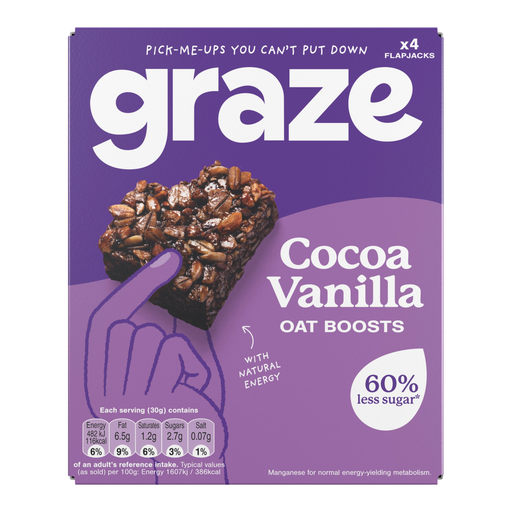 No image available
The four 30 g squares offer a smaller portion than the larger protein bars shown here. Check the sugars and allergen statements for this exact flavour if you plan to eat one late at night.
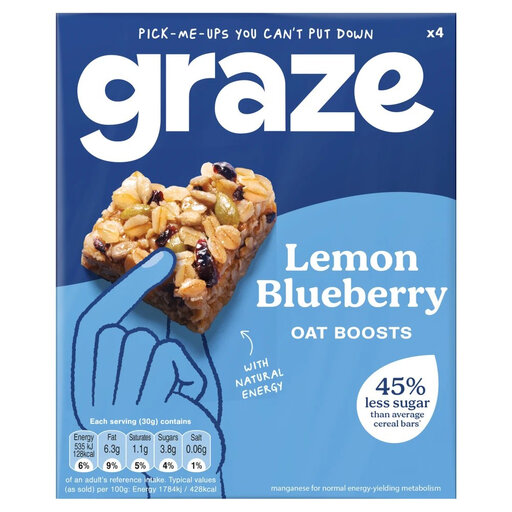 No image available
This four-pack has 30 g oat bars for a smaller single-bar portion. Read this flavour’s own nutrition and ingredient label rather than applying figures from Graze Honey Oat Boost.
 No image available
The 50 g bar is a larger portion than the 30 g Graze bars shown here. If you want it for an occasional late snack, compare its per-bar sugars, energy and allergens on the exact pack.
 No image available
This pack contains four 40 g bars for a larger single-bar portion than the 30 g options shown here. Nature Valley UK identifies peanut, soya and milk in its Protein Peanut & Chocolate bar and warns that it may contain tree nuts; check this pack’s current label.
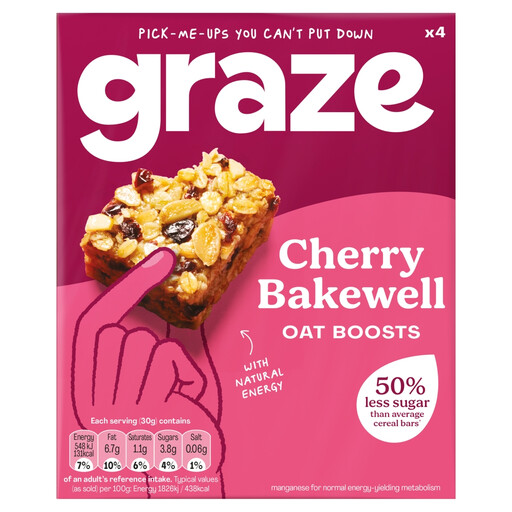 No image available
This is another four-pack of 30 g oat bars. Compare the Cherry Bakewell flavour’s own sugars, ingredients and allergen statements with the other small-portion options.
Not as a tooth-friendly default when they contain sugars. Lancashire and South Cumbria NHS Foundation Trust advises avoiding sugary foods and drinks at bedtime because saliva flow and its protective effects are lower. If you choose a bar occasionally, check its per-bar sugars rather than relying on ‘natural’, fruit or protein wording.
No. Tesco labels nākd. Peanut Butter Protein no added sugar but lists 13 g total sugars per 45 g bar. Read the total sugars for the portion you would eat.
Check the exact product’s ingredients and any ‘may contain’ statement, particularly where peanuts, tree nuts, soya or milk matter to you. Nature Valley UK lists peanut, soya and milk in Protein Peanut & Chocolate and warns it may contain tree nuts; the cited Eat Natural Red Fruits bar contains almonds.
Check the specific bar rather than relying on an older listing. Alpen Muesli’s product FAQ names several former bar varieties as no longer made, and a muesli product is not a substitute for an individually wrapped snack bar.