Viewers sharing a choice of flavours
An assorted pack gives several people options, provided they will eat its included flavours. Nature Valley’s Crunchy Variety Family Pack contains 20 bars in three flavours, arranged as 10 two-bar portions.


For TV-time sharing, an assorted multipack makes sense when several people want a choice of flavours; a smaller pack may suit fewer viewers or fewer snack occasions. Count the portions you expect to eat, not just the bars in the carton, then compare nutrition per bar or stated serving and check the exact pack for allergens. A protein claim or a no-added-sugar claim does not replace those checks.
The useful pack size depends on who will eat the bars, whether they want the same flavour and what each person needs to check on the label.
An assorted pack gives several people options, provided they will eat its included flavours. Nature Valley’s Crunchy Variety Family Pack contains 20 bars in three flavours, arranged as 10 two-bar portions.
Bar sizes and declared servings differ, so compare the amount you would actually eat as well as the figures per 100g. The Food Standards Agency advises using food labels to compare calories, fat, sugars and salt.
Vegan, gluten-free and protein-labelled bars address different requirements. Check the exact variant’s ingredients, nutrition and precautionary allergen statement before sharing it with someone who has a dietary restriction.
Work out how many snack occasions the pack needs to cover, then compare realistic portions and the current label. An assorted carton helps only if its flavours and ingredients suit the people sharing it.
| Priority | What to check | Your needs |
|---|---|---|
| Pack format | Count bars and stated servings separately. Check the flavours and whether bars are individually wrapped; Nature Valley’s 20-bar variety pack is arranged as 10 two-bar portions. | We are sharing during several TV evenings, so I want enough portions and flavours everyone is likely to eat. |
| Nutrition basis | Compare the amount you would eat, then use per-100g figures when bar sizes differ. Where shown, traffic-light labels give an at-a-glance comparison of fat, saturates, sugars and salt. | I want to compare a small bar with a larger or paired serving without treating them as equal portions. In the Food Standards Agency and Ipsos Northern Ireland survey of 611 people interviewed from September to November 2024, 49% said they actively used traffic-light labelling when shopping for food. |
| Ingredients and allergens | Read the ingredient list and any ‘may contain’ statement on the exact pack. Check product-specific vegan or gluten-free claims alongside, rather than instead of, its allergen information. | Someone sharing the bars needs to avoid a particular ingredient, so the current pack must suit that person before it goes in the cupboard. |
| Protein and fibre | Compare grams per bar on the same portion basis, alongside calories and sugars. TREK lists 10g protein per 50g Original Oat bar; Tesco lists 7.6g protein per 45g Nakd Peanut Butter Protein bar. | If protein or fibre matters to me, I still want to know the size and full nutrition of the bar I will eat. |
Nature Valley’s Crunchy Variety Family Pack has 20 bars, but its declared serving is two bars (42g). Nature Valley lists 196 kcal and 11.3g sugars for that serving.
Decide whether you would eat one bar or the paired serving, and use that amount when comparing packs.
‘No added sugar’ does not mean zero total sugars: Tesco lists 13g sugars per 45g Nakd Peanut Butter Protein bar. TREK lists 10g protein alongside 219 kcal and 12g sugars per 50g Original Oat bar.
Read the nutrition panel and ingredients as well as the particular claim that caught your attention.
The Eat Natural Red Berries bar is described as vegan and gluten-free but contains almonds. Other bars in this comparison contain or warn for peanuts, soya, milk or cereals.
For anyone with an allergy or a gluten-related requirement, check the exact current pack and its precautionary statement before serving it.
A higher bar count will not help if viewers avoid some of the flavours or if the carton contains fewer servings than its bar count suggests.
Check the flavour list, portion arrangement and date on the pack against how often the household is likely to eat it.
These examples show how pack formats and labels vary across particular product lines; a brand name alone does not establish the ingredients of every bar it makes.
Its Crunchy Variety Family Pack is an oat-bar option for sharing: 20 bars arranged as 10 two-bar portions.
Honey Oat Boost is a smaller flapjack format, listed by Tesco as a 4 × 30g pack.
Fruit & Nut is a cereal-bar multipack available in a 5 × 28g format.
Red Berries offers soft fruit-and-nut bars in a four-pack of individually wrapped 25g portions.
Peanut Butter Protein is a protein-labelled option listed by Tesco in a 3 × 45g pack.
Original Oat is a 50g protein bar to consider by individual portion, rather than as a confirmed multipack format.
These options include a variety pack for sharing, single-flavour cereal and oat multipacks, and protein-labelled bars. Compare their pack formats with the number of viewers and check the current product label for nutrition and allergens.
 Image unavailable
The 12-bar, single-flavour format is a choice to consider when several viewers want the same protein-labelled bar. Each bar is 50g; compare its nutrition per bar and check the ingredient and allergen information before sharing.
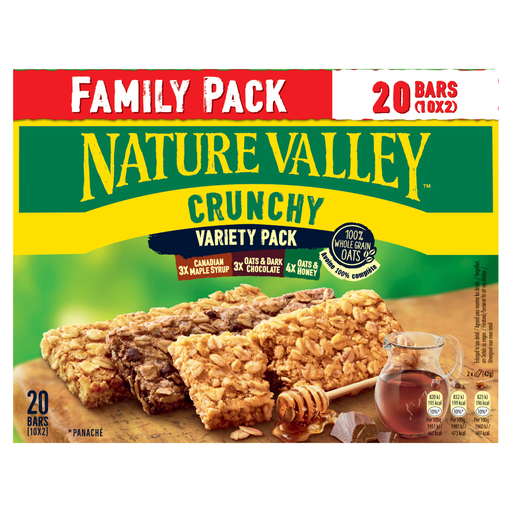 Image unavailable
For viewers who want flavour choice, this pack contains 20 bars arranged as 10 paired 42g portions. Nature Valley lists 196 kcal and 11.3g sugars per two-bar portion; the bars contain oats and soya and may contain nuts, peanuts and wheat.
 Image unavailable
This four-bar pack suits a smaller number of snack occasions when everyone wants peanut and chocolate flavour. Each bar is 40g; check the exact pack’s protein figure, full nutrition and allergen statement rather than relying on the protein label alone.
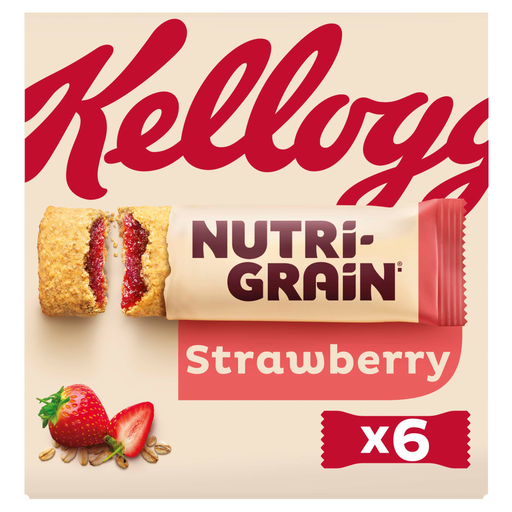 Image unavailable
A six-bar strawberry cereal-bar pack may suit viewers happy to share one flavour. Check the labelled serving and sugars per bar, as well as the ingredients, when comparing it with oat or fruit-and-nut packs.
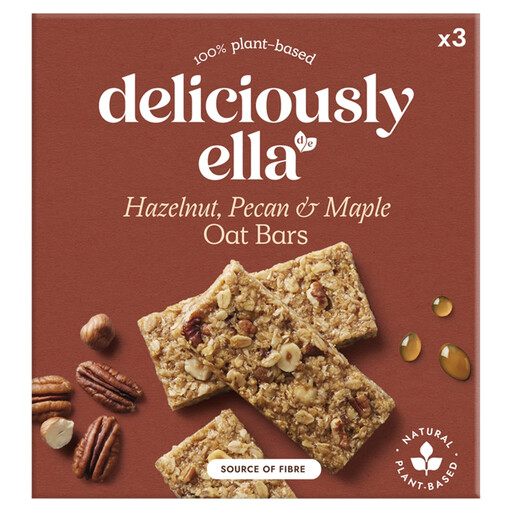 Image unavailable
This 150g oat-bar multipack offers a hazelnut, pecan and maple flavour rather than an assortment. Check the bar count and serving size for your group, and read the exact pack’s nut and precautionary allergen information.
Compare the portion you expect to eat first, then use the per-100g figures for a like-for-like nutrition comparison. A 25g bar and a stated 42g two-bar serving are different amounts; the Food Standards Agency advises using food labels to compare calories, fat, sugars and salt.
No. The claim concerns added sugar, while the nutrition panel shows total sugars. Tesco lists 13g sugars per 45g Nakd Peanut Butter Protein bar despite its no-added-sugar claim, so check the ‘of which sugars’ figure for the portion you would eat.
No. Those claims do not mean a bar is free from every allergen. Eat Natural Red Berries contains almonds, and TREK warns that Original Oat may contain peanuts, nuts and milk; check the current ingredients and ‘may contain’ statement for the exact bar.
A protein figure alone does not establish that a bar is a complete meal. TREK lists 10g protein and 219 kcal per 50g Original Oat bar, while Tesco lists 7.6g protein and 189 kcal per 45g Nakd Peanut Butter Protein bar; consider the whole portion and what else you plan to eat.