Home workers keeping bars to hand
Individually portioned bars are convenient to store for workdays. Check how many bars the pack contains and whether one bar matches the portion you normally want at lunch.


For a working-from-home lunch, choose a value pack by the number and size of bars you will actually use, then compare the nutrition of the portion you plan to eat. Oat, protein and fruit-and-nut bars suit different preferences; check the exact recipe and its allergens before committing to a large pack.
Individually portioned bars are convenient to store for workdays. Check how many bars the pack contains and whether one bar matches the portion you normally want at lunch.
If protein or fibre matters to your choice, compare the declared amount per bar alongside its sugars, saturated fat and energy. Bar size alone does not tell you its full nutritional profile.
Look at the ingredients and allergen statement for the exact flavour and pack. A brand may sell several recipes with different ingredients and dietary claims.
Start with the portion you would use during a workday, then compare labels for the exact bars in each pack.
| Priority | What to check | Your needs |
|---|---|---|
| Pack and portion | Check the bar count, weight per bar and total pack weight. Consider whether you would normally eat one bar or more. | Will this pack provide portions I will use during working-from-home lunches, or are its bars smaller than I want? |
| Protein and fibre | Read the declared protein and fibre per bar for the exact recipe. Check the bar weight when comparing portion figures. | If I choose a bar for its protein or fibre, I want to know what my usual portion contains, not just what the front of the pack says. |
| Nutrition label | Compare sugars and saturated fat per 100g, then check the values and energy per bar. NHS food-label guidance distinguishes per-100g information from values sometimes given per portion. | For a bar I might eat regularly, I want to compare recipes on the same weight basis and see what one bar contributes. |
| Ingredients and allergens | Read the exact flavour’s ingredient and allergen statement. Check dietary claims against that recipe rather than the wider brand range. | Peanuts, other nuts, milk or soya could rule out a pack for me, regardless of its bar count or other features. |
The researched pack formats include 30g, 35g, 40g and 50g bars. The same number of bars would therefore not represent the same quantity of food or the same portion.
Check both bar weight and total pack weight, then consider how many bars you would use at a time.
A protein figure or no-added-sugar description does not describe every nutrient in a bar. Different recipes also have different portion sizes.
Compare the nutrition panels per 100g and per bar, including sugars, saturated fat and energy, before choosing a pack for repeated use.
Peanuts and other nuts appear in some of the named fruit-and-nut and protein-bar recipes. Ingredients can also differ between flavours.
Read the statement for the exact product before ordering and check the delivered pack before eating if an allergy or intolerance is involved.
A large pack is difficult to use as intended if its ingredients rule it out for you or someone you planned to share it with.
A 30g snack and a 50g flapjack are different portions; neither weight alone tells you everything about its ingredients or nutrition.
Decide whether you want a bar as a snack or alongside other lunch food, then check the per-bar label for the portion you plan to eat.
These ranges offer different bar formats and recipes; check the individual product rather than treating a brand description as a claim about every bar it sells.
Graze offers individually portioned snacks, including the 56 × 30g variety box listed by Amazon.co.uk.
Its Protein Peanut & Chocolate big pack contains 40g bars. Nature Valley UK describes each bar as providing around 10g protein and 4g fibre.
Eat Natural has a protein-bar range; an Amazon.co.uk listing identifies a Peanuts, Almonds & Cocoa multipack of 24 × 40g bars.
nākd. describes its fruit-and-nut bars as containing no added sugar and as suitable for vegan, gluten-free, wheat-free and dairy-free diets.
TREK sells protein flapjacks; the brand states that its Protein Flapjacks contain 9g plant protein. Ocado lists a variety pack of 16 × 50g bars.
These packs offer protein-bar and flapjack formats for workday snacking. Compare their stated bar sizes and pack counts with the portion you want, then check each recipe’s label.
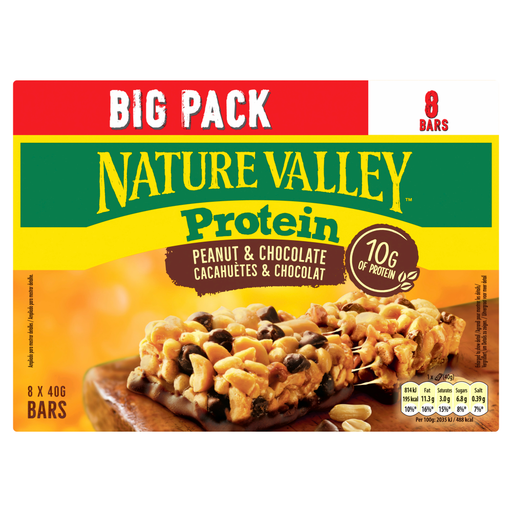 Image unavailable
For a workday portion where the declared protein and fibre matter, Nature Valley UK describes this Peanut & Chocolate bar as providing around 10g protein and 4g fibre per 40g bar. Check the pack’s full ingredients and allergen statement before ordering.
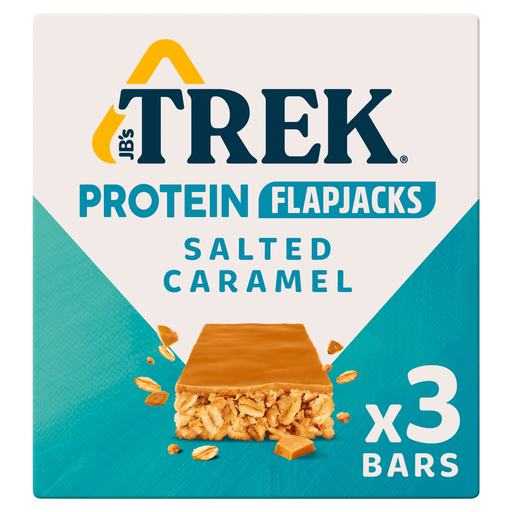 Image unavailable
This three-bar pack offers a 50g flapjack portion for a workday snack. Compare the Salted Caramel recipe’s per-bar nutrition and allergen statement with other flavours before choosing it.
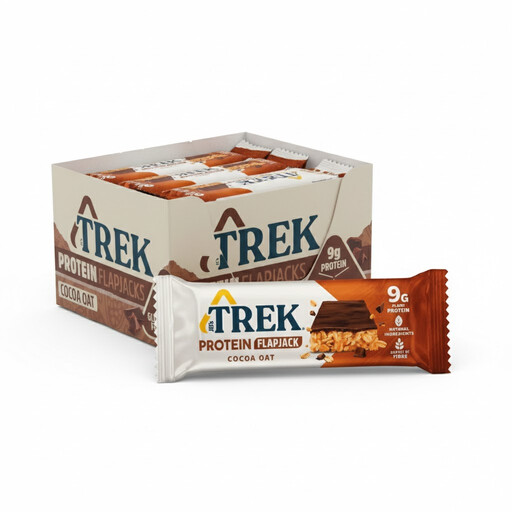 Image unavailable
The 16 × 50g format is an option if you expect to use the same Cocoa Oat flapjack across several workdays. Check this flavour’s per-bar nutrition and ingredients rather than applying figures from a variety pack.
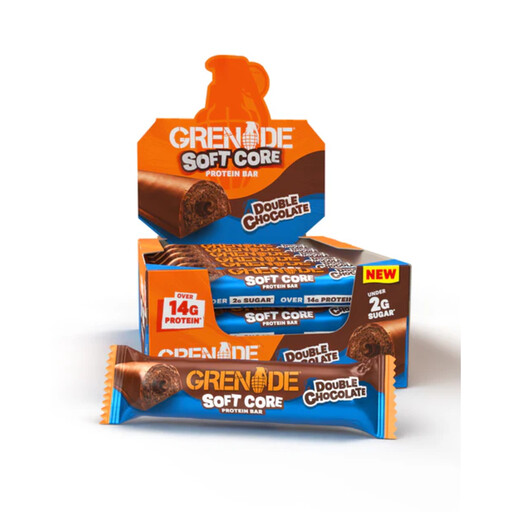 Image unavailable
This Double Chocolate pack contains twelve 50g protein bars for repeated workday portions. Review the exact recipe’s nutrition panel and ingredients before deciding whether it fits your routine or dietary requirements.
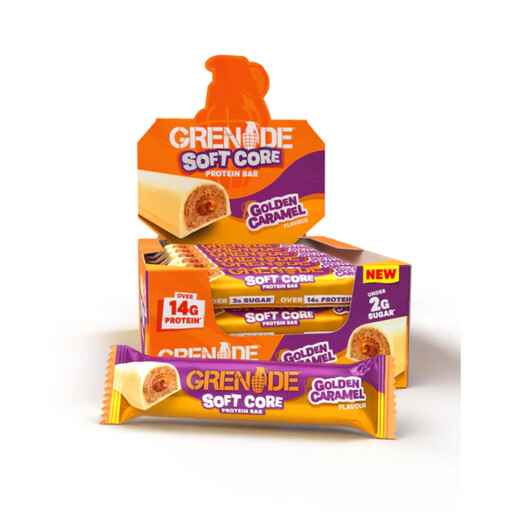 Image unavailable
This Golden Caramel variant also comes as twelve 50g protein bars. Treat it as a separate recipe when checking per-bar nutrition and allergens; the shared pack format does not establish identical ingredients.
Check total pack weight and weight per bar, then consider how many bars you would eat at a time. For nutrition comparisons, NHS food-label guidance notes that information is given per 100g and sometimes per portion: use the per-100g figures to compare recipes and the per-bar figures for your planned portion.
No. A protein figure is useful if that is a feature you want, but it does not replace the rest of the label. Compare the exact bar’s weight, fibre, sugars, saturated fat, energy and ingredients with what you intend to eat during your break.
Check the ingredient list for the exact flavour and pack. GOV.UK guidance says that any of the 14 regulated allergens present in prepacked food must be clearly labelled within that list; a brand-level dietary description is not a substitute for checking the product.
Use it to assess a product before ordering, but check the delivered pack before eating if an allergy, intolerance or strict dietary requirement is involved. Nature Valley advises checking the pack’s ingredients and nutrition because products may be reformulated.