Managers stocking a shared snack drawer
Check how many separately wrapped portions the pack provides, not just how many bars it names. Keep ingredient and allergen information accessible when colleagues choose a snack.


For a shared office snack drawer, compare the pack weight with the number of individually wrapped portions, then check the ingredients and allergen information for the exact bars. A larger conventional cereal-bar pack may suit routine stocking; keep any bars chosen for specific dietary requests clearly labelled and separate rather than assuming one pack suits everyone.
Check how many separately wrapped portions the pack provides, not just how many bars it names. Keep ingredient and allergen information accessible when colleagues choose a snack.
Compare the protein figure per bar on the exact product, alongside its portion size and allergens. A protein-labelled bar does not need to be the default choice for everyone.
Check vegan, gluten-free or no-added-sugar wording on the exact flavour and pack. A claim for one product does not establish that every bar from the brand meets the same requirement.
Start with the number of usable portions for the office, then check each proposed bar against colleagues’ ingredient and dietary requirements.
| Priority | What to check | Your needs |
|---|---|---|
| Usable portions | Compare total pack weight, bar size and the number of separate wrappers. A twin-bar wrapper may provide two bars but only one sealed portion to hand out. | I need enough individually wrapped snacks for the time between office orders. |
| Nutrition labels | Compare sugars, saturated fat, protein and fibre on the same stated basis, such as per bar or per 100g. In its November 2025 review of 458 bars from 10 major UK retailers, Action on Salt & Sugar classified 37% as high in sugars and 55% as high in saturated fat under UK front-of-pack thresholds. | A product name or front-of-pack phrase alone will not tell me how the bars compare. |
| Allergens and dietary claims | Read the exact flavour’s ingredients, emphasised allergens and any “may contain” statement. Confirm a gluten-free or vegan claim on that product rather than across the brand. | Colleagues with specific requirements need to identify a suitable bar without relying on an unlabelled shared bowl. |
| Choice and replenishment | Check the flavours in a mixed case, the number of each and their best-before dates. Keep specialist options identifiable in their original wrappers. | I want some choice, but not a large case of a flavour or format the team is unlikely to use. |
A pack described by its bar count may contain twin-bar wrappers, changing how many separately sealed snacks are available to distribute.
Check the total weight, bar size and wrapper count before planning how long a pack will last.
“Protein” and “no added sugar” describe particular attributes; neither replaces the nutrition panel. Ingredients can contain sugars even when no sugar has been added.
Compare the nutrients relevant to your choice per stated serving, and use per-100g figures when serving sizes differ.
Bars in these ranges can contain ingredients including peanuts, other nuts, oats, milk or soya. The Food Standards Agency explains that “may contain” labelling communicates possible unintended allergen presence.
Keep each bar in its labelled wrapper and check the exact flavour against the workplace’s allergy procedure before adding it to a shared selection.
Graze’s sugar comparison concerns its Oat Boost flapjacks, while Nature Valley’s stated protein and gluten-free attributes belong to named products. Neither description establishes the attributes of an entire range.
Confirm the current product label, ingredients, dietary claims and pack format for the precise variant being ordered.
These ranges offer different formats and labelled attributes; the exact flavour and pack still determine whether a bar meets an office requirement.
Its UK range includes crunchy oat bars and separately named protein variants.
Its oat-bar range is an option to examine when comparing nutrition panels across office snacks.
Its protein flapjacks provide a format to consider for a specifically requested protein-bar option.
Its fruit-and-nut bars may fit requests for the specific dietary attributes stated by the brand.
Its UK bar range includes fruit-and-nut products as well as listed vegan and gluten-free options.
These packs include a larger conventional cereal-bar format and smaller fruit-and-nut, protein-flapjack and oat-bar multipacks. For routine office stocking, compare their actual wrapper counts and labels rather than treating every multipack as the same kind of purchase.
 No image available
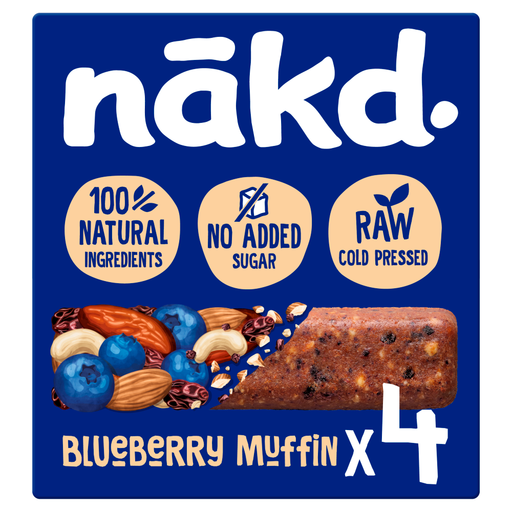
Consider this four-bar fruit-and-nut pack when stocking a separately identified option for a specific request. Check the ingredients and precautionary allergen statement before offering nut-based bars in a shared space.
 No image available
This three-bar protein-flapjack pack is a smaller option for a team requesting that format. Check the exact flavour’s protein figure, ingredients and allergen statements before ordering for colleagues with dietary restrictions.
 No image available
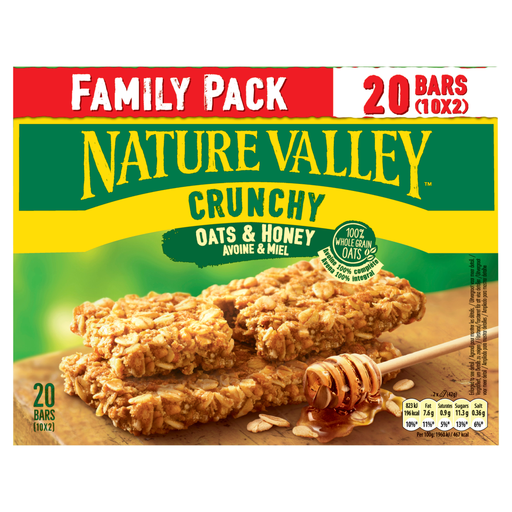
The 20-bar format is worth considering for routine office stocking. Confirm how many separate wrappers it contains, and check this pack’s nutrition and allergen label rather than relying on details for a different Nature Valley multipack.
 No image available
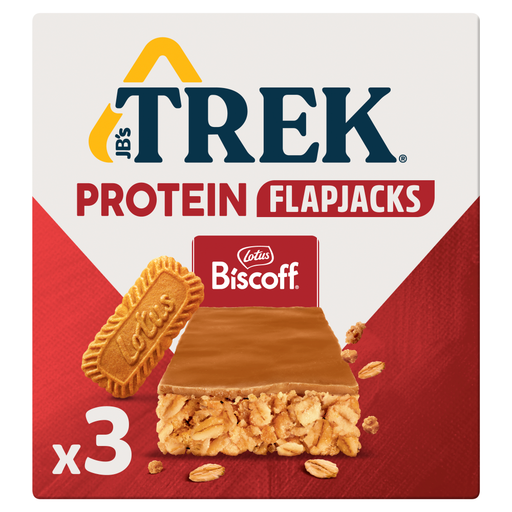
This three-bar flapjack pack offers another flavour to assess for a separately labelled office selection. The product information identifies wheat and soya, so check its full ingredient and precautionary allergen statements for the colleagues who would receive it.
 No image available
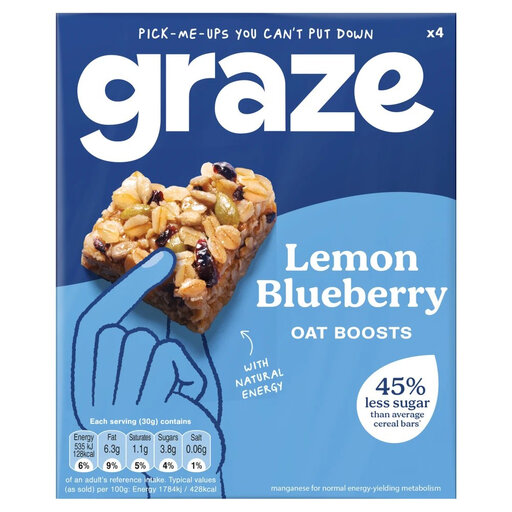
This four-bar oat multipack provides a different flavour and format for a labelled office selection. Graze makes a sugar comparison for its Oat Boost range; use this exact pack’s nutrition panel and allergen statement when comparing it with other bars.
Compare total weight, bar size and the number of individually wrapped portions. Check the flavours and dietary labels too: a large pack is less useful to a shared office if its bars do not meet the relevant ingredient requirements.
Check each exact product against the workplace’s allergy procedure before making it available. Keep bars in their labelled wrappers; the Food Standards Agency explains that “may contain” wording communicates possible unintended allergen presence, so it should not be discarded with the outer packaging.
No. The Food Standards Agency states that a food labelled gluten-free must contain no more than 20 mg/kg gluten as sold, but oats must still be identified as an allergen. Check the full ingredient declaration if a colleague needs to avoid oats themselves.
Choose a protein-bar option when colleagues specifically request that format, then compare the figure per bar and check the ingredients. Nature Valley lists different protein amounts for named products, and the TREK Peanut Butter flapjack listed by Tesco contains peanuts, soya and oats; neither brand description replaces checking the bar being ordered.
Keep bars in their original wrappers, retain the pack information needed to check ingredients and allergens, and follow the stated best-before dates when replenishing supplies. Avoid mixing unlabelled bars where colleagues need to identify what each one contains.