What should you check?
Start with usable portions for the journey, then check the exact product’s ingredients and per-bar information. Plan when snacks will be eaten without changing the driving-break schedule.
| Priority |
What to check |
Your needs |
| Portions |
Count bars and read their individual weights. Allow for passengers and planned stops; check that the chosen flavour suits the people sharing the pack. |
Will there be enough bars for everyone who wants one, without leaving unsuitable bars to distribute? |
| Ingredients and allergens |
Read the exact flavour’s ingredients, highlighted allergens and may-contain statement. A gluten-free or vegan description does not answer every allergy question. |
I need each passenger’s dietary requirements checked against the particular pack, not another flavour or the brand as a whole. |
| Per-bar nutrition |
Compare declarations using the stated serving size. Nature Valley UK lists around 10 g protein and 4 g fibre per 40 g Peanut & Chocolate protein bar; Tesco lists 10.4 g protein per 40 g Eat Natural Salted Caramel bar. |
If protein or fibre is part of my decision, I want to compare what one actual bar contains rather than rely on a front-of-pack phrase. |
| Journey planning |
Put bars where passengers can reach them or use them at planned stops. The Highway Code recommends a break of at least 15 minutes after every two hours of driving and says to stop safely if sleepy. |
Snacks would be handy between stops, but I still need breaks that account for tiredness. |
Brand and product-line references
These examples show different bar formats; suitability still depends on the exact flavour and pack.
Nature Valley
Its Peanut & Chocolate protein big pack contains eight 40 g bars, according to Nature Valley UK.
- The brand lists around 10 g protein and 4 g fibre per bar for this product.
- It contains peanuts, soy and milk and may contain tree nuts.
Graze
Tesco lists Honey Oat Boost as an oat-flapjack-style pack of four 30 g bars.
- The listing describes the product as suitable for vegetarians.
- Check the exact nutrition panel rather than treating Graze’s less-sugar comparison with selected cereal bars as a category-wide measure.
Nakd
Tesco lists Berry Delight as a four-pack of 35 g fruit-and-nut bars suitable for vegans.
- The cited flavour is listed as gluten-free and dairy-free.
- It contains cashews; its nutrition panel lists 17 g sugars per bar despite its no-added-sugar description.
Eat Natural
Tesco lists the Salted Caramel fruit-and-nut protein bars in a pack of three individually wrapped 40 g bars.
- The listing states 10.4 g protein per bar.
- This cited flavour contains peanuts and almonds; check its full allergen statement before sharing.
TREK
TREK describes its bars as plant-based and includes Protein Flapjacks and High Protein Bars in its range.
- TREK states that its Protein Flapjacks contain 9 g plant-based protein.
- Check the chosen flavour’s pack size and allergen declaration before adding it to a shared snack bag.
Alpen
Tesco lists Alpen Light Summer Fruits as a five-bar pack weighing 105 g in total.
- The five-bar format offers individually countable portions for trip planning.
- Confirm the exact pack’s current availability and ingredients before relying on it for the journey.
Snack-bar packs on Joybuy
These Joybuy multipacks offer different bar counts for road-trip planning. Compare the portion count with your group’s needs and check the exact pack for dietary suitability.
 Image unavailable
Nature Valley Protein Peanut & Chocolate Cereal Bars, 8 x 40 g
Eight bars provide portions for several passengers or stops. Nature Valley UK lists around 10 g protein and 4 g fibre per 40 g bar; this product contains peanuts, soy and milk and may contain tree nuts.
View on Joybuy
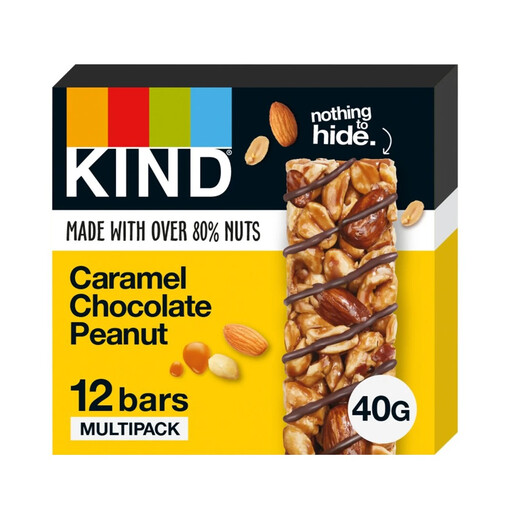 Image unavailable
KIND Caramel Chocolate Peanut, 12-bar pack
The 12-bar count may suit a larger group or more planned stops. Check the exact pack’s ingredients and allergen statement before sharing peanut-flavoured bars.
View on Joybuy
 Image unavailable
Nature Valley Protein Peanut & Chocolate Bars, 4 x 40 g
Four 40 g bars offer a smaller pack format for a short trip or fewer eaters. Check this pack’s ingredient and allergen statement rather than assuming it is identical to the eight-bar variant.
View on Joybuy
 Image unavailable
Nature Valley Protein Salted Caramel Nut Bars, 4 x 40 g
The four 40 g bars may suit a smaller group. For this Salted Caramel Nut flavour, read the exact pack’s nutrition and allergen information rather than applying figures from the Peanut & Chocolate variant.
View on Joybuy
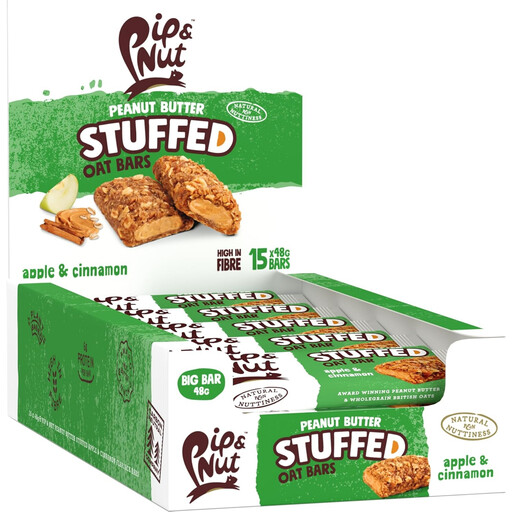 Image unavailable
Pip & Nut Apple & Cinnamon Peanut Butter Stuffed Oat Bars, 15 x 48 g
Fifteen 48 g bars provide a larger count for more passengers or stops. The peanut-butter filling makes an exact ingredient and allergen check important before offering these bars to a group.
View on Joybuy
Questions about road-trip snack bars
How many bars should I put in the car?
Count the people who may eat one and the planned opportunities to offer a snack, then check the pack’s bar count and size. A larger pack is not more useful if its ingredients prevent some passengers from eating it.
Does “no added sugar” mean a bar contains little sugar?
No. Tesco lists Nakd Berry Delight as having no added sugar, while its nutrition information states 17 g sugars per 35 g bar. Read the nutrition panel for the exact flavour rather than treating that phrase as a sugar-content figure.
Is a gluten-free bar suitable for someone with a nut or milk allergy?
Not necessarily. Nature Valley’s cited Peanut & Chocolate protein bar is listed as gluten-free but contains peanuts, soy and milk; Nakd Berry Delight contains cashews despite its gluten-free and dairy-free descriptions. Check the exact pack’s ingredients and may-contain statement for the person concerned.
Should I check the wrapper if I have already read the product page?
Yes. Use the page to plan your purchase, then read the exact pack’s current ingredients, nutrition and allergen information before offering a bar to someone with a dietary requirement.
Can snack bars replace rest breaks on a long drive?
No. The Highway Code recommends a break of at least 15 minutes after every two hours of driving. If you feel sleepy, stop in a safe place; a snack does not remove the risk of tired driving.


