Parents beginning baby-led weaning
Start with the food’s size, shape and texture, rather than the convenience of a wrapped bar. NHS guidance says to consider those features and supervise babies while they eat.


For early baby-led weaning, a standard packaged snack bar is not a default choice: its texture and ingredients need checking before it can be considered. For an older baby who can manage the texture, check the current pack for honey, the full ingredients and any “may contain” warning; a free-from or no-added-sugar claim does not settle those questions.
The deciding checks depend on a baby’s stage of self-feeding and any ingredient that must be avoided.
Start with the food’s size, shape and texture, rather than the convenience of a wrapped bar. NHS guidance says to consider those features and supervise babies while they eat.
Check the exact flavour’s ingredients and “may contain” statement. A bar can be free from one ingredient while declaring another that matters for your child.
Consider a packaged option only after checking that the child can manage its texture and that the current pack meets their ingredient requirements. An adult bar’s free-from claim is not an age or texture assessment.
Check whether the food is manageable first, then read the ingredients and allergen information for the exact product.
| Priority | What to check | Your needs |
|---|---|---|
| Size and texture | Consider the actual size, shape and firmness. The NHS advises avoiding firm foods and supervising babies and young children while they eat. | My baby is starting solids, so I need food they can manage rather than assuming a standard bar is suitable. |
| Allergens | Read the ingredients and any “may contain” statement for the exact flavour. Match both to the ingredient your child must avoid. | A gluten-free claim does not answer my question if I need to avoid soya, milk or nuts. |
| Honey | Check the ingredient list: the NHS says not to give honey until a child is over 1 year old. | For a baby under 1, I need to rule out honey even when a bar has other appealing label claims. |
| Sugars and claims | Read the ingredients and sugars figure on the nutrition panel. “No added sugar” does not mean a fruit bar contains no sugars. | I want to assess the actual product, not use a front-of-pack phrase as a shortcut for deciding whether to serve it. |
| Current formulation | Check the current pack and the precise flavour and pack size; recipes and allergen statements can differ between products. | If an ingredient must be avoided, an old listing or a claim about the wider brand is not enough for my decision. |
A no-added-sugar claim does not answer questions about naturally occurring sugars, allergens or texture. Honey is a separate ingredient check: the NHS says not to give it to children under 1.
Read the ingredient and nutrition panels, then assess whether the food is manageable for your baby.
TREK’s Cocoa Oat ingredients declare soya and a possible presence of peanuts, nuts and milk, despite its gluten-free positioning. Tesco’s listing for nākd. Berry Delight declares cashew and possible traces of soya, peanuts and other nuts.
Check the complete allergen information against the particular ingredient your child needs to avoid.
Nature Valley’s Crunchy Oats & Honey bar lists honey and is a crunchy product. The NHS advises against honey before age 1 and says to consider whether a food’s texture is manageable.
Exclude honey-containing bars for a child under 1. For other foods, assess the actual texture and supervise eating.
Flavours can have different ingredients, and Nature Valley says its recipes can change.
Check the current pack for the exact product before buying or serving it, particularly when an allergen must be avoided.
These examples show why a claim on one range or product cannot replace a check of the bar you are considering.
The brand describes its fruit-and-nut bars as gluten-, wheat- and dairy-free, with no added sugar or syrups.
TREK’s Cocoa Oat product information lists gluten-free oats.
The reviewed Crunchy Oats & Honey bar is an adult-style oat snack containing honey.
Alpen’s FAQ says its products contain gluten from wheat, barley or oats.
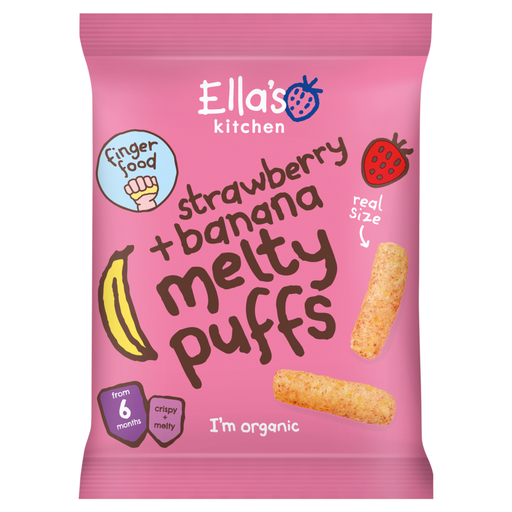
These are packaged finger-food snacks, not snack bars. Their named age ranges and formats can help narrow a search, but check each current pack’s ingredients, allergen warnings and texture before serving.
 No image available
A puff rather than a bar for considering finger-food snacks. Check the current pack’s age guidance, ingredients and allergen warnings, and assess the texture before serving.
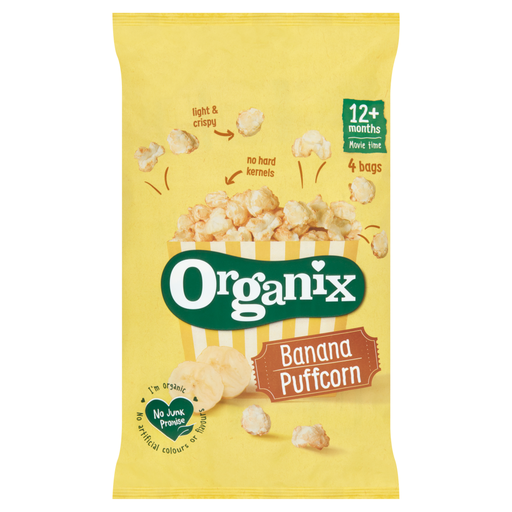 No image available
The named 12+ months range makes this a product to consider for a child at that stage, rather than for early weaning. Check the current pack’s allergen information and whether your child can manage the puffcorn texture.
 No image available
These named 12+ months melts are another packaged format rather than a bar. Read the current ingredient and nutrition panels if fruit ingredients or sugars matter to your choice, and check allergen warnings before serving.
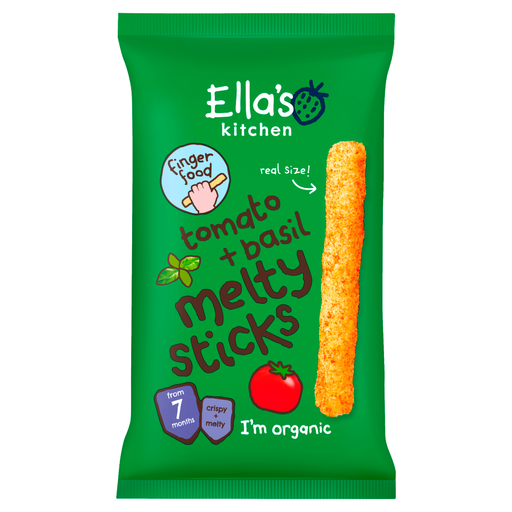 No image available
The named 7+ months sticks offer a finger-food format instead of a standard bar. Check the current pack’s ingredients and allergen warnings, and assess how the sticks feel and break up before serving.
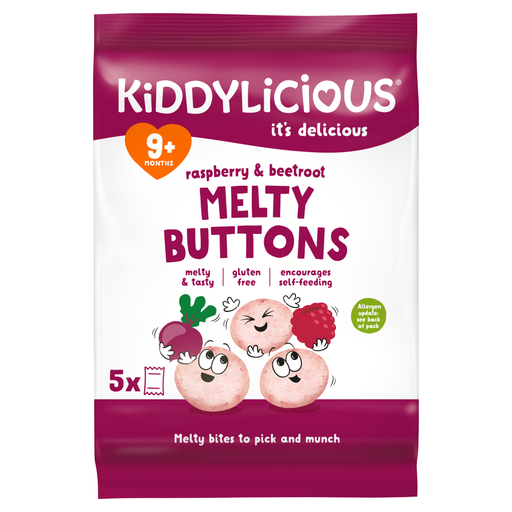 No image available
These named 9+ months buttons are a different shape and format from a bar. If avoiding an allergen, check the full current pack rather than relying on a single free-from claim; assess the texture as well.
Do not assume it is. NHS guidance says to introduce solids from around 6 months, consider the food’s size, shape and texture, avoid firm foods and supervise eating. Assess the actual bar and its ingredients before considering it.
No: the claim may concern only one ingredient. Read the full current ingredients and any “may contain” statement for the exact product. The NHS advises avoiding a food if you are unsure of its ingredients and think it may contain something your child is allergic to.
No. The NHS says not to give honey until a child is over 1 year old, so check the ingredient list even if the bar carries other free-from claims.
Check the nut ingredients, any precautionary allergen warning and the bar’s texture separately. The NHS says whole nuts must not be given to children under 5 because they can choke on them; a fruit-and-nut bar should not be assumed manageable simply because its nuts are part of a bar.
The NHS advises introducing foods that can trigger allergic reactions one at a time and in very small amounts. That guidance does not remove the need to check a packaged bar’s full ingredients and texture.