What should you check first?
Start with the baby’s age and the food’s texture, then read the ingredients and nutrition information for the specific flavour and pack.
| Priority |
What to check |
Your needs |
| Age and honey |
Check the stated age and full ingredient list. NHS Best Start in Life says honey must be avoided until 12 months; a general snack-bar format does not establish infant suitability. |
I need a snack that suits my baby’s stage, and I will rule out any bar containing honey before their first birthday. |
| Texture and serving |
Assess the food’s size, shape and texture rather than relying on its wrapper or a texture claim. NHS Best Start in Life advises keeping babies alert, safely upright and supervised while eating. |
My baby is still learning to chew and swallow, so I need a form of finger food I can offer appropriately while watching them eat. |
| Allergens |
Read the ingredients and allergen statement for each flavour. NHS Best Start in Life advises introducing potential allergens one at a time and in very small amounts; nuts and peanuts should be crushed or ground, not offered whole. |
If an ingredient is new to my baby, I would rather introduce it separately than make a mixed-ingredient bar the first exposure. |
| Sugar and salt |
Check the ingredients and nutrition panel, not just claims on the front. NHS Best Start in Life says babies do not need salt or sugar added to their food. |
A portable pack is useful, but I still want to see what is in this particular snack before offering it. |
Brand references
These general-snacking brands illustrate why a familiar bar name is not a substitute for checking an individual product for baby-led weaning.
Nature Valley
Nature Valley sells snack bars for general snacking, including crunchy oat varieties.
- Nature Valley UK lists 59% wholegrain rolled oats in its Crunchy Oats & Honey bar.
- That same bar lists honey, sugar and salt and may contain peanut, tree nuts and soya. NHS Best Start in Life says babies under 12 months must not have honey; a crunchy bar also needs a separate texture assessment for a young child.
Graze
Graze describes its range as snacks made with ingredients including wholegrains, fruit and nuts.
- Its range includes oat-based snacks as well as mixes with different ingredients and formats.
- Brand-level ingredient and sugar claims do not establish infant suitability. Check the exact snack’s age guidance, ingredients, allergens and texture.
Alpen
Alpen is associated with muesli products and has also had named bar varieties.
- Alpen’s own product information can help identify a particular variety and its ingredients.
- Alpen says some named bars are no longer made and that some products are made where peanuts and nuts are used. Check the current product and allergen statement rather than relying on an older bar listing.
Joybuy snacks to assess
These options include portioned baby snacks and a soft oaty bar for children aged 12 months and over. They are not interchangeable: start with each pack’s stated age, then check its ingredients and serving texture for your child.
 No image available
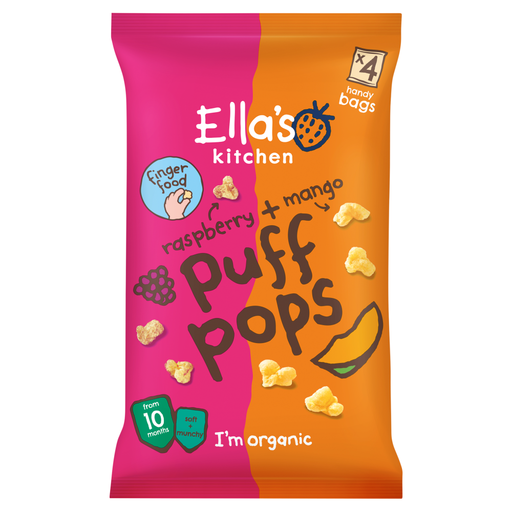
Ella's Kitchen Raspberry & Mango Puff Pops, 10+ Months, 4 x 9g
The stated age is 10+ months, so these puff pops are not an option for a baby just starting solids around six months. The pack contains four 9g portions; check the current ingredients and serving guidance before offering one.
View on Joybuy
 No image available
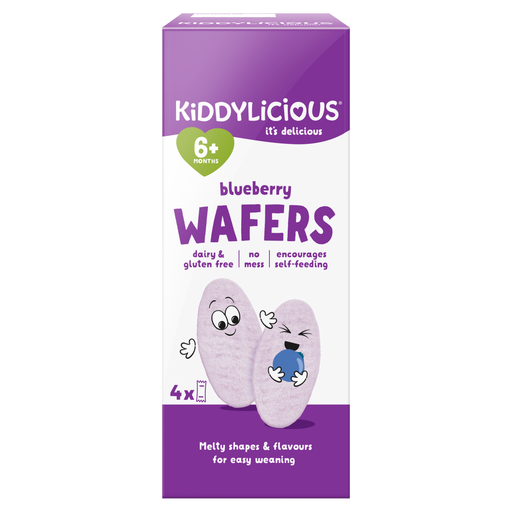
Kiddylicious Blueberry Wafers, 6+ Months, 4 x 4g
These wafers are labelled 6+ months and come in four 4g portions. If milk or gluten-containing cereals are new to your baby, check the current ingredients before offering a mixed-ingredient snack; assess the wafer’s texture and supervise eating.
View on Joybuy
 No image available
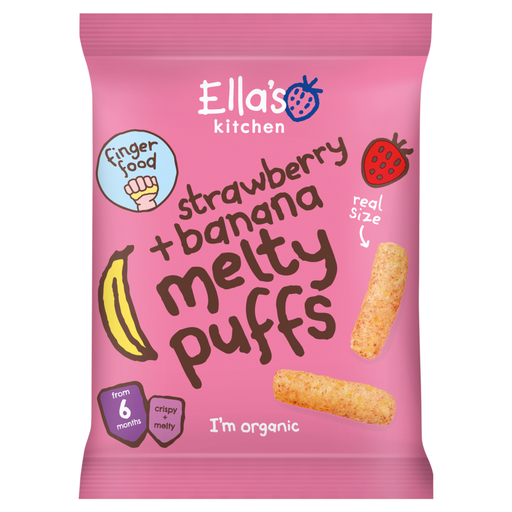
Ella's Kitchen Organic Strawberry & Banana Melty Puffs, 6+ Months, 20g
This 20g pack is labelled 6+ months and is a single pack rather than a multipack of individual portions. Check its current allergen and precautionary statements, particularly if milk, soya or gluten are relevant to your baby, and assess the texture before serving.
View on Joybuy
 No image available
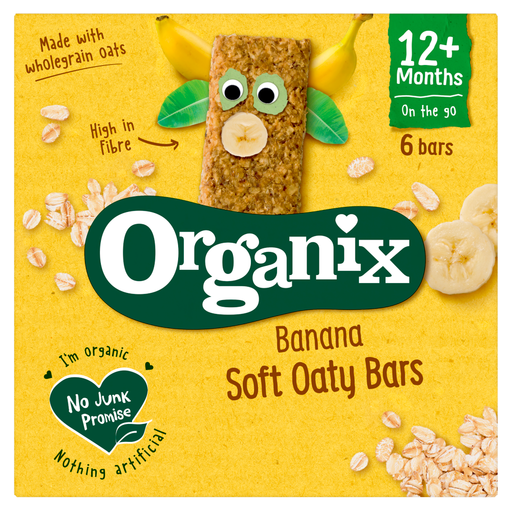
Organix Banana Soft Oaty Bars, 12+ Months, 6 x 23g
These individually portioned soft oaty bars are labelled 12+ months, not for the start of weaning. The pack contains six 23g bars; read the current ingredients and nutrition panel as well as checking how your child manages the texture.
View on Joybuy
 No image available
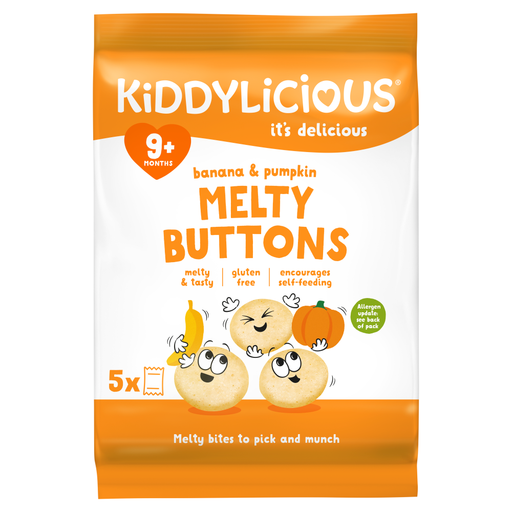
Kiddylicious Banana & Pumpkin Melty Buttons, 9+ Months, 5 x 6g
These buttons are labelled 9+ months, so they do not suit the very start of weaning around six months. The pack contains five 6g portions; check the current ingredients, age guidance and serving texture rather than relying on the portion size alone.
View on Joybuy
Questions about baby-led weaning snacks
Can a baby under 12 months have a snack bar containing honey?
No. NHS Best Start in Life says honey should be completely avoided until 12 months because it can contain bacteria that can lead to infant botulism. Read the ingredients on the exact pack: Nature Valley UK, for example, lists honey in its Crunchy Oats & Honey bar.
Does a wholegrain or fibre claim make a bar suitable for baby-led weaning?
No. Such a claim does not establish the bar’s age suitability, serving texture or allergen content. Check the individual product’s age guidance, full ingredients and nutrition panel, then consider its size, shape and texture as advised by NHS Best Start in Life.
What if a snack contains an allergen my baby has not tried?
Introduce foods that can trigger allergic reactions one at a time and in very small amounts from around six months, rather than using a bar containing several new ingredients. NHS Best Start in Life says nuts and peanuts should be served crushed or ground, not whole. If your baby has a diagnosed allergy or eczema, or a relevant family history, speak to a GP or health visitor first.
How should finger foods be offered during baby-led weaning?
From around six months, consider each food’s size, shape and texture before offering it. NHS Best Start in Life advises that the baby should be alert, safely upright in a highchair and supervised throughout eating; an age label or individual wrapper does not replace those steps.
Do England’s commercial baby-food guidelines guarantee a suitable snack?
No. The Office for Health Improvement and Disparities describes its sugar and salt guidelines for commercial food and drink aimed at children up to 36 months as voluntary, with implementation expected by the end of February 2027. They do not establish that a particular product has an appropriate age label, ingredients or serving texture for your child.


