Commuters having a small snack with coffee
An individually portioned oat bar or soft fruit bar may fit a short coffee break. Compare the nutrition per bar and check whether the pack treats one or two bars as a serving.


Choose a snack-bar multipack by the portion you want with coffee and where you will eat it. A smaller oat bar can suit a brief coffee break; a bar with more protein per portion offers a different option for a longer gap between meals. If sticky fingers are the concern, Eat Natural says the wafer paper around its Apple Soft Fruit Bar is designed to prevent them. Check the serving size, sugars and allergens on the exact product rather than relying on the type of bar alone.
An individually portioned oat bar or soft fruit bar may fit a short coffee break. Compare the nutrition per bar and check whether the pack treats one or two bars as a serving.
If there is a longer gap until your next meal, compare protein, fibre and portion size per bar. Nature Valley Protein Peanut & Chocolate is one example with about 10 g protein per 40 g bar, according to Nature Valley; its peanut, soya and milk ingredients also matter when choosing.
Eat Natural says the edible wafer paper around its Apple Soft Fruit Bar is designed to prevent sticky hands. If you have a dietary restriction or allergy, check the exact bar’s ingredients and precautionary allergen statement: a vegan or gluten-free description does not answer every allergen question.
Start with the eating occasion and portion, then compare the nutrition and ingredients of the bars that fit it.
| Priority | What to check | Your needs |
|---|---|---|
| Eating on the move | Look for individual wrappers and a texture you can manage where you travel. Eat Natural says its Apple bar’s wafer paper is designed to prevent sticky hands. | I want to take out one portion beside my coffee without dealing with sticky fingers. |
| Portion size | Check the number of portions, not just the number of bars. Nature Valley defines one Crunchy Variety serving as two bars weighing 42 g. | A single bar is enough for my coffee break, so I need to know whether the nutrition figures cover one bar or a pair. |
| Protein and fibre | Compare amounts per complete portion alongside its weight. Nature Valley describes its Protein Peanut & Chocolate 40 g bar as providing around 10 g protein and around 4 g fibre. | There is a long gap before my next meal, and I want to compare what each whole bar provides. |
| Sugars and other nutrition | Read sugars, saturated fat and energy for the stated serving. In its November 2025 audit of 458 snack bars at 10 UK retailers, Action on Salt and Sugar reported that 37% would be high in sugars under voluntary UK front-of-pack traffic-light thresholds; that figure describes the audited products, not commuters’ preferences. | I do not want a fruit, oat or protein description to stand in for the nutrition figures on the pack. |
| Allergens and dietary claims | Check the exact flavour’s ingredients, highlighted allergens and any may-contain statement. Assess vegan and gluten-free claims separately from nut, soya and milk information. | I need the particular bar in the multipack to meet my dietary requirements, not merely the brand’s general description. |
“Protein”, “fibre” and “fruit” describe different aspects of a bar. Action on Salt and Sugar’s November 2025 audit of 458 snack bars at 10 UK retailers found that 37% would be high in sugars under voluntary UK traffic-light thresholds; the result does not describe every bar.
Compare the energy, sugars, saturated fat, protein and fibre for the portion you intend to eat.
A wrapper can contain more than one bar. Nature Valley specifies two bars, weighing 42 g together, as a serving of its Crunchy Variety product.
Check how many eating occasions the multipack provides and whether its nutrition table describes one bar or the full serving.
Ingredients differ between bars. Nature Valley Protein Peanut & Chocolate contains peanuts, soya and milk, while Eat Natural Apple Soft Fruit Bar contains almonds and lists possible cross-contact allergens.
For an allergy, intolerance or coeliac disease, read the current ingredients and allergen statements for the exact product and pack.
Alpen’s UK availability FAQ identifies its Apple, Blackberry & Yogurt bars among products no longer made, while its current product page presents mueslis.
Check the current product listing and the pack you receive rather than relying on an archived bar description.
These examples show why the exact product and portion matter; a brand name alone does not establish the nutrition or allergen details of every bar it makes.
Its Sticky Toffee Oat Boosts provide a 30 g oat-bar example for a smaller coffee-break portion.
The Protein Peanut & Chocolate bar and Crunchy Variety pack illustrate two different portion formats.
Its Apple Soft Fruit Bar is a soft-bar example for eating while travelling.
Its fruit-and-nut bars offer another soft format, with ingredients that vary by flavour.
TREK’s Protein Flapjacks are a plant-based flapjack option for comparing with smaller oat bars.
Alpen is useful to check by product name rather than treating an older bar listing as a current multipack option.
These multipacks cover protein bars, oat flapjacks and a fruit-and-nut bar for different coffee-break portions. Compare the stated pack format and check each flavour’s current nutrition and ingredients before choosing.
 No image available
A 50 g flapjack format to compare when you want a larger portion with coffee. Check the Salted Caramel pack’s protein figure and allergen statement; the product information identifies soya and warns of possible peanut, nut and milk traces.
 No image available
This protein-bar multipack supplies 50 g portions for comparing with smaller coffee-break bars. Its product information identifies milk and soya; check the current pack for the nutrition per bar, including its polyol content, if that matters to your choice.
 No image available
For a coffee stop between meals, Nature Valley describes each 40 g bar as providing around 10 g protein and around 4 g fibre. The product is labelled gluten free, but contains peanuts, soya and milk; check its full allergen statement on the current pack.
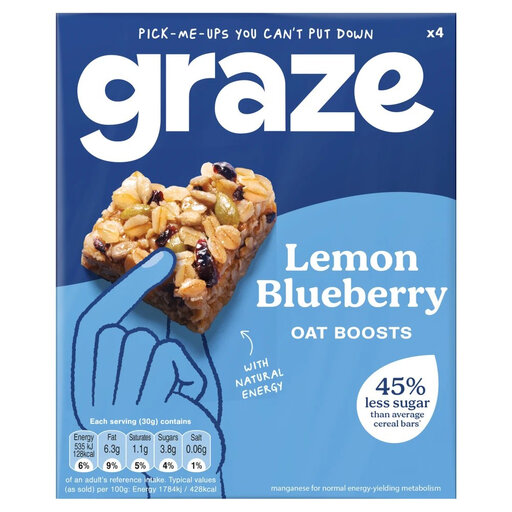 No image available
The 30 g bar format is an option when you want a smaller accompaniment to coffee rather than a 50 g bar. Check the Lemon Blueberry pack’s own nutrition figures and allergen statement; figures for Graze Sticky Toffee Oat Boosts do not describe this flavour.
 No image available
This fruit-and-nut multipack provides 35 g bars as an alternative to an oat flapjack or protein bar. Its product information identifies cashews and almonds and warns of possible other nuts, peanuts and soya. Check total sugars for this flavour on its own pack rather than using figures from nākd. Cocoa Orange.
Choose by the portion and nutrition you want, rather than assuming a protein bar suits every coffee break. Nature Valley describes its Protein Peanut & Chocolate bar as providing around 10 g protein per 40 g bar, but it contains peanuts, soya and milk. A smaller 30 g oat bar is another format to compare if you only want a brief snack.
No. Added sugar and total sugars are different things. For example, Joybuy’s nākd. Cocoa Orange listing declares 15 g sugars per 35 g bar. Read the total-sugars figure for the flavour and portion you are buying.
Eat Natural’s Apple Soft Fruit Bar is one product to consider: the brand says its edible wafer-paper layers are designed to prevent sticky hands. Check the wrapper and portion format of any alternative rather than assuming every fruit bar has the same design.
No. Those labels answer different questions from whether a bar contains, or may have been exposed to, nuts, peanuts, soya or milk. Read the ingredients and precautionary allergen statement on the exact current pack.
Check the product’s current status first. Alpen’s UK availability FAQ names its Apple, Blackberry & Yogurt bars among products no longer made, and its current product page presents mueslis. An archived bar description is therefore not enough to establish what a current pack contains.