Campers keeping track of snack portions
If you are packing bars for several days, compare kcal per bar as well as per 100g. Bars of different sizes are not equivalent portions.


For festival camping, choose snack bars by the calories in the portion you expect to eat, then check the sugars, saturated fat and allergens on the pack. A smaller bar may suit a calorie-focused snack plan, while a larger protein bar involves a different trade-off; compare kcal per bar and per 100g before deciding.
If you are packing bars for several days, compare kcal per bar as well as per 100g. Bars of different sizes are not equivalent portions.
Compare the calories, protein and fibre in the bar you would actually eat, rather than assuming a protein label means a lighter snack.
Check the exact pack’s ingredients and precautionary allergen statements, even when a bar is described as vegan or free from particular ingredients.
Start with the size of the bar you plan to pack, then compare its nutrition information and allergen statement against your needs.
| Priority | What to check | Your needs |
|---|---|---|
| Portion calories | Check kcal per bar, the bar’s weight and kcal per 100g. The NHS explains that nutrition labels give values per 100g and sometimes per portion. | I want to know how many calories are in the whole bar I will eat, especially when comparing a small cereal bar with a larger protein bar. |
| Other nutrition values | Compare total sugars, saturated fat and salt on the nutrition label. Check both per-100g and per-serving figures where given. | A claim such as “no added sugar” is not enough for me to judge total sugars or the rest of the nutrition panel. |
| Protein and fibre | Read protein and fibre per bar alongside its calories and portion weight; do not compare protein figures without checking bar size. | If I want a protein-focused snack between meals, I can decide whether its portion and calorie count fit what I plan to pack. |
| Allergens and storage | Read the current ingredients list and any “may contain” statement. Follow the storage directions on the exact pack. | I need bars that meet my ingredient requirements and can be kept as directed during the trip. |
A 30g bar and a 40g bar are different portions, so the lower per-bar figure does not tell you how their energy values compare by weight.
Note kcal per bar for the snack you will eat, and use kcal per 100g for a like-for-like comparison.
nākd Cocoa Delight is described by its maker as having no added sugar, but its label gives 15g total sugars per 35g bar. The two statements measure different things.
Check the “of which sugars” figure, along with saturated fat and salt, rather than relying on ingredients or front-of-pack wording alone.
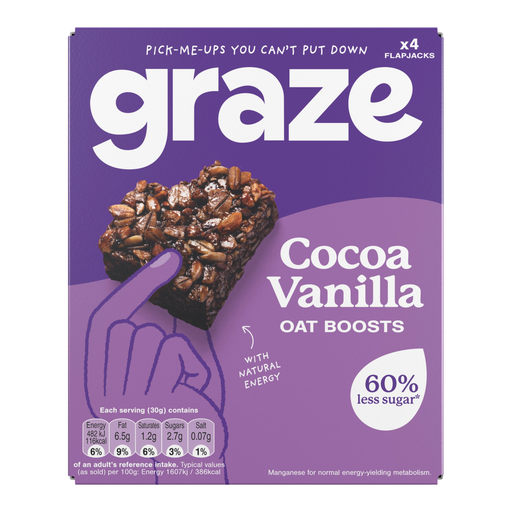
Nature Valley UK lists 196 kcal, around 10g protein and around 4g fibre for its Protein Peanut & Chocolate 40g bar. By comparison, Waitrose & Partners lists 116 kcal for a 30g Graze Cocoa Vanilla Oat Boost; the portions differ.
Decide whether you want the protein and fibre in the larger bar, then account for its full portion.
A bar can have ingredients that appear suitable while carrying a “may contain” warning relevant to your requirements.
Read the current pack before travelling and choose another bar if its ingredient or precautionary information does not meet your needs.
These examples illustrate label details worth checking; nutrition and allergens depend on the exact bar and variant.
Graze’s Cocoa Vanilla Oat Boost is an example of a portioned oat bar. Waitrose & Partners lists 116 kcal for its 30g bar.
The brand’s Cocoa Delight fruit-and-nut bar provides 138 kcal per 35g bar, according to its product page.
Nature Valley UK lists its Protein Peanut & Chocolate bar as a 40g option with around 10g protein, around 4g fibre and 196 kcal per bar.
Eat Natural’s protein-bar range includes varieties made with nuts and seeds.
These options cover smaller cereal and fruit-and-nut bars alongside protein-focused bars for festival packing. Check the current pack for nutrition, ingredients and storage directions before choosing.
 No image available
The 21.5g bar is a smaller portion to consider when planning individual festival snacks. Check its per-bar nutrition and ingredients on the current pack, particularly if you need to avoid wheat, barley, oats, milk or soya.
 No image available
This oat-square pack provides 30g bars for portion-by-portion planning. Check this Protein Bites variant’s own nutrition and allergen information rather than using figures for Graze Cocoa Vanilla Oat Boost.
 No image available
These 35g fruit-and-nut bars offer another portion size to compare with cereal and protein bars. If nuts or total sugars affect your choice, read the figures and allergen statement for this Blueberry Muffin variant.
 No image available
Consider this 40g bar if protein is part of your snack decision, but compare the exact pack’s calories with smaller bars before packing several. Check the peanut, soy and milk allergen information.
 No image available
This 50g protein-bar portion is larger than the smaller cereal bars shown here. Compare its per-bar calories and ingredients on the current pack if you are choosing between portion size and a protein-focused snack.
Check kcal for the whole bar you expect to eat, then compare kcal per 100g to account for differences in bar weight. The NHS explains that nutrition information is given per 100g and sometimes per portion.
No. nākd lists Cocoa Delight as having no added sugar, while its nutrition information gives 15g total sugars per 35g bar. Read the “of which sugars” line for the exact product.
Yes. Nature Valley UK lists 196 kcal for its 40g Protein Peanut & Chocolate bar, while Waitrose & Partners lists 116 kcal for a 30g Graze Cocoa Vanilla Oat Boost. Compare the portions as well as the protein and fibre figures before deciding.
Read the ingredients and precautionary allergen statements on the current pack. The Food Standards Agency says the 14 allergens must be emphasised in the ingredients list of pre-packed food; an older online description should not replace the pack check.
Follow the storage directions for the exact product and protect its packaging from damage. The Waitrose & Partners listing for Graze Cocoa Vanilla Oat Boost says to store it in a cool, dry place; do not assume every bar has identical instructions.