What should you compare?
Start with the nutrition values for the amount you would actually eat, then use claims on the front of the pack to decide what else to inspect—not as a substitute for the full label.
| Priority |
What to check |
Your needs |
| Total carbohydrate |
Find total carbohydrate per bar, not only sugars. Check whether the nutrition values refer to one bar or another stated portion. |
I count carbohydrate and need to know how this whole bar fits into my own plan. |
| Calories and portion |
Compare calories per bar; use per 100g values when comparing bars of different sizes. Check how many bars are in a pack. |
A smaller snack may suit what I am looking for, but I still want to compare the portion I would eat. |
| Sugars and saturated fat |
Read both values alongside total carbohydrate. In its November 2025 UK supermarket snack-bar review, Action on Sugar reported that 37% of bars would be high in sugars and 55% high in saturated fat under voluntary front-of-pack traffic-light criteria; these are proportions of products, not shoppers. |
I do not want a reduced-sugar claim or front-of-pack label to stand in for the full nutrition panel. |
| Fibre and protein |
Compare the declared amounts per bar if either matters to you, then check carbohydrate, calories and sugars on the same portion basis. |
I may prefer an oat bar or a protein-labelled bar, without assuming either label tells me its carbohydrate total. |
| Ingredients and allergens |
Read the current ingredients list and highlighted allergens, including any relevant nuts, peanuts, milk, soya or gluten-containing cereals. Check what a “no added sugar” claim refers to. |
If I avoid an ingredient, I need information for this exact variant—not just a claim about the brand’s range. |
Brand ranges to consider
A brand’s range can help you find a format to compare, but the nutrition and ingredients of the exact bar determine whether it meets your requirements.
Graze
Graze offers oat-based flapjacks and other snack formats, including its Oat Boost range.
- An oat-based range to consider if that is the format you prefer.
- Graze makes a reduced-sugar claim for Oat Boost; it does not establish the total carbohydrate or calories of every flavour.
Nature Valley
Nature Valley lists oat, nut and protein-labelled bars in its UK range.
- Different formats allow comparison by declared portion and nutrients.
- A protein or fibre label does not tell you the exact bar’s total carbohydrate or calories.
Alpen
Alpen is a cereal brand whose older bar listings may still be encountered when comparing snack bars.
- Its official product information can help identify a historical variant.
- Alpen lists several former bars as no longer made, including Alpen Light Chocolate & Orange; do not apply an old listing’s details to a different current product.
Eat Natural
Eat Natural lists cereal, protein, and fruit-and-nut bars, including vegan and gluten-free options.
- The range offers several ingredient and bar formats to compare.
- Vegan or gluten-free availability does not establish the calories or carbohydrate in a particular bar.
Nakd
Nakd describes its fruit-and-nut bars as containing no added sugar or syrups.
- An option to examine if avoiding added sugar is an ingredient preference.
- Diabetes UK notes that fruit-based cereal bars can still contain carbohydrate, including naturally occurring fruit sugars.
Trek
Trek protein flapjacks are an oat-based, protein-labelled snack format.
- A format to consider if you want to compare declared protein alongside other nutrients.
- Check total carbohydrate and the other nutrition values on the exact variant’s current pack.
Joybuy snack-bar options
These listings cover Graze oat-based bars and Nature Valley peanut-and-chocolate protein bars. Their pack sizes help identify the variants; check each current pack’s nutrition and ingredients before deciding which fits your requirements.
 No image available
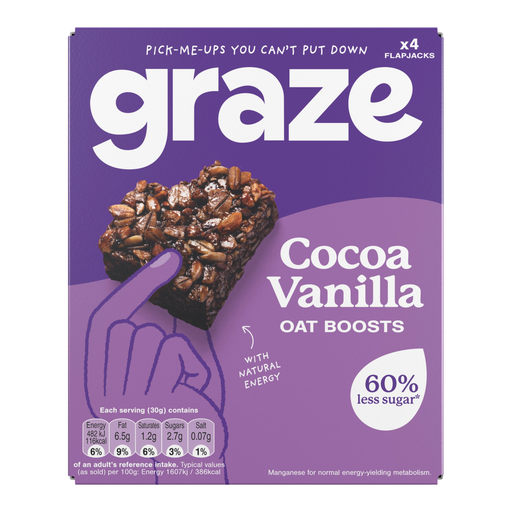
Graze Protein Bites Cocoa, Vanilla Oat Squares, 4 x 30g
The 30g bar size gives you a defined portion for comparing calories and total carbohydrate per bar. Check the current pack’s nutrition and allergen information.
View on Joybuy
 No image available
Nature Valley Protein Peanut & Chocolate Cereal Bars, 8 x 40g
If you prefer a protein-labelled cereal bar, compare the nutrition panel for one 40g bar rather than relying on the word “protein”. Check the exact variant’s ingredients for allergens.
View on Joybuy
 No image available
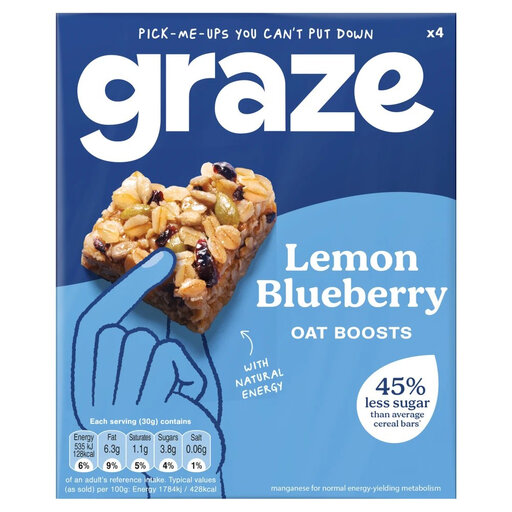
Graze Oat Boosts Lemon Blueberry, 4 x 30g
This oat-based variant comes as four 30g bars. Compare total carbohydrate and calories for one bar, as well as its sugars and ingredients, before relying on a reduced-sugar range claim.
View on Joybuy
 No image available
Nature Valley Protein Peanut & Chocolate Bar, 4 x 40g
This four-pack has a stated 40g bar size. Check its own nutrition panel—including total carbohydrate, sugars and saturated fat—rather than assuming it matches the other Nature Valley pack listed here.
View on Joybuy
 No image available
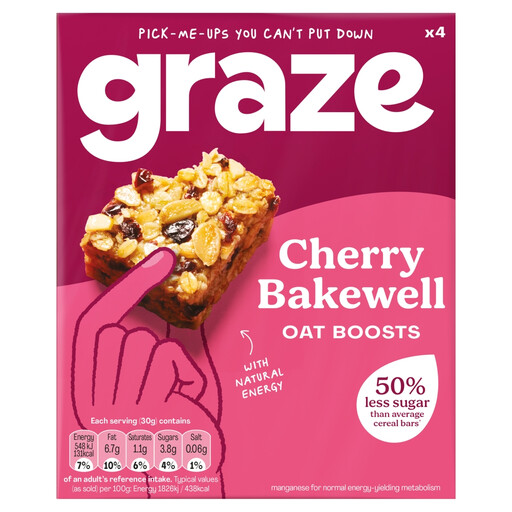
Graze Oat Boosts Cherry Bakewell, 4 x 30g
Use the declared 30g bar size when comparing this Cherry Bakewell variant with other bars. Check total carbohydrate separately from sugars, and read the current ingredients and allergen information.
View on Joybuy
Questions about snack bars
Is a lower-calorie snack bar automatically suitable for someone managing diabetes?
No. Calories alone do not show total carbohydrate, which Diabetes UK advises checking on the pack. Compare the amount in the bar you would eat with your own plan, then consider portion size and the rest of the nutrition panel.
Is there one carbohydrate limit that suits everyone?
No single snack-bar figure suits every diabetes plan. Diabetes UK says snack needs vary with factors including diabetes type, insulin programme and activity. Check total carbohydrate per bar against the guidance you use for your own meals and snacks.
Does “no added sugar” mean a bar is low in carbohydrate?
No. Nakd says its fruit-and-nut bars contain no added sugar or syrups, but fruit ingredients can still contribute sugars and carbohydrate. Read the total carbohydrate figure per bar as well as the ingredients list.
Can an everyday snack bar replace my hypo treatment?
Do not assume that a bar selected for everyday snacking is your hypo treatment. Diabetes UK advises people at risk of hypos to keep their hypo treatment with them; follow the treatment plan given by your diabetes team.
What allergen information should I check on a UK pre-packed bar?
Check the ingredients list on the current pack. GOV.UK states that allergens among the 14 required to be declared must be emphasised in the ingredients list of pre-packed food. Check the exact variant for ingredients relevant to you, such as nuts, peanuts, milk, soya or gluten-containing cereals.


