Day hikers packing pocket snacks
Compare the portion in each bar with the length of your walk. A small bar can be a top-up, while a larger flapjack or nut bar offers a more substantial single portion.


For a short walk, a small bar may be enough as a pocket snack; for a longer or hillier hike, compare the energy in each bar and pack it as part of your wider food plan. Check protein and fibre per serving if they matter to you, and read the exact variant’s ingredients and allergen statements rather than relying on an “energy”, vegan or gluten-free label alone.
Compare the portion in each bar with the length of your walk. A small bar can be a top-up, while a larger flapjack or nut bar offers a more substantial single portion.
Look for figures per bar, not just a protein or energy description on the front of the pack. Serving sizes differ between products.
Check the chosen flavour’s ingredients and allergen warnings. Vegan and gluten-free descriptions do not establish that a bar is free from nuts, peanuts, soya or other allergens.
Start with the size of the portion you will carry, then compare its label with your ingredient and dietary requirements.
| Priority | What to check | Your needs |
|---|---|---|
| Portion size | Compare the bar’s weight and energy per bar, rather than the multipack total. Check whether the bars are separately wrapped if you plan to distribute them through a hike. | For a short walk, I might want a small pocket snack. On a longer route, I would plan enough food for the day rather than count on one bar. |
| Protein and fibre | Read the grams of protein and fibre for the stated serving size. Compare bars on the same per-bar basis before choosing a format. | If protein or fibre is important to me, I want the figures for the bar I will actually pack, not a claim about the product range. |
| Ingredients and allergens | Read the exact variant’s ingredients, highlighted allergens and any “may contain” statement. Check these again before sharing bars. | I need a snack that fits my dietary requirements and is suitable for anyone who might take one from the shared bag. |
| Bar format | Compare the ingredients and portion nutrition of oat flapjacks, nut bars and fruit-and-nut bars. Do not use texture or “energy” wording as a substitute for the label. | I might prefer a particular texture while walking, but I still need its portion and ingredients to work for my trip. |
The examples cited by Sainsbury’s, Eat Natural UK, Tesco and Weetabix Cereals range from 19 g to 50 g per bar. Those are different-sized portions, even though each is sold as a snack bar.
Compare energy and other nutrition information for one bar, then plan the rest of your food around the route rather than treating a single small bar as a day’s provision.
The nākd fruit-and-nut range contains nuts. Sainsbury’s lists the cited Trek Smooth Lemon flapjack as gluten-free and vegan, but says it may contain peanuts, nuts and milk.
Use a dietary description to narrow the options, then check the exact pack’s ingredients and precautionary warnings before buying or sharing it.
Eat Natural UK lists peanuts and almonds as major ingredients in its cited cocoa bar. A protein-bar description therefore cannot establish suitability for someone avoiding those ingredients.
Check the chosen variant’s allergen statement, particularly when packing food for someone else.
These examples illustrate different portions and ingredient profiles; the figures and dietary descriptions apply to the named products or ranges, not every bar from each brand.
Oat Boost flapjacks offer a smaller oat-based portion for a hiking bag.
The Protein range is relevant when stated protein and fibre figures are part of the choice.
Alpen Light includes small multigrain bars for a light pocket snack.
Its peanut, almond and cocoa bar is a nut-led, 40 g portion.
Its fruit-and-nut bars offer a different ingredient profile from oat flapjacks and cereal bars.
Protein flapjacks include larger oat-based portions for hikers comparing per-bar energy and protein.
These oat flapjack and nut-bar multipacks offer portions to consider for a hiking bag. Compare each chosen flavour’s nutrition and allergen label with your route and dietary requirements.
 No image available
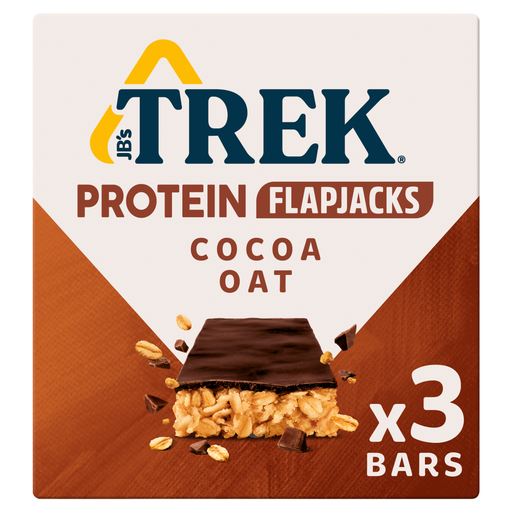
This cocoa oat flapjack multipack contains three 50 g bars. Compare the energy and ingredients on the chosen pack if you are planning snacks for a longer walk.
 No image available
This nut-bar multipack contains four 40 g bars. If you are choosing it for protein or fibre, compare this flavour’s per-bar figures and check its allergen statement.
 No image available
This salted caramel flapjack multipack contains three 50 g bars. Check the nutrition and allergen information for this flavour before adding it to a hiking-food bag.
 No image available
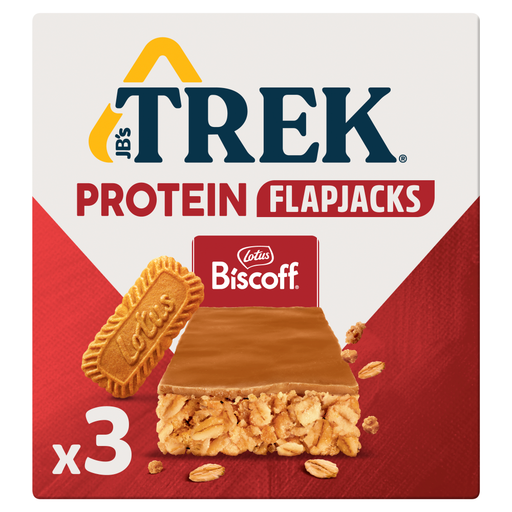
This Biscoff flapjack multipack contains three 50 g bars. Read this variant’s ingredients and per-bar nutrition if you are comparing it with other Trek flavours.
 No image available
This peanut and chocolate multipack contains four 40 g bars. Nature Valley UK lists protein and fibre figures for its Protein Peanut & Chocolate bars; check this pack’s per-bar label and allergens before choosing it.
Plan bars as part of the food and water you will carry for the route, rather than choosing a number from the multipack alone. Compare the energy in each bar: a small portion may be a top-up on a short walk, while a longer or hillier outing calls for a broader food plan.
No: protein is one figure to compare alongside portion size, energy and ingredients. Nature Valley UK lists 10 g protein and 4 g fibre for its Protein Peanut & Chocolate bars, while Sainsbury’s lists 230 kcal and 9.5 g protein per 50 g Trek Smooth Lemon flapjack; those figures describe different products and servings.
No. Sainsbury’s lists the cited Trek Smooth Lemon flapjack as gluten-free but says it may contain peanuts, nuts and milk; Eat Natural UK lists peanuts and almonds in its cited gluten-free cocoa bar. Read the exact product’s ingredients and precautionary warnings.
Check the serving size, nutrition per bar, full ingredients, emphasised allergens and any “may contain” wording on the pack you intend to buy. That is particularly important when flavours within a range have different ingredients or when someone else will share your snacks.
A multipack may suit you if you will use the remaining bars on later outings. Check the number of bars and each bar’s weight before buying: the cited Alpen Light Chocolate & Fudge bar is 19 g, while the cited Trek Smooth Lemon flapjack is 50 g, according to Weetabix Cereals and Sainsbury’s respectively.