Households buying several portions at once
If you are stocking a shared cupboard, compare fat per 100g before deciding whether a multipack’s portion size and number of servings suit your household.


For a large family shop, compare snack bars by total fat per 100g, then check the fat per bar or twin-bar portion, the pack size and the current allergen declaration. Of five representative bars compared using nākd., Nature Valley, TREK, Graze and Eat Natural product information, nākd. Cocoa Delight has the lowest total fat at 14g per 100g. None of the five meets the maximum of 3g per 100g for a low-fat claim on solid food set out in Business Companion’s February 2025 guidance.
If you are stocking a shared cupboard, compare fat per 100g before deciding whether a multipack’s portion size and number of servings suit your household.
A bar that suits one person may not suit everyone. Check the exact pack for ingredients, allergen warnings and any dietary claims before choosing a snack to share.
Protein and fat are separate figures on the nutrition label. If reducing fat is also a priority, compare both total and saturated fat rather than choosing by the protein description alone.
Start with comparable nutrition figures, then work out what each person would eat and whether the exact pack suits everyone who might take a bar.
| Priority | What to check | Your needs |
|---|---|---|
| Total and saturated fat | Compare both figures per 100g across bars of different sizes. Business Companion’s February 2025 guidance permits a low-fat claim on solid food only at no more than 3g total fat per 100g; being lower in fat than another bar does not meet that threshold. | I want to compare bars on the same basis, without mistaking a sugar, protein or wholegrain description for a statement about fat. |
| Portion and pack format | Check the weight of one bar, whether a stated portion contains two bars, and how many portions the pack provides. Read the per-portion nutrition figure for the amount likely to be eaten. | When I stock up for several people, I need to know whether the pack contains separate bars or twin-wrapped portions. |
| Ingredients and allergens | Read the current ingredients, declared allergens and any may-contain warning on the exact variant. Check vegan or free-from wording separately; neither replaces the allergen declaration. | One shared multipack needs to suit the people who will eat it, or I will need another snack for those with different requirements. |
| Sugars and protein | Read sugars per 100g and per bar alongside fat. If protein matters, check its declared amount separately; neither a protein figure nor a less-sugar claim establishes that a bar is lower in fat. | I may care about sugars or protein as well as fat, but I want to make each comparison using the relevant line of the nutrition table. |
“Less sugar” and “no added sugar” describe different things from total fat. For solid foods, Business Companion’s February 2025 guidance sets the low-fat claim limit at no more than 3g fat per 100g.
Check the fat and saturated-fat lines themselves before using front-of-pack wording to narrow your choice.
A 30g flapjack, a 35g fruit bar and a 50g oat bar are different-sized portions. A per-bar figure tells you about that portion, but does not put the products on an equal-weight basis.
Compare per 100g first, then use the per-bar or twin-bar figure for the amount someone will actually eat.
Eat Natural UK lists 36.3g fat and 14.1g saturated fat per 100g for its Dark Chocolate & Peanut Protein Bar. Nature Valley UK lists 29.5g fat per 100g for its Salted Caramel Nut Protein Bar.
If protein is important to you, compare its figure and the fat figures independently on the exact product.
The bars discussed here have differing ingredient and may-contain declarations. A pack format that is convenient for stocking up does not make every bar suitable for every member of the household.
Check the current pack’s allergen declaration before ordering a quantity intended for several people.
If the chosen bar does not suit everyone, keeping a separate snack adds to cupboard planning.
Nutrition and allergens vary by recipe, so use these examples to identify which figures to compare on the particular bar you intend to buy.
Fruit-and-nut bars, including Cocoa Delight.
Crunchy oat bars and protein bars, including an Oats & Honey family pack.
Oat-based protein flapjacks, including Original Oat.
Oat Boost flapjacks, including Cocoa & Vanilla.
Nut-led snack and protein bars, including Dark Chocolate & Peanut.
A cereal brand whose historical bar names may still appear in shopping searches.
These fruit, cereal and oat bars offer different pack formats for a family shop. Compare the current fat and saturated-fat figures on each listing or pack before treating any of them as a lower-fat choice.
 No image available
The four-bar pack is one way to stock individual fruit-and-nut snacks. Check the current fat and sugars figures alongside the nut ingredients and may-contain warning before choosing it for a shared cupboard.
 No image available
This six-pack contains 21.5g snacks. Compare its per-100g fat figure with other bars before considering the portion size, and check the current pack for wheat, barley, oats, milk and soya if those ingredients matter in your household.
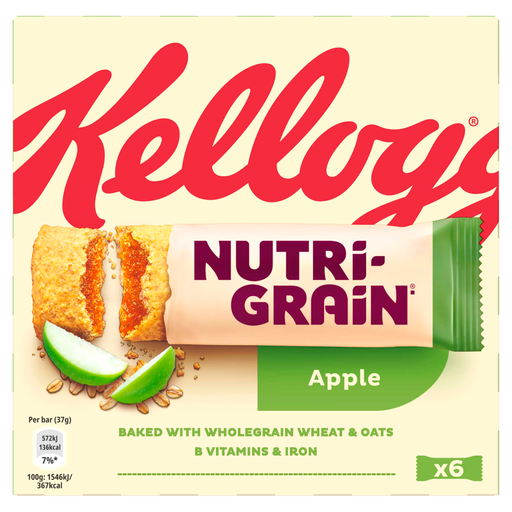 No image available
The Apple six-pack provides another format for stocking cereal bars. Read its fat and sugars figures separately, and check the current allergen declaration before putting it in a shared snack cupboard.
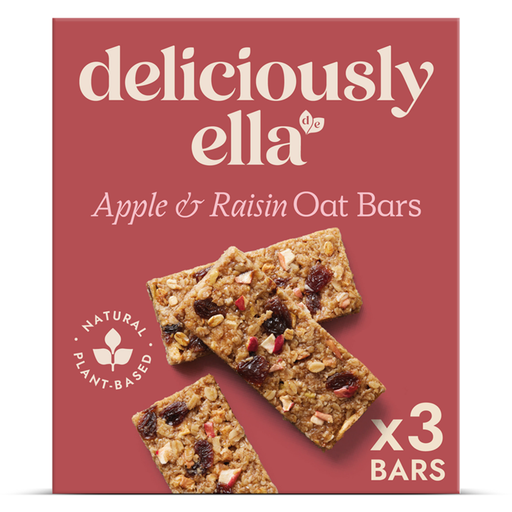 No image available
Each oat bar in this three-pack is 50g. If that portion format suits your household, compare its total and saturated fat with smaller bars on a per-100g basis and check the current may-contain warning.
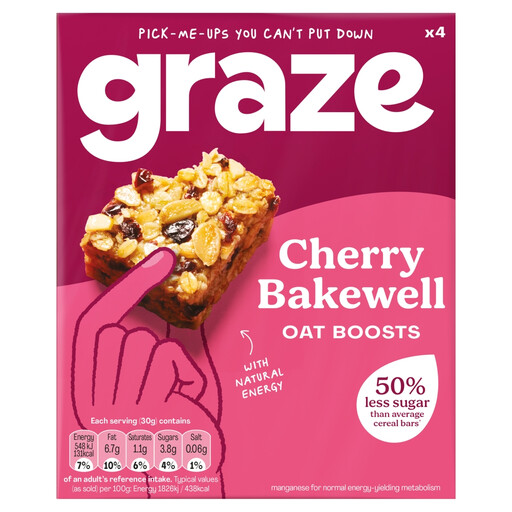 No image available
This four-pack contains 30g oat bars. Check total fat per 100g before comparing what one bar provides, and review the current ingredients and allergen warning if the pack will be shared.
For a solid food, Business Companion’s February 2025 guidance permits a low-fat claim only when the product has no more than 3g fat per 100g. The five representative bars compared above range from 14g to 36.3g per 100g according to their brand and retailer nutrition declarations, so none meets that threshold.
No. Read the total-fat figure separately: nākd. lists 14g fat per 100g for Cocoa Delight, while Sainsbury’s lists 22g per 100g for Graze Cocoa & Vanilla Oat Boost, despite their respective sugar-related descriptions.
Use per 100g to compare differently sized bars on the same weight basis, then check the figure for the portion someone will actually eat. A stated portion may be a single bar or a twin-bar serving.
No. A pack’s size tells you about its format, not its nutrition. Nature Valley lists 18.1g fat per 100g for its Crunchy Oats & Honey Family Pack and 7.6g per 42g twin-bar portion; check both figures against the household’s intended choice.
Check the exact current pack’s ingredients, declared allergens and may-contain warnings, as well as how its bars are wrapped. Vegan or gluten-free wording on a particular variety does not replace an allergen check for each person who may eat it.