Who is the grab bag for?
A wrapped bar is convenient to carry, but its place in training depends on timing, the portion you will eat and whether you tolerate it while running.
Runners keeping snacks close to hand
A bar can bridge a gap between meals on a workday or around a training session. If you also want to carry it on a long run, check its carbohydrate per portion against your hourly plan rather than treating everyday convenience as proof that it works as race fuel.
Runners cautious about stomach discomfort
Check the actual portion, fibre and fat before a hard run, and try the bar at the timing and intensity you intend to use. Sports Dietitians Australia advises a low-fibre meal 2–4 hours before running and only a light snack or fluids in the final hour to reduce symptoms.
Runners checking dietary requirements
Choose by the exact flavour and pack, not a brand-wide description. Fruit-and-nut, oat and protein ranges differ in their ingredients and may-contain statements; read each label when putting together a mixed grab bag.
What should you check first?
Decide whether the bar is for a snack around training, for after a run or for eating during one. Then compare the labelled portion with what you can carry, chew and tolerate at that time.
Carbohydrate-led bars
Consider for: A familiar snack before an easier session or between meals.
Keep in mind: One portion may contribute carbohydrate without covering a long run’s hourly plan, and its fibre or fat may matter close to running.
Protein-focused bars
Consider for: An after-run or everyday snack when a hard run is not imminent.
Keep in mind: A protein figure does not tell you how much carbohydrate the bar contributes during a run.
Planned in-run fuel
Consider for: Long runs where you need to plan carbohydrate intake by the hour; drinks, gels or chews are alternatives to trial.
Keep in mind: A 2023 review in Nutrients notes that some foods are impractical during exercise because of the amount required, transport or gastrointestinal discomfort. Practise with whichever format you choose.
| Priority |
What to check |
Your needs |
| Carbohydrate per portion |
Read the carbohydrate figure and serving definition: one bar and a two-bar serving are not interchangeable. For an in-run plan, compare what you would actually eat with the hourly amounts in World Athletics’ endurance guidance. |
I want to know what one pack contributes before relying on it during a long run. Nature Valley UK lists 27 g of carbohydrate for a 42 g, two-bar Crunchy Oats & Honey serving; Tesco lists 20 g for one 35 g nākd Berry Delight bar. |
| Timing and tolerance |
Check fibre and fat per portion, then try the bar at the intended time and running intensity. Consider whether you can comfortably unwrap, chew and carry the amount your plan requires. |
If my stomach is unsettled on hard runs, I want to test a familiar portion rather than assume a bar that works at my desk will feel the same at race pace. |
| After-run snacks |
Compare protein with carbohydrate, fat and portion size; a protein claim alone does not establish a bar’s role in a fuelling plan. |
A protein-containing bar could be useful when my next meal is delayed, but I would choose separately what to carry for carbohydrate during a long run. |
| Ingredients and labelling |
Check ingredients, allergens and may-contain statements for the exact flavour. Read carbohydrate and total sugars per serving as well as any front-of-pack wording. |
For a shared grab bag, I need every selected flavour to meet the relevant dietary requirements; a claim on one bar does not cover the rest of the range. |
Which brands are relevant?
These ranges offer different kinds of snack, not interchangeable marathon fuel. The product and portion details below refer to the named examples; check the label of the flavour you buy.
Nature Valley
The UK range includes crunchy oat bars and protein bars, so the choice depends on whether you want a carbohydrate-led snack or a protein-focused one.
- Nature Valley UK lists 27 g of carbohydrate for a labelled 42 g, two-bar Crunchy Oats & Honey serving.
- That serving also lists 7.6 g of fat. Do not transfer its nutrition figures to the brand’s protein bars.
Graze
Oat Boost flapjacks are an option to examine for ordinary portable snacking around training.
- Graze describes its Oat Boost flapjacks as high in fibre and made with wholegrain oats.
- If you are cautious about fibre close to a hard run, check the particular bar and trial your timing rather than assuming every flapjack will suit you.
nākd.
Its fruit-and-nut bars offer a different ingredient format from oat flapjacks and protein bars.
- nākd. describes its fruit-and-nut range as vegan and free from gluten, wheat and dairy; Tesco lists 20 g of carbohydrate per 35 g Berry Delight bar.
- Tesco also lists 17 g of sugars and 3.0 g of fibre for that bar. Check the exact flavour’s ingredients and allergen statement.
Trek
Protein oat flapjacks are worth considering as an after-run or everyday snack rather than selecting by the word “protein” for in-run fuel.
- Myprotein UK lists 21.1 g of carbohydrate and 10.2 g of protein per 50 g Trek Original Oat Protein Flapjack.
- The same serving lists 9.8 g of fat. Those figures describe Original Oat, not other Trek flavours or pack variants.
Eat Natural
The protein range includes nut-, seed- and fruit-based bars for an everyday or after-run snack occasion.
- Tesco lists 10.4 g of protein per 40 g Peanuts, Almonds & Salted Caramel bar.
- That bar also lists 12.5 g of carbohydrate and 11.4 g of fat; its nut, soya and milk-related ingredients require a product-level allergen check.
Alpen
Check the particular bar rather than treating the Alpen name as one consistent snack-bar option.
- Alpen’s UK FAQ says several named Alpen bars are no longer made. Confirm the exact product and its current label before putting it on a grab-bag list.
Joybuy bars for everyday and after-run snacks
These Trek flapjacks and Nature Valley protein bars fit the protein-focused snack side of the decision. Compare each exact pack and flavour for dietary requirements; this selection does not replace a separate carbohydrate plan for a long run.
 Image unavailable
Trek Salted Caramel Protein Flapjacks, 3 × 50 g
Consider this protein flapjack for an after-run or everyday snack rather than assuming it suits eating during a hard run. The pack contains three 50 g bars; check the current label for ingredients and allergens.
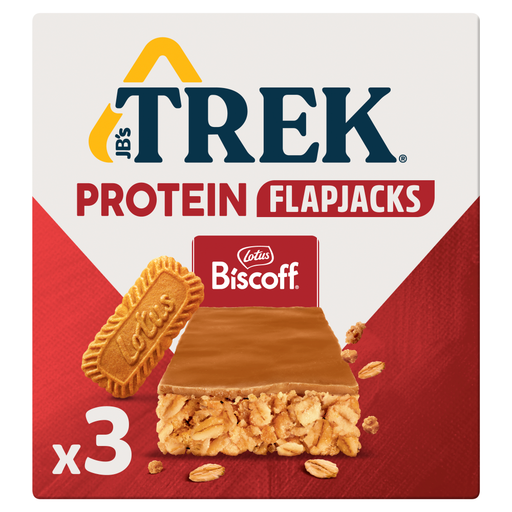 Image unavailable
Trek Biscoff Flapjack, 3 × 50 g
This is another flapjack to consider for an after-run or everyday snack. The pack contains three 50 g bars; check the Biscoff flavour’s own ingredients and allergen label rather than relying on information for another Trek bar.
 Image unavailable
Trek High Protein Flapjack Cocoa Oat, 16 × 50 g
The 16-bar pack offers Cocoa Oat flapjacks for planned snack occasions. If you intend to carry one on a run, check its own carbohydrate, fibre and fat per 50 g bar and trial it in training; figures for Trek Original Oat describe a different flavour.
 Image unavailable
Nature Valley Protein Peanut & Chocolate Cereal Bars, 8 × 40 g
Choose this peanut-and-chocolate protein-bar format for a snack occasion, not on the assumption that it matches the carbohydrate in Nature Valley’s Crunchy Oats & Honey serving. Check the current label carefully if peanuts, soya, milk or other nuts are a concern.
 Image unavailable
Nature Valley Protein Salted Caramel Nut Bar, 4 × 40 g
This four-bar pack is a nut-and-protein snack option for an after-run or everyday grab bag. Check the Salted Caramel Nut flavour’s current carbohydrate figure and allergen statement before choosing it for a particular runner or training session.
Common questions
Can ordinary snack bars be my only marathon race fuel?
Do not rely on them without checking the full hourly carbohydrate plan and testing it on long runs. World Athletics lists 30–60 g of carbohydrate per hour for events of 1–2.5 hours and up to 90 g per hour for longer events. Bars can contribute, but a 2023 review in Nutrients notes that the quantity needed, carrying food and gastrointestinal comfort can make some foods impractical during exercise.
Should I skip a high-fibre bar before a hard run?
Treat it as a timing and tolerance question, particularly if you are prone to stomach symptoms. Sports Dietitians Australia advises a low-fibre meal 2–4 hours before running and only a light snack or fluids in the final hour to reduce symptoms. Check fibre per actual portion and trial the bar at the planned time and intensity.
Does “no added sugar” mean a bar contains little sugar?
No. It does not describe the amount of total sugars in the finished bar. For example, nākd. describes its fruit-and-nut range as having no added sugar, while Tesco lists 17 g of sugars per 35 g Berry Delight bar. Read total sugars, carbohydrate and portion size together.
How should I check a bar for allergens and nutrition?
Read the current packaging for the exact flavour, including its ingredients, allergen and may-contain statements, and nutrition figures per portion. The NHS explains how to use food labels; an older listing or another flavour’s details should not stand in for the pack you are putting in the grab bag.


