Parents packing snacks for days out
If a bar needs to travel in a bag, its pack size matters alongside the calories, sugars and saturated fat in the portion your child will eat.


For a half-term snack bar, compare the calories and sugars in the portion that will actually be eaten, rather than choosing by claims such as ‘protein’ or ‘no added sugar’. Tesco lists Graze Cocoa Vanilla Oat Boosts at 116 kcal per 30g boost, while nākd lists its Blueberry Muffin bar at 131 kcal per 35g but with 17g sugars; portion size, the current label and any relevant allergens all affect the choice.
If a bar needs to travel in a bag, its pack size matters alongside the calories, sugars and saturated fat in the portion your child will eat.
A smaller bar can have fewer calories per pack without having fewer per 100g. Check both figures when comparing bars of different sizes.
Check the current ingredients and ‘may contain’ statement against the recipient’s allergy requirements. A vegan, gluten-free or dairy-free claim does not address every other allergen.
Start with the portion likely to be eaten, then compare the nutrition label and ingredients before deciding whether a bar suits the outing.
| Priority | What to check | Your needs |
|---|---|---|
| Portion and calories | Check kcal per bar or serving, how many bars are in the pack, and kcal per 100g when portion sizes differ. | I want to know what the portion we will actually eat contains, rather than compare unlike pack sizes. |
| Sugars and saturated fat | Read the amounts per serving and the traffic-light colours where shown. ‘No added sugar’ does not describe total sugars. | A fruit-based or protein-labelled bar may appeal to me, but I still want to compare its full nutrition label. |
| Allergens | Read the current ingredient list and precautionary ‘may contain’ wording for the particular product and variant. | Someone eating the bar has an allergy or dietary restriction, so a broad front-of-pack claim is not enough for my choice. |
| Practicality | Consider the bar’s size and packaging, and whether a non-bar snack would work for the same trip. | For a day out, I need something practical to carry; at home, I may not need a packaged bar. |
Those descriptions do not establish the calories or total sugars in a bar. According to nākd, its Blueberry Muffin bar has no added sugar but contains 17g sugars per 35g bar.
Compare kcal, sugars, saturated fat and serving size on the packs you are considering.
The NHS advises giving dried fruit such as raisins to toddlers with meals rather than between meals because its sugars can cause tooth decay.
For a toddler, check whether a date- or raisin-based bar belongs with a meal, or choose a different between-meal snack.
A bar described as vegan or gluten-free can still contain nuts or carry a precautionary warning. The specific product’s ingredients determine whether it can be considered for an allergy-managed household.
Read the current pack each time and follow the recipient’s individual allergy-management advice.
Alpen’s official FAQ lists Alpen Light Bars Chocolate & Orange among products no longer being made. An older nutrition panel may therefore describe a different purchasing choice.
Check the exact product and its current pack label before including an Alpen bar in a comparison.
These examples describe particular bars, not every product made by each brand or the products available on Joybuy.
Cocoa Vanilla Oat Boosts are sold as a pack of four 30g portions.
Blueberry Muffin is a 35g fruit-and-nut bar.
Its Peanut & Chocolate Protein Bar is a different portion and format from a small oat bar.
Cocoa Oat is a 50g oat protein flapjack.
Its Dark Chocolate & Peanut Protein Bar is a 40g nut-and-protein option.
An older Alpen bar name is not enough to identify a current snack-bar option.
These oat, cereal and fruit-and-nut bars offer different pack sizes and ingredients to consider for half-term snacks. Check each current product label for nutrition and allergens before choosing.
 No image available
The 30g bar size makes the labelled serving a useful starting point for a day-out snack comparison. Check the current nutrition and allergen information for this Lemon Blueberry variant.
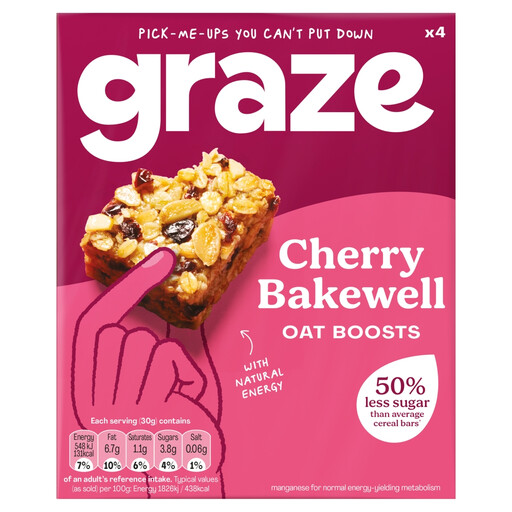 No image available
Another 30g Graze Oat Boosts variant for comparing a single-bar portion. Check this flavour’s own label rather than applying figures from Cocoa Vanilla or Lemon Blueberry.
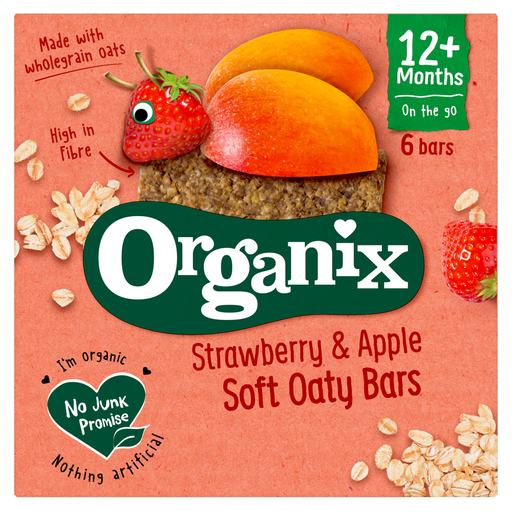 No image available
This 23g bar is labelled for ages 12 months and over. For a toddler, check the current ingredients and nutrition label; NHS advice says dried fruit such as raisins should be given with meals rather than as a between-meal snack.
 No image available
At 21.5g per bar, this has a smaller stated portion than several other products shown here. Compare the current per-bar and per-100g nutrition figures before drawing a calorie comparison.
 No image available
For this 35g fruit-and-nut bar, nākd lists 131 kcal and 17g sugars per bar. Its listed ingredients include cashews and almonds; check the current pack for the full allergen statement.
Compare kcal for the complete portion likely to be eaten, then check per 100g when bars differ in size. For example, Tesco lists Graze Cocoa Vanilla Oat Boosts at 116 kcal per 30g boost, while nākd lists Blueberry Muffin at 131 kcal per 35g bar; those figures alone do not settle the sugar or allergen checks.
No. According to nākd, its Blueberry Muffin bar has 17g sugars per 35g bar despite its no-added-sugar claim. Read total sugars on the nutrition label and the traffic-light information where shown.
Check whether the bar contains dried fruit. The NHS advises giving dried fruit such as raisins to toddlers with meals rather than between meals because its sugars can cause tooth decay; that advice matters when considering bars made with dates or raisins.
Read the current ingredients and any precautionary ‘may contain’ statement for the exact bar against the recipient’s allergy requirements. A vegan, gluten-free or dairy-free description does not establish that a product is free from peanuts, other nuts or soya.
No. NHS Healthier Families recommends fruit and vegetables as children’s snack choices and advises aiming for no more than two packaged snacks a day when using packaged options. A bar may be convenient for a trip, but it need not be the default for every snack.