Parents packing snacks for holiday outings
A wrapped bar can be convenient for a day trip or a busy afternoon. If you are comparing options, check the portion inside the wrapper as well as the figures printed for each bar.


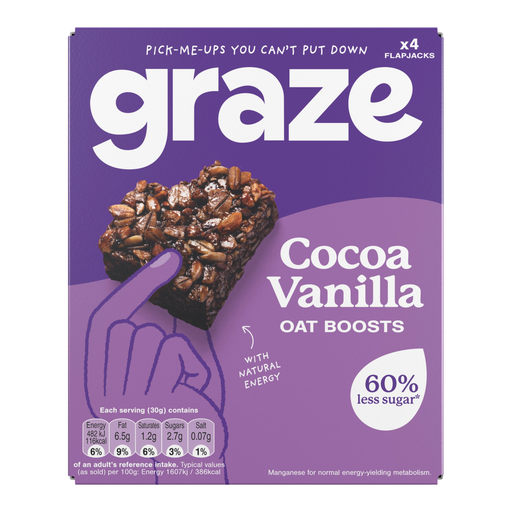
For a lower-calorie packaged snack, compare the energy in the bar a child would actually eat, then check total sugars and allergens rather than relying on claims such as “no added sugar” or “protein”. Tesco lists Graze Cocoa Vanilla Oat Boost at 116 kcal per 30 g bar, while nākd. lists its Blueberry Muffin bar at 131 kcal and 17 g total sugars per 35 g bar. For everyday choice, the NHS favours fruit and vegetables over packaged snacks.
A wrapped bar can be convenient for a day trip or a busy afternoon. If you are comparing options, check the portion inside the wrapper as well as the figures printed for each bar.
Ingredients and precautionary allergen statements matter more than whether a bar looks oat-based or fruit-based. Check the current pack against the child’s requirements and any rules at the setting where it will be eaten.
“No added sugar” does not mean no total sugars, and a protein claim does not establish that a bar is lower in calories. The nutrition panel makes those distinctions clearer.
Start with the likely portion, then compare the nutrition panel and ingredients for bars that suit the child.
| Priority | What to check | Your needs |
|---|---|---|
| Portion energy | Read kcal per bar and check whether a wrapper contains more than one bar. Use per 100 g figures when comparing products of different sizes. | For an outing, I want to know how much is in the portion my child is likely to eat. Tesco lists Graze Cocoa Vanilla Oat Boost at 116 kcal per 30 g bar; nākd. lists Blueberry Muffin at 131 kcal per 35 g bar. |
| Total sugars | Read “of which sugars” per bar alongside any no-added-sugar claim. Check the ingredients to understand what the bar contains. | A no-added-sugar label alone would not answer my question: nākd. lists 17 g total sugars in its 35 g Blueberry Muffin bar. |
| Allergens | Check the current ingredients, highlighted allergens and any “may contain” statement on the exact variant. | If my child needs to avoid an ingredient, I cannot choose by flavour or brand name alone. Joybuy’s Nature Valley Peanut & Chocolate listing, for example, declares peanuts, soya and milk. |
| Snack occasion | Consider the portion alongside meals, and compare protein and fibre figures without treating either as proof that a bar is lower in calories. | For a more substantial snack occasion, I might consider a different type of bar. Nature Valley UK lists about 10 g protein and 196 kcal per 40 g Peanut & Chocolate bar. |
| Bar or another snack | Decide whether a packaged bar is needed for the outing. The NHS favours fruit and vegetables as children’s snacks and advises aiming for no more than two packaged snacks a day. | When I can pack something suitable without relying on a wrapped bar, fruit or vegetables are another option. |
A no-added-sugar or protein claim does not tell you the bar’s energy and total sugars. nākd. lists 17 g total sugars per Blueberry Muffin bar, while Nature Valley UK lists 196 kcal per Peanut & Chocolate protein bar.
Compare the per-bar panel first, then use the ingredients and front-of-pack wording to understand it.
Fruit-and-nut and protein bars can contain ingredients a child must avoid. The Joybuy listing for Nature Valley Peanut & Chocolate, for instance, declares peanuts, soya and milk.
Read the exact pack’s ingredients and precautionary allergen statement each time you change product or variant.
The NHS favours fruit and vegetables for children’s snacks and advises aiming for no more than two packaged snacks a day.
Use a wrapped bar when its convenience is useful, while considering suitable fruit or vegetables for other snack occasions.
Graze Cocoa Vanilla Oat Boost and Graze Protein Bites Cocoa, Vanilla Oat Squares have different product names. The 116 kcal figure Tesco lists for Oat Boost should not be transferred to Protein Bites.
Match the full name, variant and pack size before using a nutrition figure to choose a product.
These examples show why the exact bar and its portion matter more than a brand-wide description.
Graze sells oat-based snacks, including Cocoa Vanilla Oat Boost.
Its Blueberry Muffin fruit-and-nut bar offers an example for comparing a no-added-sugar claim with the nutrition panel.
Its range includes oat bars and a Peanut & Chocolate protein bar.
Its Dark Chocolate & Peanut Protein Bar is a nut-based example to compare with smaller snack bars.
Trek protein flapjacks provide a different portion to consider when comparing snack occasions.
Alpen is a muesli brand, but a familiar former bar name is not enough to identify a current snack.
These oat and cereal bars offer packaged options for school holiday snacks. Compare each exact product’s portion, nutrition and allergen label; the Graze Protein Bites below are not the Cocoa Vanilla Oat Boost used in the earlier calorie comparison.
 No image available
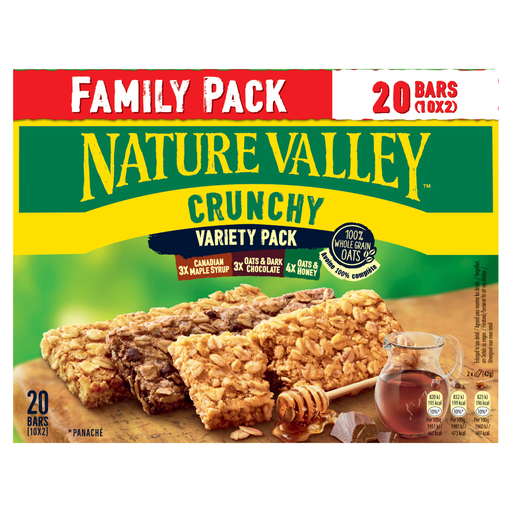
For an outing, check whether the child would eat one crunchy bar or the whole 42 g portion. Read the current wrapper for nutrition and allergen statements.
 No image available
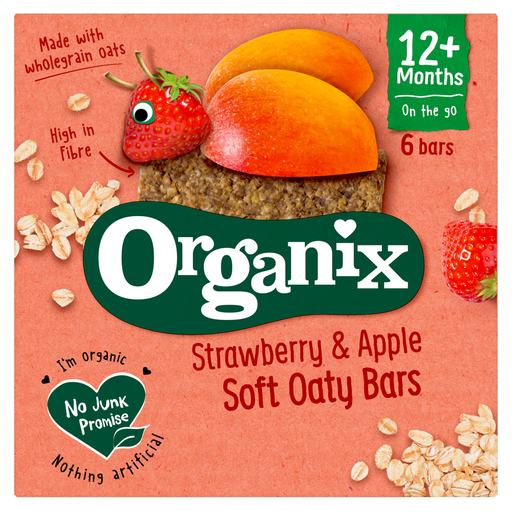
A 23 g soft oat-bar option labelled for ages 12 months and over. Check the pack’s age guidance, ingredients and per-bar nutrition when choosing for a younger child.
 No image available
This listing is for four 30 g oat-square portions. Check this product’s own nutrition and allergens rather than using figures for Graze Cocoa Vanilla Oat Boost.
 No image available
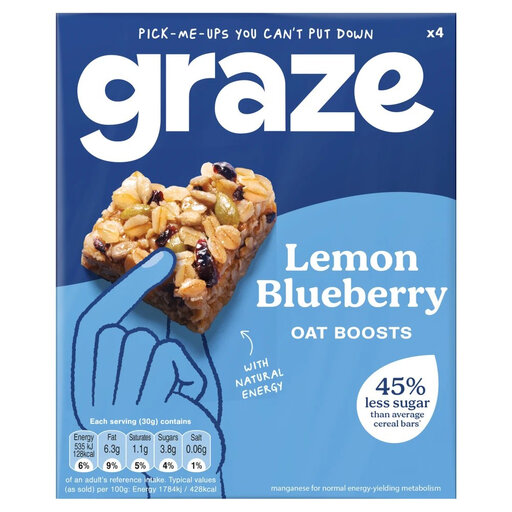
The 30 g Lemon Blueberry variant is another oat-bar portion to consider for packing. Check its own energy, sugars and allergen label; Cocoa Vanilla Oat Boost figures do not describe this flavour.
 No image available
Each listed portion is 21.5 g, smaller than the 30 g and 42 g portions above. Compare both per-bar and per 100 g nutrition, and read the allergen statement before packing it.
Start with kcal for the portion the child is likely to eat, then use per 100 g values to compare bars of different sizes on the same basis. Check whether an individually wrapped portion contains one bar or more.
No. nākd. lists 17 g total sugars per 35 g Blueberry Muffin bar. Read the “of which sugars” figure for the actual portion even when a product carries a no-added-sugar claim.
No. Nature Valley UK lists about 10 g protein but also 196 kcal per 40 g Peanut & Chocolate bar. Compare its portion and ingredients with the alternative you would otherwise pack.
Read the ingredients, declared allergens and any “may contain” statement on the current pack of the exact variant. Joybuy’s Nature Valley Peanut & Chocolate listing declares peanuts, soya and milk; do not assume another bar from the same brand has the same ingredients.
England’s School Food Standards concern food provided by schools, not an ordinary snack packed for a family outing. If a school or holiday club is providing food, check its arrangements and the rules applicable to that setting; the Department for Education says updated standards in England become mandatory for schools in September 2027.