Families sharing holiday lunches
When packing for several children or outings, count the portions as well as the bars. Some family packs group two bars into one wrapped portion, which affects how many separate lunches a pack can cover.


For shared school-holiday lunches, choose a multipack by checking the exact bar’s ingredients and allergen information before settling on pack size or flavour. Then compare how many portions the pack provides and read nutrition both per 100g and for the amount you expect to serve; a twin-bar portion is different from one bar.
When packing for several children or outings, count the portions as well as the bars. Some family packs group two bars into one wrapped portion, which affects how many separate lunches a pack can cover.
Ingredients and may-contain statements need checking on the exact flavour. A bar that works at home may not fit a school, holiday club or childcare provider’s food policy.
Look at the figures for the individual bar or intended portion, alongside its ingredients and other nutrition values. A fibre or protein message alone does not establish whether a bar meets a child’s dietary requirements.
Start with ingredients and any food-setting requirements, then compare the portions and nutrition for the bars you could actually pack.
| Priority | What to check | Your needs |
|---|---|---|
| Ingredients and allergens | Read the exact flavour’s ingredient list, emphasised allergens and may-contain statement. Check the relevant school, club or childcare food policy. | I need a bar that fits the child’s requirements and can be brought into the setting where lunch will be eaten. |
| Pack and portion format | Count wrapped portions separately from individual bars. Check whether a stated serving is one bar or a twin-bar portion, and which flavours the pack contains. | For several lunches, I want enough portions in flavours that will be eaten—not just a large bar count on the outer pack. |
| Nutrition | Use per 100g figures to compare different bar sizes, then check sugars, saturated fat, fibre and protein for the amount likely to be served. | If one or two bars will go into a lunch, I want the nutrition figures to reflect that amount rather than a different serving size. |
| Dietary requirements | Confirm any vegan, gluten-free or dairy-free claim on the exact product. Check its ingredients and allergen information separately; a dietary claim does not answer every allergy question. | A specific dietary requirement matters more to me than a claim made about the brand or another flavour. |
Nutrition differs between products. In its November 2025 review of 458 snack bars from ten major UK retailers, Action on Salt & Sugar classified 64% as ‘less healthy’ under the Government Nutrient Profiling Model and found 37% were high in sugars under UK front-of-pack thresholds. Those figures describe the products reviewed, not a particular bar.
Compare the exact bar’s nutrition per 100g and per intended portion rather than deciding from its front-of-pack description.
Ingredients and may-contain warnings can differ by product and flavour. Vegan, gluten-free and protein descriptions do not establish suitability for a child with an allergy.
Read the current label for each flavour and follow the child’s allergy advice when assessing ingredients and cross-contact warnings.
Nature Valley’s Crunchy Variety Family Pack contains 20 bars grouped into ten two-bar portions, according to Nature Valley. Its stated serving therefore represents two bars.
Decide whether one or both bars will go into a lunch, and use the corresponding amount when reading the nutrition panel.
A household snack may not meet a particular school or club’s food rules. For schools in England, Department for Education allergy guidance says schools must publish an allergy safety policy; this does not establish one identical packed-lunch rule for every setting.
Ask the setting about its current policy before choosing bars containing, or carrying warnings for, restricted ingredients.
These examples show why the exact flavour and pack label matter more than a brand-wide assumption about portions or ingredients.
Graze sells smaller Oat Boost flapjack multipacks. ASDA lists the Peanut Butter Oat Boost pack as four 30g bars.
Nature Valley’s Crunchy Variety Family Pack has three flavours and 20 bars grouped into ten twin-bar portions.
Alpen is an oat-based cereal-bar reference, but suitability needs checking product by product.
Eat Natural includes fruit-and-nut and protein-focused bars. Its Peanuts & Dark Chocolate Protein bar is an ingredient-led example to assess separately from any multipack format.
Nakd’s Peanut Butter Protein bars are listed by Tesco in a three-bar, 3 x 45g multipack.
TREK’s Cocoa Oat Protein Flapjacks are listed by Tesco as a three-bar, 3 x 50g multipack.
These oat-bar and flapjack multipacks offer smaller four-bar packs alongside family and variety formats. Compare each exact flavour’s label and the number of wrapped portions before choosing one for shared lunches.
 No image available
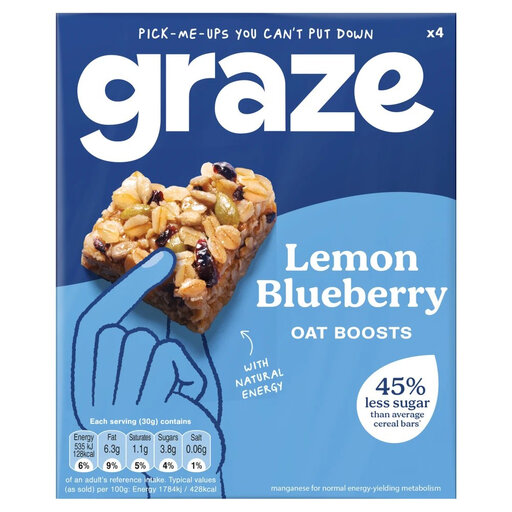
The four-bar pack is a smaller format to consider when fewer lunch portions are needed. Each bar is 30g; check the Lemon Blueberry label for its ingredients, allergens and may-contain warnings before packing it for a child or food setting.
 No image available
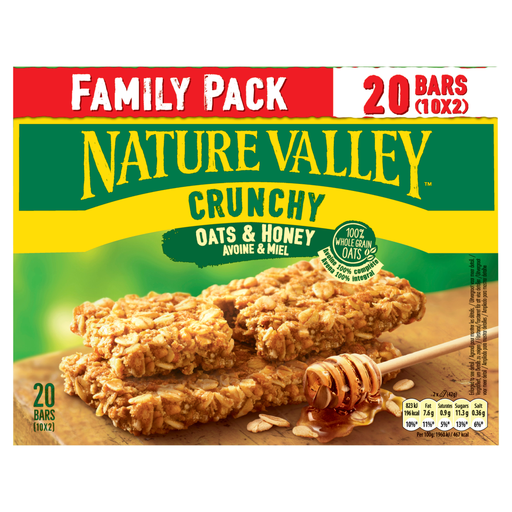
The 20-bar family pack offers a larger count for planning several lunches. Check how its bars are wrapped and what the Oats & Honey label defines as a serving before dividing the pack between lunches; check its own allergen information rather than relying on another Nature Valley flavour.
 No image available
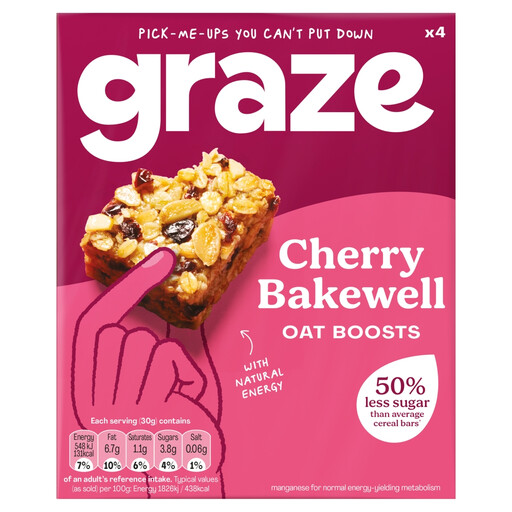
This four-bar pack is another smaller format for lunches. Each bar is 30g; check the Cherry Bakewell label for almonds and other declared allergens, including any may-contain statement, before choosing it for a child or a nut-aware setting.
 No image available
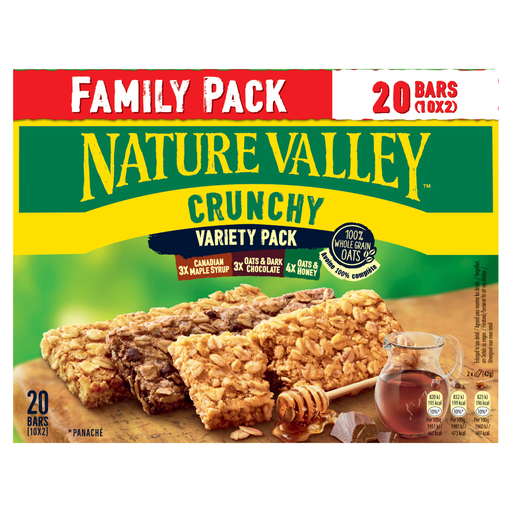
The variety format offers different flavours for shared lunches. Nature Valley describes its Crunchy Variety Family Pack as 20 bars in ten twin-bar portions; its stated nutrition serving is two bars. Check each flavour’s allergen information and decide whether a lunch needs one or both bars.
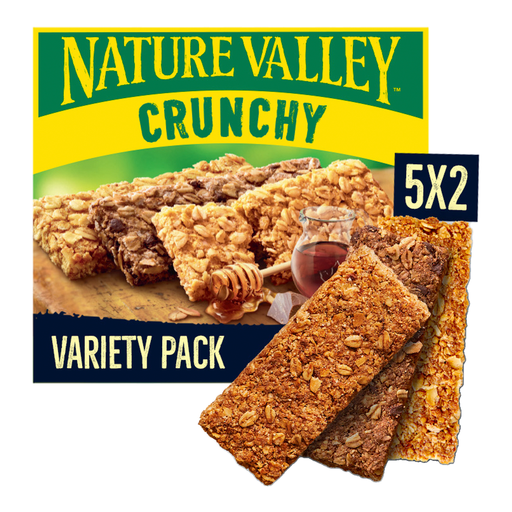 No image available
The five-pack offers variety without choosing the larger family format. Check the number of bars in each wrapped portion, the flavours included and each flavour’s current allergen label before planning how many lunches it will cover.
Compare nutrition per 100g to account for different bar sizes, then read the figures for the amount you intend to pack. Nature Valley lists two bars as a portion for its Crunchy Variety Family Pack, so check whether the lunch will contain one bar or both.
No; check the exact product’s nutrition panel. Action on Salt & Sugar found that 37% of the 458 snack bars in its November 2025 UK retail review were high in sugars under UK front-of-pack thresholds, but that product-sample figure cannot determine the sugar content of a particular bar.
Check that setting’s current food policy and the exact bar’s ingredients and may-contain statement before packing it. Department for Education guidance says schools in England must publish an allergy safety policy; it does not mean every school, club or childcare provider across the UK has the same packed-lunch rules.
No. Tesco lists Nakd Peanut Butter Protein bars as vegan, gluten-free and dairy-free, but the checked product contains peanuts and may contain nuts. Read the exact product’s allergen information rather than using a different dietary claim as a substitute.
Count the lunches you plan to pack, the wrapped portions in the multipack and the flavours the household will eat. Nature Valley describes its Crunchy Variety Family Pack as three flavours and 20 bars grouped into ten twin-bar portions, illustrating why the bar count and portion count both matter.