Students wanting a snack alongside dinner
A bar can be a portable option before or after a meal. Compare its portion and regular cost rather than expecting a small bar to replace dinner.


A small snack bar can be useful alongside a student dinner, but its calorie count alone is not a reason to treat it as dinner. Compare the nutrition information for one bar, the regular cost per bar and the ingredients; a protein-focused bar involves a different portion and calorie trade-off from a smaller snack.
A bar can be a portable option before or after a meal. Compare its portion and regular cost rather than expecting a small bar to replace dinner.
Check the exact flavour and pack for dietary labels, ingredients and allergen warnings. The compared fruit-and-nut and protein bars do not all have the same ingredients.
Compare protein per bar alongside calories and serving size. The protein-focused bars in this comparison are different choices from the smaller oat and fruit-and-nut snacks.
Start with whether you need a snack or dinner, then compare like-for-like portions and the regular cost of each bar.
| Priority | What to check | Your needs |
|---|---|---|
| Cost alongside dinner | Divide the regular pack cost by the number of bars. Check the current cost before relying on a promotion. | I need to account for a snack without treating it as dinner. In Save the Student’s 2026 National Student Money Survey, 63% of respondents said they skip meals at least some of the time to save money; that figure does not measure snack-bar preferences. |
| Portion and calories | Compare kcal for one whole bar and its weight. Tesco Groceries lists 129 kcal for a 30g Graze Honey Oat Boost bar and 131 kcal for a 35g nākd. Blueberry Muffin bar. | For a small snack alongside dinner, I want to know what one bar provides, not just what a front-of-pack claim suggests. |
| Protein, fibre and sugars | Read each value per bar, then compare the serving sizes. Nature Valley UK lists approximately 10g protein and 4g fibre for its 40g Peanut & Chocolate Protein Bar, at 196 kcal. | If I want a protein-focused snack, I can compare it with a smaller bar without assuming either will serve as a meal. |
| Ingredients and allergens | Check the exact flavour’s ingredients, highlighted allergens and any may-contain statement. Read vegan or gluten-free labelling separately from allergen information. | When an ingredient matters to me or someone I am buying for, I need to check the current pack rather than rely on the brand name. |
Tesco Groceries lists 129 kcal for one 30g Graze Honey Oat Boost bar and 131 kcal for one 35g nākd. Blueberry Muffin bar. Those figures describe small snack portions, not a complete dinner.
Decide whether you are buying something to eat alongside a meal or something to eat instead of one. For a snack, compare the whole bar’s nutrition and portion size.
The no-added-sugar description of nākd. Blueberry Muffin does not tell you the total sugars in one bar.
Read the sugars line for the exact serving and compare it with the ingredients list.
A vegan or gluten-free description does not replace the ingredients and allergen statement. The bars discussed here include nut, soya and milk ingredients or warnings, depending on the product.
Check the current pack for the exact flavour, including highlighted allergens and may-contain wording, particularly when buying for someone with an allergy.
The Honey Oat Boost flapjack is a 30g oat-based snack.
The Peanut & Chocolate Protein Bar is a protein-focused option, distinct from the brand’s crunchy variety pack.
Alpen’s UK product range includes muesli. Compare an exact snack-bar product’s label before using it as an alternative to the bars discussed here.
Salted Caramel, Almond & Peanut is a nut-based protein bar.
Blueberry Muffin is a 35g fruit-and-nut bar labelled vegan and gluten-free.
Cocoa Oat is an oat-and-soya protein flapjack labelled vegan and gluten-free.
These are oat, fruit-and-nut and crunchy-bar options for a snack alongside a student dinner. Compare the exact flavour and serving information before choosing.
 No image available
An oat-bar option for a snack alongside dinner. The pack is labelled 4 x 30g; check this flavour’s per-bar nutrition, ingredients and current cost.
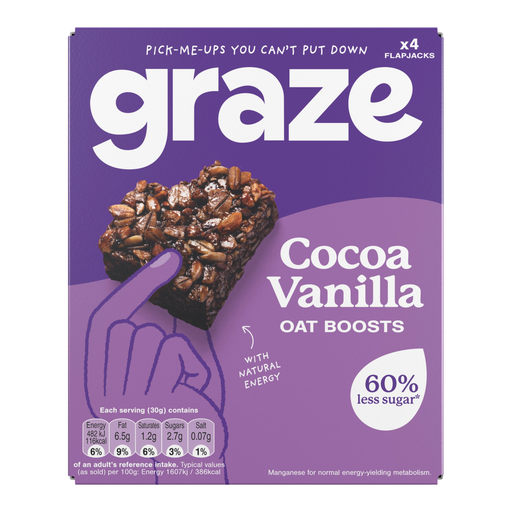 No image available
These cocoa and vanilla oat squares offer another 4 x 30g snack format. Check protein and calories per square if comparing them with other Graze bars; the product name alone does not establish those amounts.
 No image available
A fruit-and-nut snack for those comparing a vegan, gluten-free option with oat bars. The 35g bar is listed at 131 kcal by Tesco Groceries and Joybuy; it contains cashews and almonds, so check the current pack’s allergen statement.
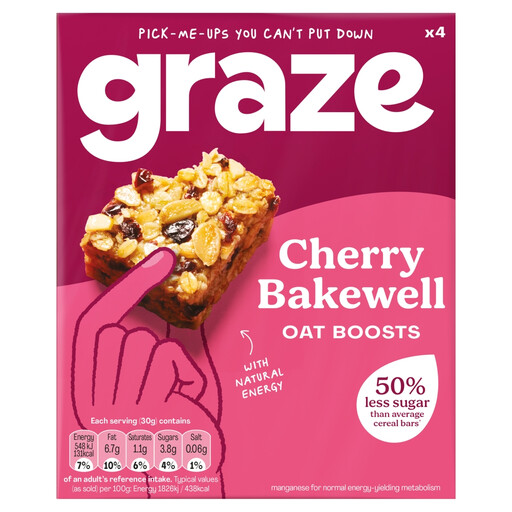 No image available
This 4 x 30g oat-bar pack offers a different Graze flavour for snacking alongside dinner. Compare its own nutrition and ingredients rather than applying figures from Honey Oat Boost.
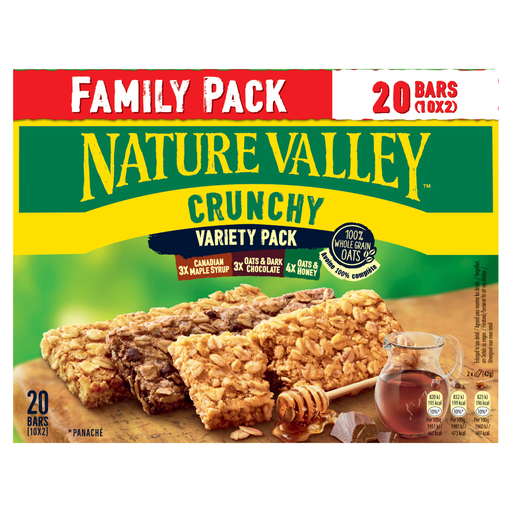 No image available
A crunchy variety pack for an oat-bar snack. The pack name states 10 x 42g; check the nutrition panel’s serving definition before comparing it with single 30g or 35g bars.
Do not treat a low calorie count as evidence that a bar replaces dinner. Tesco Groceries lists 129 kcal for a 30g Graze Honey Oat Boost bar and 131 kcal for a 35g nākd. Blueberry Muffin bar; compare these as snack portions alongside a meal.
No. “No added sugar” and the total sugars shown on a nutrition panel describe different things. Read the sugars value for the whole bar, including when choosing nākd. Blueberry Muffin.
Divide the current regular pack cost by the number of bars, then compare each bar’s weight and nutrition information. A 30g bar and a 35g bar are different portions, and a promotion may change the cost comparison.
Check the ingredients, highlighted allergens and any may-contain statement on the current pack for the exact flavour. GOV.UK guidance describes the highlighted allergen information on pre-packed food labels; a vegan or gluten-free description is not a substitute for reading it.