For regular household sharing, compare the number of usable portions and flavours before choosing a large snack-bar box; a three- or four-bar pack makes more sense when a flavour or texture is new to the child. For school lunchboxes, check nutrition per bar, every flavour’s ingredients and the school’s own allergy policy, and use a bar as an addition rather than the main lunchbox item, in line with NHS lunchbox guidance.
Who is buying?
Parents packing regular school lunches
Portioned bars can be convenient on busy mornings, but compare the nutrition and ingredients of the actual bar going into the lunchbox. NHS lunchbox guidance recommends building the main item around foods such as bread, rice, pasta or potatoes and choosing fruit-based alternatives to cereal bars where possible.
Households sharing snacks between children
A large box is useful when its flavours and portion format suit the people eating it. Product listings from Nature Valley, Ocado and Costco UK describe packs of 18 or 20 bars, but their bar sizes, flavour mixes and ingredients differ.
Families checking dietary and school restrictions
Check the current label for each flavour and the individual school’s arrangements before choosing a bar to send in. The Department for Education’s allergy guidance applies to schools in England; it does not establish one packed-lunch rule for every UK school.
What should you check?
Start with the number and format of portions you will use, then check the label and school arrangements before deciding whether a larger box is practical.
| Priority | What to check | Your needs |
|---|
| Portion format |
Count usable portions, not just bars: Nature Valley describes its 20-bar Crunchy variety pack as ten two-bar 42g portions. Check whether each portion is wrapped for the intended use. |
I want portions that are straightforward to allocate between lunchboxes or share at home. |
| Pack size and flavours |
Compare the number of each flavour and the bar size. A small pack lets you try a new texture before choosing an 18- or 20-bar assortment. |
If several children will share the box, will they eat its mix of flavours? For a first try, I would rather have fewer unused bars. |
| Ingredients and allergens |
Read the ingredients, highlighted allergens and “may contain” statements for the exact pack and each variety. Check the school’s policy separately. |
The bar must fit the child’s dietary requirements and the arrangements at their school; a vegan or gluten-free label does not answer every allergen question. |
| Nutrition label |
Compare sugars, fibre, protein, saturated fat and salt per bar or intended serving; use per 100g figures to compare different bar sizes. Read “no added sugar” alongside total sugars. |
I want to know what one lunchbox portion contains, rather than choosing by a claim on the front of the box. |
| Place in the lunchbox |
Plan the main lunch item separately. NHS lunchbox guidance suggests fruit-based alternatives to cereal bars where possible. |
A bar may be convenient on some days, but I do not want it to stand in for the main part of lunch. |
Common buying mistakes
-
Assuming every flavour in a variety box can be shared
Allergen profiles can differ within one box. Nature Valley lists oats and soya for its Crunchy variety pack, with possible nuts, peanuts and wheat; Costco UK lists several nut-containing varieties in the Eat Natural assortment.
Read each flavour’s ingredients and “may contain” statement, then check the individual school’s policy before sending bars in or arranging sharing.
-
Judging sugars by “natural” or “no added sugar”
Those descriptions do not give the total sugars in a serving. Ocado lists 17g sugars in one 35g flavour of the nākd. variety box; Nature Valley lists 11.3g per two-bar 42g portion of its Crunchy variety pack.
Read the nutrition table for the flavour and portion you intend to use, comparing per 100g figures when bar sizes differ.
-
Buying a large box before trying the bars
A pack of 20 bars may contain ten paired portions, while a four-bar pack gives you fewer servings of a new flavour or texture.
Check how the bars are portioned and consider a smaller pack if you do not yet know whether the child will eat them.
An unwanted flavour in a large assortment can leave bars unused.
-
Using an online listing as the final label check
The pack in hand is the place to confirm its current ingredients, allergen declaration, nutrition and portion information.
Check the physical pack before serving, particularly if you have bought the product before or are switching flavours.
Brand references
Pack format and ingredients vary within a brand, so use these examples to narrow the choice and check the exact product label.
Nature Valley
Its Crunchy variety pack is an oat-based family format with 20 bars arranged as ten two-bar portions, according to Nature Valley UK.
- The variety pack offers three flavours in a larger format.
- It contains oats and soya and may contain nuts, peanuts and wheat; its nutrition panel lists 11.3g sugars per two-bar 42g portion.
nākd.
The fruit-and-nut range includes an 18-bar, six-flavour variety box listed by Ocado, alongside the brand’s vegan and gluten-free product descriptions.
- The listed variety box contains 35g bars across six flavours.
- Fruit-and-nut bars need a nut-allergen check. “No added sugar” does not replace the per-flavour total-sugars figure.
Eat Natural
Its listed formats range from four individually wrapped Apple Soft Fruit Bars at Waitrose & Partners to a 20-bar, three-variety assortment at Costco UK.
- The four-bar pack offers a way to try the soft-fruit format before choosing a larger box.
- The Apple bars contain almonds and may contain other allergens; the 20-bar assortment includes several nut-containing varieties.
TREK
Tesco lists the TREK Biscoff Protein Flapjacks as a 3 x 50g multipack.
- Three bars make it a small-pack option for trying a flapjack flavour.
- A three-bar pack offers fewer portions for household sharing; check the current ingredients and allergen statement for school use.
Graze
Graze describes its Oat Boost range as wholegrain-oat flapjacks. Check the label of the particular multipack for its portion size, nutrition and ingredients.
- An oat-flapjack format provides a different texture from fruit-and-nut bars.
- Brand-level descriptions do not establish the ingredients or nutrition of every flavour.
Snack-bar multipacks on Joybuy
These Joybuy options cover larger Nature Valley packs and smaller nākd. and Graze packs for trying a flavour. Compare their portion formats and check each current label against the intended lunchbox or household use.
 No image available
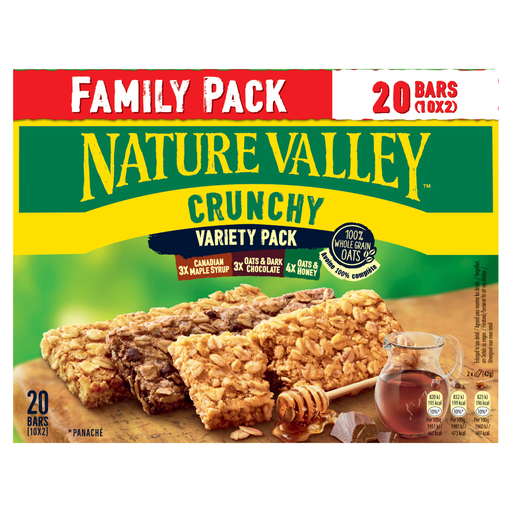
Nature Valley Crunchy Family Variety Pack 10 x 42g
For households considering a larger variety pack: Nature Valley describes 20 bars arranged as ten two-bar 42g portions across three flavours. Its nutrition panel lists 11.3g sugars per two-bar portion; the pack contains oats and soya and may contain nuts, peanuts and wheat.
Joybuy
 No image available
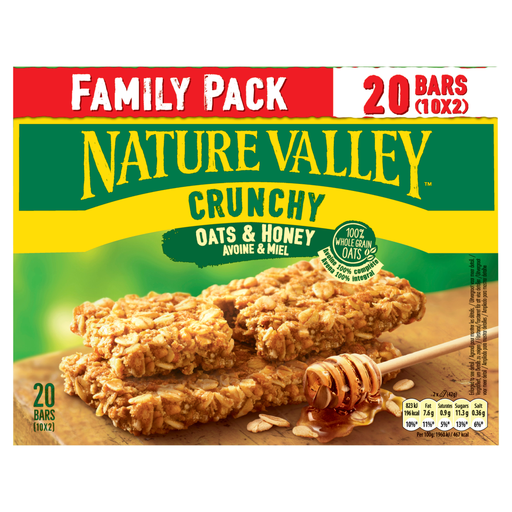
Nature Valley Crunchy Oats & Honey Family Pack, 20 bars, 420g
A 20-bar, single-flavour option for a household that already wants Oats & Honey. Check the current pack for its wrapping format, nutrition and allergen statement before allocating bars to lunchboxes.
Joybuy
 No image available
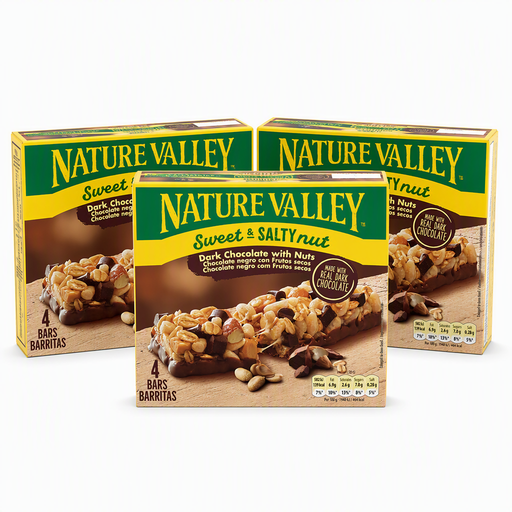
Nature Valley Sweet & Salty Nut Dark Chocolate With Nuts, 3 x 4 x 30g
A dark-chocolate-and-nut option in a 3 x 4 x 30g format. Check its ingredients against any nut restrictions and confirm the individual wrapping on the current pack if the bars are intended for lunchboxes.
Joybuy
 No image available
nākd. Blueberry Muffin Raw Fruit & Nut Bars, 4 x 35g
The four-bar pack offers a smaller way to try this fruit-and-nut flavour before buying a variety box. Check the exact ingredients and school policy where nuts are a concern, and use the nutrition panel to assess sugars per 35g bar.
Joybuy
 No image available
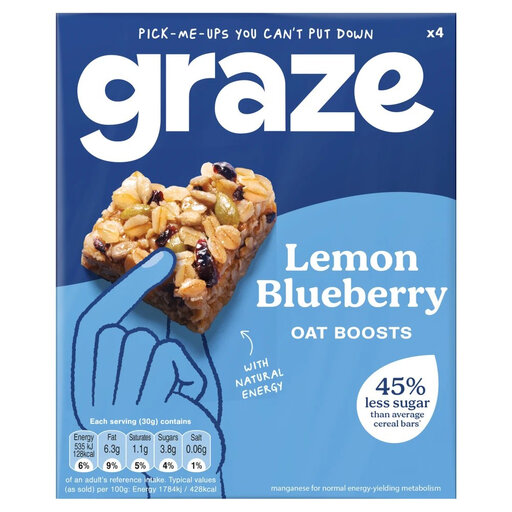
Graze Oat Boosts Lemon Blueberry, 4 x 30g
A four-bar pack for trying a lemon-and-blueberry oat-flapjack flavour. Check the current pack’s ingredients, allergen statement and nutrition per 30g bar before using it for school lunches.
Joybuy
Questions about school snacks
Should a snack bar be the main part of a school lunchbox?
No. NHS lunchbox guidance recommends basing the main item on foods such as bread, rice, pasta or potatoes and suggests fruit-based alternatives to cereal bars where possible. Treat a bar as an addition, not the main lunch item.
Does “no added sugar” mean a fruit-and-nut bar contains little sugar?
No. It does not describe the total sugars shown in the nutrition table. Ocado’s listing for the nākd. variety box gives 17g sugars for one 35g flavour and describes those sugars as naturally occurring; check the figure for the flavour you choose.
Can I send a nut-containing bar to school?
Check the individual school’s allergy and packed-lunch policy before sending one in. The Department for Education’s allergy guidance for England addresses school-specific risk management; it does not establish a single packed-lunch rule for every UK school.
Does a vegan label also mean a bar is gluten-free or nut-free?
No. Vegan describes the absence of animal-derived ingredients, not every allergen. nākd. describes its fruit-and-nut bars as vegan and gluten-free, but their nut ingredients still need checking against the child’s requirements and school arrangements.
How do I compare bars with different serving sizes?
Use the per 100g nutrition figures for a like-for-like comparison, then check the per-bar or stated-serving figures for the amount you plan to pack. Nature Valley’s Crunchy variety pack states a two-bar 42g portion, whereas Ocado lists 35g bars in the nākd. variety box.


