
24/7 Customer Support

Free returns

Same-day & Next-day Delivery

Quality Guaranteed

Unlock Your Welcome Offers: FREE Delivery | Up to 80% OFF | Free 30-day JoyPlus trial
Download the APP
A flat car battery is an unwelcome surprise, whether on a frosty winter morning or during a summer heatwave. For years, portable jump starters have been a staple in many UK drivers' emergency kits. However, as technology evolves, a new option is emerging that addresses the long-standing frustrations many of us have with conventional models. This guide will explore the rise of the sodium ion car jump starter and explain why it might be the smarter choice for your vehicle.
Before you invest in any emergency power pack, it is crucial to understand the common pitfalls that can lead to a wasted purchase and leave you stranded.
To ensure you get a reliable and safe jump starter, focus on these core parameters rather than just the marketing headlines.
The single most important factor is the type of battery inside the jump pack. This determines its safety, lifespan and maintenance needs.
Ensure the 12v jump pack is suitable for your vehicle's engine size and type. A jump starter for diesel engines generally requires more starting power than one for a small petrol car. Look for the starting current and check the manufacturer's recommendation for petrol (L) and diesel (L) engine displacement.
Many modern jump starters are more than just a battery booster. Some models integrate a car jump starter with air compressor, allowing you to use it as a portable tyre inflator. Other common features include USB ports for charging devices and a built-in LED torch with SOS functions. While useful, ensure these extra features are built upon a solid, reliable core battery.
We have filtered the market to find options that address the common pitfalls and match the needs of different UK drivers.
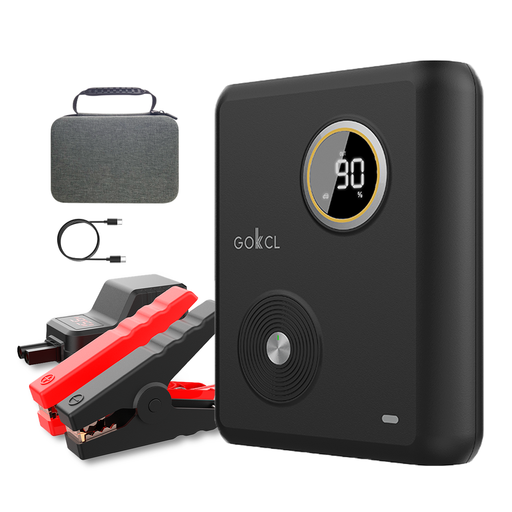
Why This Fits Their Persona: This user wants an emergency tool they can place in their boot and trust to work years later, without constant recharging. They prioritise long-term reliability and safety over bells and whistles.
Its sodium-ion battery has an extremely low self-discharge rate, allowing for a 5-year standby time on a single charge. It completely eliminates the need for quarterly recharging, solving the maintenance trap.
All-weather reliability: Operates safely from -40°C to 80°C. Exceptional lifespan: Rated for over 6,000 charge cycles, lasting far longer than lithium alternatives.
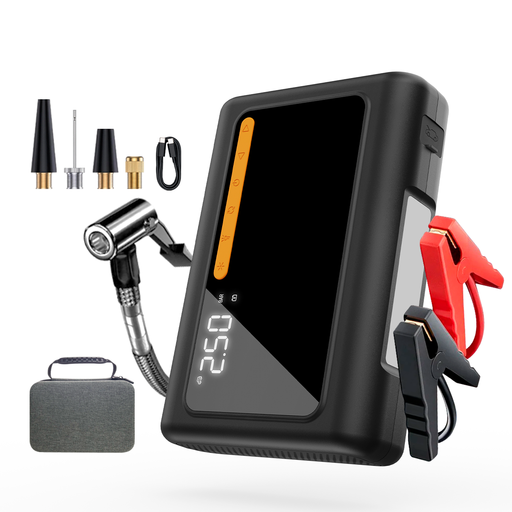
Why This Fits Their Persona: Perfect for families and practical drivers who want one tool to handle multiple roadside issues, from a dead battery to an underinflated tyre. They value utility and long-term peace of mind.
This model provides the same sodium-ion benefits—long standby, temperature stability and safety—while adding a powerful 150PSI air compressor. It consolidates two essential emergency tools into one reliable unit.
4-in-1 Functionality: Acts as a jump starter, tyre inflator, fast-charging power bank (PD60W) and LED torch. Zero-Volt Reactivation: Can be recharged and brought back to life even if fully depleted.
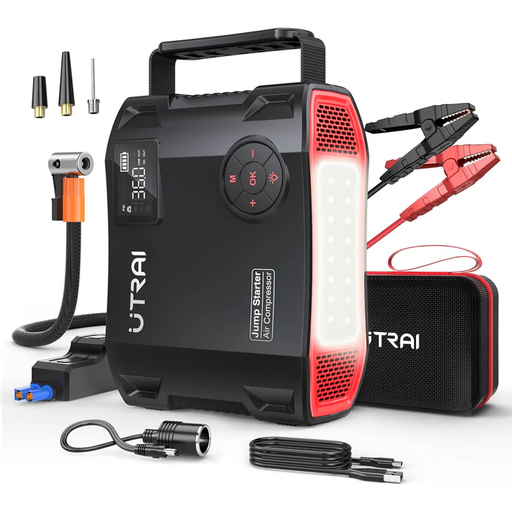
Why This Fits Their Persona: This driver owns a large SUV, van or a vehicle with a high-displacement diesel engine (up to 10.0L). For them, sheer starting power is the top priority, and they need a unit that can deliver it reliably.
While this is a lithium model, it directly addresses the "peak amps illusion" by providing a genuinely high 6000A peak current, making it suitable for starting very large engines where lesser models would fail.
High-Power Output: Capable of starting all petrol cars and diesel engines up to 10.0L. Powerful Air Compressor: Features a 150PSI compressor with a high airflow rate of 45L/min.
We have compiled a complete, real-time list of products that fully satisfy these strict selection criteria and UK safety regulations.
A key benefit of sodium-ion technology is its very low self-discharge rate. Models with this battery can retain a usable charge for up to 5 years, unlike lithium models that need recharging every 3-6 months. This makes them a true 'store and forget' emergency device.
Yes. Sodium-ion batteries have a much wider safe operating temperature range, typically from -40°C to 80°C. This means they remain stable and effective during both the freezing winter months and the increasingly hot UK summers, removing the safety concerns associated with leaving a lithium battery in an enclosed vehicle.
No. Most modern sodium-ion jump starters, like the ones featured, use a standard USB-C input for charging. Many support fast charging (such as PD60W), allowing them to be fully recharged quickly using a compatible wall adapter or car charger that you likely already own for your phone or laptop.