
24/7 Customer Support

Free returns

Same-day & Next-day Delivery

Quality Guaranteed

Unlock Your Welcome Offers: FREE Delivery | Up to 80% OFF | Free 30-day JoyPlus trial
Download the APP
Choosing soft drinks can look simple until you compare sugar levels, serving sizes, flavours and pack formats. A bright label may suggest a lighter option, while a large multipack may not offer the value expected once storage and household demand are considered.
For UK households, offices, parties and hospitality settings, the most useful approach is to compare the information on the can or bottle rather than relying on front-of-pack marketing.
Low-calorie soft drinks can still contain sugar. For example, Sprite Regular provides 4.4g of sugar per 100ml, while Pepsi Regular contains 10.3g per 100ml. A 330ml can therefore gives a clearer picture than the front label alone.
Sugar-free products may use sweeteners instead. Coke Zero, Diet Coke, Tango Orange Sugar Free and Tango Apple Sugar Free list sweeteners such as aspartame, acesulfame K or sucralose. Anyone who needs to avoid particular ingredients should check the full ingredient list, including the statement that some products contain a source of phenylalanine.
Probiotic soda, prebiotic soda and kombucha drinks may contain live cultures, fermented ingredients or added fibre. However, these features should not be treated as medical or therapeutic guarantees.
Living Things sodas list 2 billion live cultures and around 2g to 2.2g of fibre per 100ml, while Lipton Kombucha Mango & Passionfruit contains kombucha ingredients and live cultures. These are product attributes, not substitutes for a varied, balanced diet. Check storage guidance carefully, as some drinks need gentle inversion, refrigeration after opening or consumption within a stated period.
A cola multipack can make sense for a busy family, party or office fridge, but a 24-can case needs suitable dry storage and a realistic consumption plan. Smaller 4-can packs may be more practical when trying a new flavour, including fruit-flavoured soda, Asian soft drinks or functional beverages.
UK nutrition panels generally show values per 100ml, making products easier to compare. Also check the per-can figure, particularly for 250ml, 310ml, 320ml, 330ml and 500ml formats.
Examples from the selection include:
This comparison is more useful than terms such as “light”, “refreshing” or “natural” on the front of the pack.
330ml cans suit individual servings, lunch breaks, meal pairings and event catering. A 4-pack is useful for sampling or occasional consumption, while 18- and 24-can soft drink multipacks are more suitable for regular household use, parties and office stock.
Smaller 250ml cans, such as J2O and Lipton Kombucha, can be appropriate where portion control or varied drinks service matters. Bottled options such as 500ml Sangaria Grape Soda may suit on-the-go use, but opened carbonated drinks should generally be consumed promptly to retain fizz and flavour.
Do not rely solely on “vegan”, “sugar-free” or “fruit-flavoured” claims. Review sweeteners, preservatives, caffeine, juice percentages and allergen statements. Mogu Mogu Peach Drink, for instance, lists sulphur dioxide and sulphites, while several cola drinks contain caffeine or a source of phenylalanine.
Store unopened cans and bottles in a cool, dry place away from direct sunlight and heat. Never freeze pressurised cans. For drinks containing live cultures or pieces, follow the label instructions and handle cans carefully.
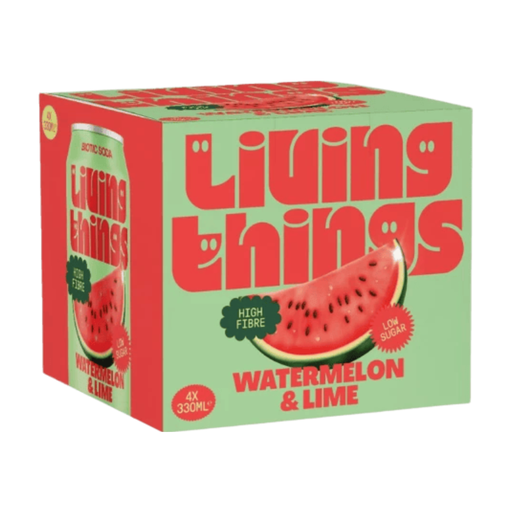
Why This Fits Their Persona: A smaller multipack gives first-time buyers a practical way to try a fruit-forward functional soda without committing to a large case.
The label states 13 kcal and 1.7g sugar per 100ml, helping shoppers compare it directly with conventional fizzy drinks.
Four 330ml cans; contains listed prebiotic fibre and live cultures; vegan-friendly according to the supplied product information.
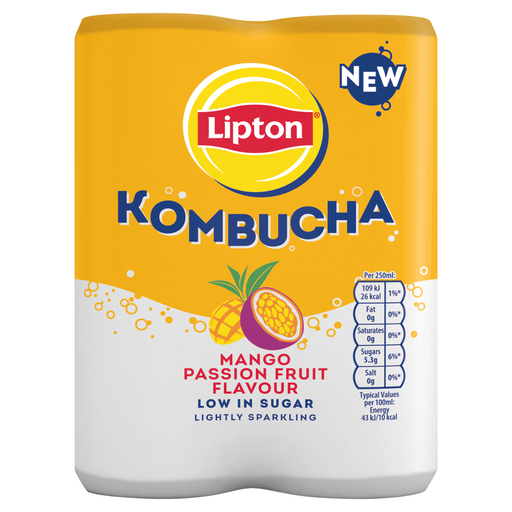
Why This Fits Their Persona: A compact ready-to-drink option for shoppers seeking a more distinctive sparkling drink for lunches, hosting or afternoon refreshment.
The nutrition panel specifies 50 kcal and 11g sugar per 250ml can, so its “low-sugar” positioning can be assessed by serving size.
Four 250ml cans; mango and passionfruit flavour; contains listed kombucha ingredients and live cultures.

Why This Fits Their Persona: A 24-can case suits parties, hospitality cupboards, shared offices and households that regularly serve cola with meals.
The case quantity and 330ml serving size are clear, while the nutrition panel shows 34g sugar per can for informed purchasing.
24 individual cans; familiar cola flavour; suitable for vegetarians and vegans according to the supplied information.
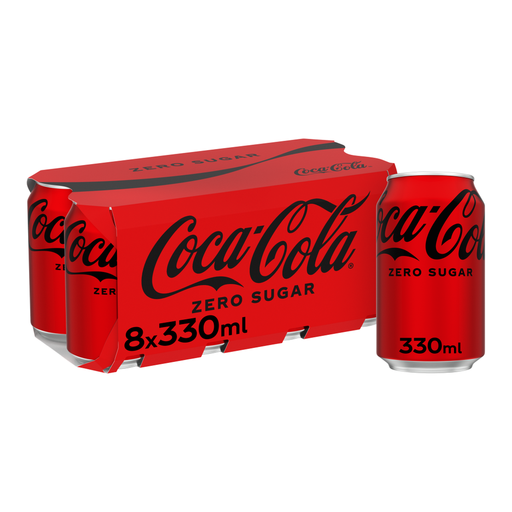
Why This Fits Their Persona: The 8-can format provides a manageable supply for homes that prefer sugar-free cola without storing a bulk case.
The supplied nutrition information lists approximately 1 kcal and 0g sugar per 330ml can, while the sweetener and phenylalanine information remains visible.
Eight 330ml cans; zero sugar; familiar sparkling cola profile.
We have compiled a complete, real-time list of products that fully satisfy these strict selection criteria and UK safety regulations.
Large soft drink multipacks of 330ml cans are convenient for parties because they are easy to chill, distribute and recycle. Pepsi Regular 24 x 330ml and Coca-Cola Original Taste 24 x 330ml suit traditional cola preferences, while mixed choices such as sugar-free cola, fruit-flavoured soda and ready-to-drink tea can accommodate different tastes.
Not always, so check the nutrition panel. Many sugar-free soft drinks contain very little energy, but formulations vary. Tango Orange Sugar Free lists approximately 2 kcal per 100ml, while sweetened fruit blends may contain more calories even when their portion is relatively small.
Keep unopened cans in a cool, dry cupboard away from sunlight and heat. Chill before serving, but do not freeze pressurised containers. Once opened, consume promptly to retain carbonation. Products containing live cultures, fruit pieces or kombucha ingredients may have additional refrigeration instructions, so read the packaging before serving.