
24/7 Customer Support

Free returns

Same-day & Next-day Delivery

Quality Guaranteed

Unlock Your Welcome Offers: FREE Delivery | Up to 80% OFF | Free 30-day JoyPlus trial
Download the APP
A solo microwave oven can handle everyday reheating, defrosting and simple cooking without the added cost or complexity of a grill or combination appliance. For many UK households, a 20L or 23L countertop microwave is enough for plates, bowls, ready meals and frozen ingredients.
However, specifications can be easy to misread. A higher wattage does not automatically mean easier cooking, while a long list of programmes may not be useful if the controls are confusing. Before choosing a compact microwave oven, check the details that affect daily use, cleaning, safety and available countertop space.
A microwave described as “compact” may still need considerable clearance around its sides, rear and top for ventilation. Measure the available worktop space, then compare it with the product’s full dimensions rather than relying on the stated capacity alone.
A 20L microwave is generally suitable for singles, couples and smaller kitchens, but the turntable diameter matters too. A large dinner plate may fit in one 20L cavity but not another.
A 700W microwave can be suitable for reheating soup, cooking vegetables and defrosting ingredients, although it may require longer timings than an 800W or 900W model. A more powerful microwave can heat food faster, but users still need to adjust timings to avoid overheating smaller portions.
Check whether the manufacturer’s instructions explain power settings and cooking times. Multiple power levels are more useful than a headline wattage alone, particularly for gentle reheating and defrosting.
A digital microwave may include auto-cook menus, touch controls and automatic defrosting. These can be convenient, but they may not matter to someone who mainly reheats leftovers and uses a manual timer.
Conversely, a household that regularly cooks from frozen may benefit from a microwave with defrost function, weight-based settings or more precise digital controls. Choose features around your routine rather than selecting the longest feature list.
For many UK homes, the following guide is practical:
Also check the turntable diameter. Removable glass turntables are convenient to wash and help rotate food during heating. Confirm that the microwave has enough clearance around ventilation openings and can sit safely on a stable, heat-resistant surface.
A 700W microwave is often adequate for basic daily tasks. An 800W microwave may reduce cooking times, while a 900W model can suit households preparing larger portions more frequently.
Power levels are equally important. Lower settings can help with gentle warming and thawing, while full power is useful for reheating liquids and cooked meals. A manual microwave with five or six settings may be easier to operate than a digital model for users who prefer rotary dials.
Manual dials are straightforward and do not require navigating menus. A digital microwave can offer a clearer countdown, auto-cook programmes and defrost-by-weight functions.
Look for a wipe-clean interior and a removable microwave with glass turntable design. Painted interiors are common, while some models use enamel or ceramic-style coatings. Always follow the care instructions and avoid abrasive cleaning products that may damage the surface.
For running costs, standby-saving or eco modes can reduce electricity use while the appliance is not operating. The actual saving depends on usage, standby duration and household energy tariffs, so treat this as a useful supporting feature rather than the main reason to buy.
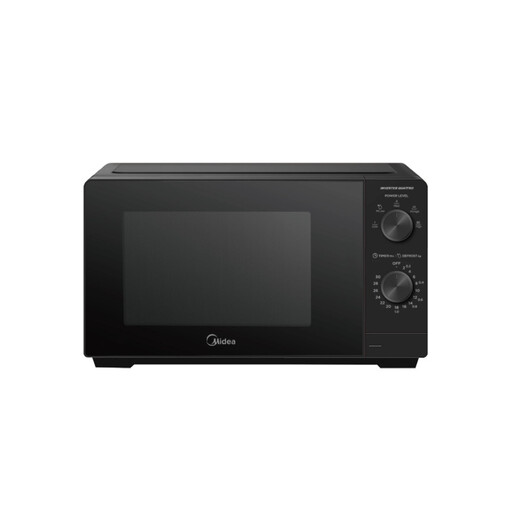
Why This Fits Their Persona: Its compact 20L format suits students, renters and smaller UK kitchens where straightforward controls and modest dimensions matter.
Six power settings and a 30-minute timer provide more control than a basic single-setting appliance, while the energy-saving mode addresses standby consumption.
700W output, MET inverter technology, child lock and removable glass turntable in a black countertop design.
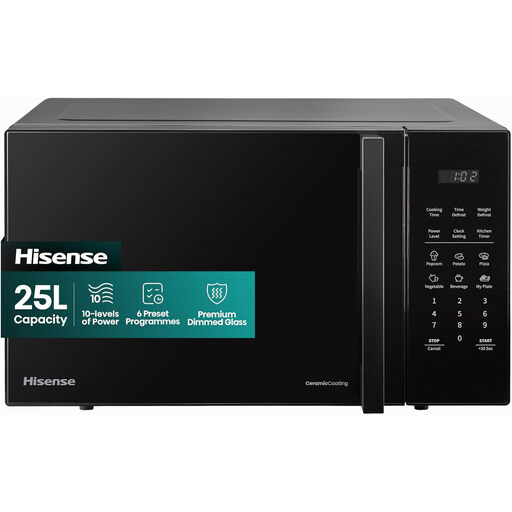
Why This Fits Their Persona: The larger cavity, touch controls and automatic functions suit couples or families wanting more capacity and a more guided cooking experience.
The 31.5cm removable turntable helps buyers check actual dish space, while auto defrost and 10 power levels offer practical control beyond headline wattage.
25L capacity, 900W output, touch controls, auto-cook programmes and a two-year manufacturer’s warranty.
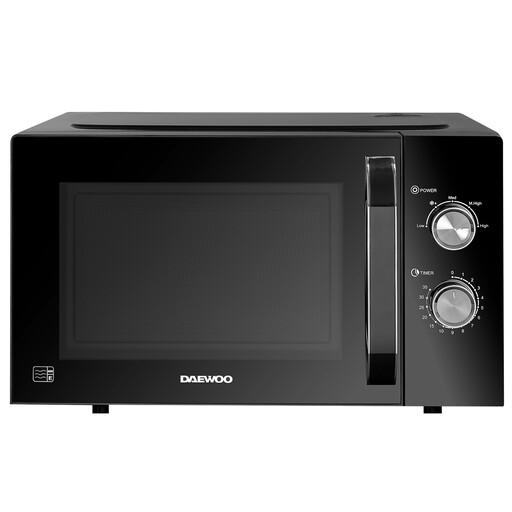
Why This Fits Their Persona: Its 23L cavity and manual operation work well for households reheating family portions regularly without needing digital menus.
The five power settings include defrost, so users can select settings directly instead of paying for programmes they may not need.
800W output, 35-minute manual timer, removable glass plate, wipe-clean interior and three-year warranty with registration.
We have compiled a complete, real-time list of products that fully satisfy these strict selection criteria and UK safety regulations.
Place the appliance on a level, heat-resistant surface with the ventilation gaps specified in its manual. Use a suitable UK mains socket and do not block the vents. Only use containers labelled microwave-safe; avoid metal, metallic trim, sealed containers and empty operation.
Hot food, liquids and steam can cause burns. Allow heated liquids to stand briefly before handling and use oven gloves where appropriate. Unplug the appliance before cleaning, moving or carrying out maintenance. Do not use a microwave if its door, seal or locking mechanism is damaged.
Usually, a 20L model accommodates a standard dinner plate, but plate diameter varies. Check the listed turntable measurement before buying, especially if you regularly use wide plates or rectangular containers.
Running cost depends on cooking time, usage frequency and your electricity tariff. A 700W microwave uses less power while operating than an 800W or 900W model, but it may need longer cooking times. Standby-saving modes can also reduce consumption when the appliance is not in use.
Lifespan depends on build quality, cleaning, frequency of use and whether the door and controls are treated carefully. Keeping the cavity clean, avoiding empty operation and following the manufacturer’s instructions can help maintain safe operation. Check the included warranty and retailer support before purchasing.