
24/7 Customer Support

Free returns

Same-day & Next-day Delivery

Quality Guaranteed

Unlock Your Welcome Offers: FREE Delivery | Up to 80% OFF | Free 30-day JoyPlus trial
Download the APP
A microwave can look like a simple purchase, but the wrong model may quickly become inconvenient. A cavity that cannot fit your usual dinner plate, controls that are awkward to use, or an appliance that needs more ventilation than your worktop allows can turn a low-cost purchase into wasted money.
This guide from the Joybuy Product Recommendation Officer focuses on the practical details that matter when comparing solo microwave ovens, including capacity, power, controls, cleaning and installation.
A 20L microwave may suit a single person, student or couple, but the usable space also depends on the turntable diameter and cavity shape. A compact model with a 24.5cm turntable may not accommodate larger dinner plates or wide cookware.
For family portions, a 23L microwave or 25L microwave usually offers more flexibility. Always compare the stated cavity capacity with the turntable diameter and the external width and depth.
A 700W microwave can handle everyday reheating, defrosting and simple cooking, while an 800W microwave offers a little more output for regular use. A 900W microwave may reduce cooking times, but food still needs to be monitored and manufacturer instructions followed.
Higher power can also mean greater peak electricity demand. For occasional reheating, choosing the highest wattage available may add cost without providing a meaningful benefit.
Digital displays, auto-cook programmes and touch controls can be helpful, but they are not essential for every household. A manual microwave with rotary dials may be faster to operate for reheating a mug of soup or a ready meal.
Similarly, a built-in microwave with grill is not a direct replacement for a worktop microwave. It needs suitable cabinet ventilation and installation. Buying a built-in appliance for use on a worktop can create safety and warranty problems.
Measure the available space, including clearance around ventilation openings. Many worktop models require approximately 10cm of clearance around the sides and vents, although the product manual takes priority.
Typical choices include:
Check the product dimensions rather than relying on the capacity description alone. For example, a 25L model may be significantly deeper than a 20L microwave.
Look for at least five adjustable power levels if you want more control than simple full-power reheating. Lower settings are useful for warming delicate foods, while defrost functions help thaw frozen ingredients.
A microwave with auto defrost may calculate a cycle using the food’s weight, but you should still follow the instructions, turn food when prompted and allow standing time. Manual defrosting can be suitable if you prefer to control the process yourself.
A digital microwave generally provides a clear countdown timer, auto menus and button or touch operation. A manual model uses rotary dials and may start as soon as the timer is turned, which some users find straightforward.
A microwave with glass turntable is practical because the plate can usually be removed for washing. Also look for an easy-clean interior, such as a smooth painted, enamel or ceramic-style surface. Cleaning food splashes promptly helps reduce odours and residue.
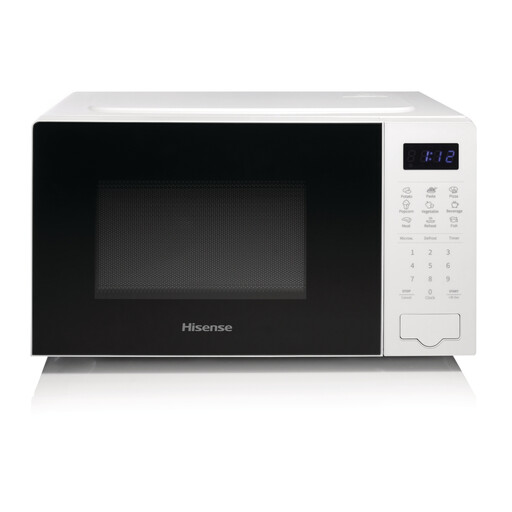
Why This Fits Their Persona: Its compact 20-litre capacity and white worktop design suit students, renters and smaller UK kitchens where worktop space matters.
The 24.5cm removable glass turntable makes the usable space clearer than the litre figure alone. Rotary controls also avoid unnecessary menu complexity.
700W output, five power levels, defrost function and a two-year manufacturer guarantee.
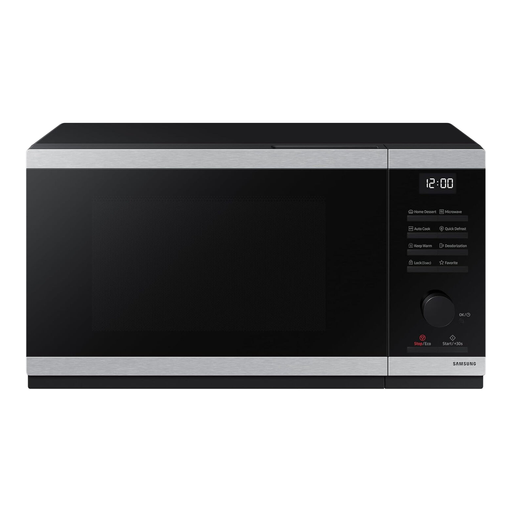
Why This Fits Their Persona: This suits households wanting a more spacious solo appliance with a modern finish and features aimed at regular daily use.
The 23-litre format provides more room than many compact models without moving to a grill appliance or built-in installation.
800W output, ceramic enamel interior, deodorisation function and Eco Mode.
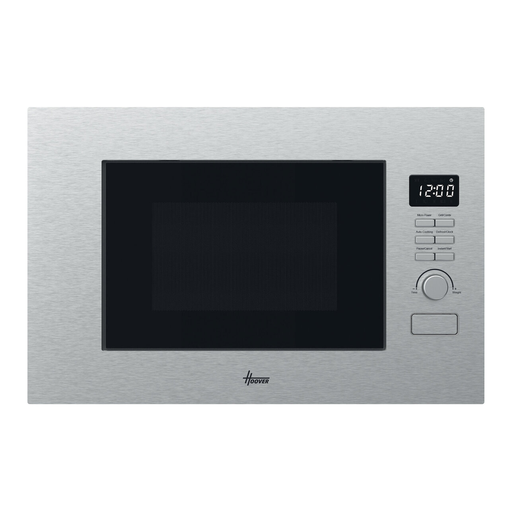
Why This Fits Their Persona: Suitable for fitted kitchens where a flush appliance and grill function are more important than worktop portability.
Its product type is clearly built-in, so it should be considered only where the cabinet cut-out, ventilation and professional installation requirements can be met.
700W microwave output, 800W grill, combination cooking, auto defrost and hOn App compatibility.
We have compiled a complete, real-time list of products that fully satisfy these strict selection criteria and UK safety regulations.
Place a worktop microwave on a stable, level, heat-resistant surface with unobstructed ventilation. Connect it to a suitable, earthed UK socket and follow the manual regarding extension leads. Do not operate the appliance empty, and use only microwave-safe containers. Metal, sealed containers and whole eggs in shells can create safety risks.
For lower standby consumption, consider an energy-efficient microwave with Eco Mode or energy-saving standby settings. Actual running cost depends on wattage, cooking time, tariff and frequency of use, so a higher-rated appliance is not automatically cheaper to run.
Yes. Solo models are designed for reheating, defrosting and microwave cooking. They do not provide a conventional oven or grill function, so choose a built-in microwave with grill if browning and crisping are priorities.
It can be suitable for standard plates and smaller portions, but households regularly heating wide dishes may find a 23L or 25L microwave more convenient. Check the turntable diameter before ordering.
Lifespan depends on usage, cleaning, ventilation and maintenance. Avoid empty operation, keep the cavity clean and stop using the appliance if the door, seal or locking mechanism is damaged. Always arrange repairs through an appropriately qualified service provider.