
24/7 Customer Support

Free returns

Same-day & Next-day Delivery

Quality Guaranteed
Download the APP
Categories
Moving beyond your smartphone to a dedicated camera is a significant step for any content creator or aspiring photographer. You are looking for better image quality, more creative control and the versatility that comes with changing lenses. The Sony APS-C mirrorless camera range is a popular choice for this upgrade, offering powerful features in a compact body.
Navigating the different models, however, can be a challenge. This guide is designed to help you understand the key differences between popular options and identify which camera aligns with your specific needs, whether you're creating content for YouTube, capturing memories on your travels or pursuing photography more seriously.
Before diving into specific models, consider these key factors. Thinking about your primary use case will help you focus on the features that matter most to you.
Your main creative outlet will heavily influence your choice. If you are a vlogger, a Sony camera with a flip screen that is fully articulating is invaluable for self-framing. Features like a high-quality built-in microphone, a dedicated background defocus button and a mode for showcasing products to the camera become priorities. For a dedicated Sony vlogging camera, these features can make the creation process much smoother.
If photography is your main passion, you might prioritise a high-resolution sensor, a clear electronic viewfinder for composing shots in bright light and a fast continuous shooting speed to capture action. For those who do a bit of everything, a hybrid camera that balances strong photo and video capabilities is the ideal solution.
Sony is well-regarded for its autofocus technology, but different models offer different levels of performance. Older, yet still highly capable, models feature excellent Real-time Tracking that reliably follows subjects like people and animals.
More recent models have introduced a dedicated Sony AI autofocus processing unit. This hardware is specifically designed to recognise and track a wider variety of subjects—from insects and cars to people—with greater precision, even analysing a subject's pose to predict their movement. This can be a deciding factor if you frequently shoot fast or unpredictable action.
One of the main appeals of the APS-C format is its compact size. These cameras are generally much smaller and lighter than their full-frame counterparts, making them an excellent choice for a lightweight travel camera. While all models in this range are portable, there are subtle differences in grip depth, button layout and overall weight. A more pronounced grip can offer better comfort during long shoots, while an extra control dial can provide faster access to settings.
Here are our recommendations from Sony's current APS-C lineup, each catering to a different type of creator.
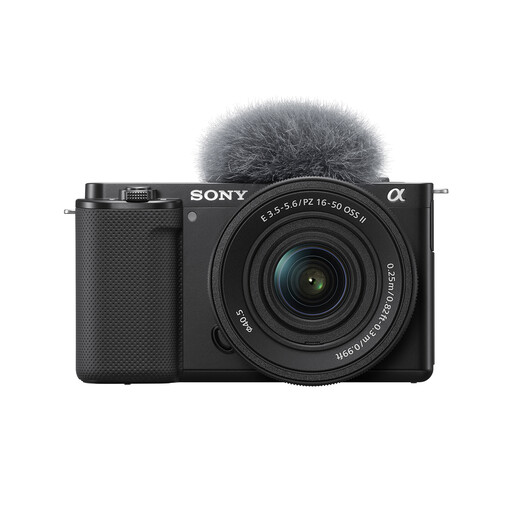
Why It Stands Out The ZV-E10K is purpose-built for vlogging and online content creation. Its design choices, from the fully articulating touchscreen to the simple one-touch controls for background blur and product focus, are all geared towards making the single-person production process as seamless as possible. The high-quality, three-capsule directional microphone is a significant step up from typical built-in camera mics.
Pros
Who is it for? This is an ideal choice for aspiring and established vloggers, streamers and anyone creating content for platforms like YouTube and TikTok. It's a fantastic interchangeable lens camera for beginners who are focused primarily on video.
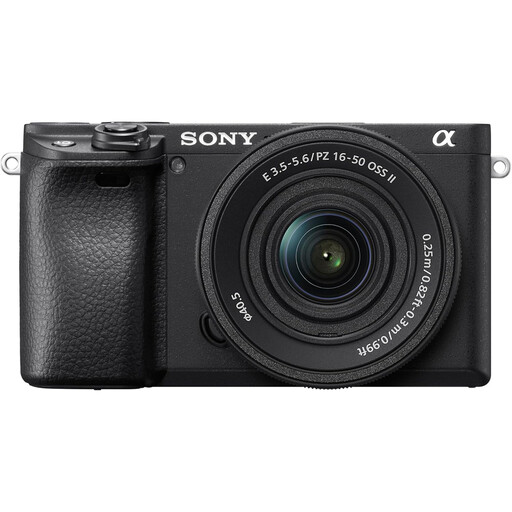
Why It Stands Out The A6400 is a true hybrid workhorse, celebrated for bringing high-end autofocus performance to a compact and accessible body. Its Real-time Tracking AF system is incredibly fast and tenacious, making it a reliable tool for capturing sharp photos and videos of moving subjects. The inclusion of an electronic viewfinder makes it a more versatile tool for photographers than a vlogging-first camera.
Pros
Who is it for? The A6400 is for the hybrid creator who values both photography and videography. It's a great match for enthusiasts, travel photographers and anyone needing a dependable camera that excels at capturing fast-moving subjects like pets, children or sports.
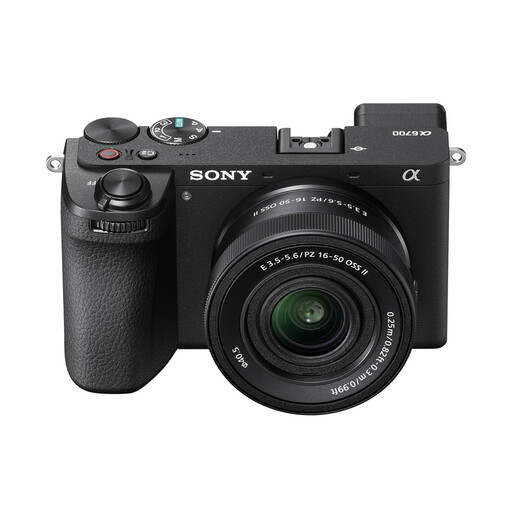
Why It Stands Out The A6700 represents the cutting edge of Sony's APS-C technology. Its standout feature is the dedicated AI processing unit, which drives a next-generation autofocus system capable of recognising subjects with remarkable accuracy. This, combined with its advanced video specifications—including 4K recording at up to 120p—and a new 26MP sensor, places it in a class of its own for performance.
Pros
Who is it for? This camera is for serious enthusiasts and professionals who demand the latest technology. It's perfect for wildlife and sports photographers who need the advanced AF, as well as filmmakers looking for a compact yet powerful B-camera or a primary tool for high-end video production.
If these models don't seem to be the perfect fit, or if you're interested in comparing them with other systems, there is a wider world of cameras to discover. Each offers a unique combination of features, ergonomics and lens selections.
Explore our full range of Mirrorless Cameras to find the perfect match for your creative journey.
Is a Sony APS-C camera good for beginners? Yes, many Sony APS-C models are excellent for beginners. Cameras like the ZV-E10 are designed with user-friendly controls and helpful modes. The ability to change lenses also provides a clear and rewarding upgrade path as your skills grow, making it a great system to invest in.
What is the main difference between the Sony a6400 vs a6700? The key difference is the technology inside. The a6700 features a newer 26MP sensor and a dedicated AI processing unit for more sophisticated autofocus tracking. It also offers more advanced video features, such as 4K at 120p. The a6400 remains a very capable camera with a proven, fast autofocus system and offers fantastic value for its performance.
Can I use a Sony APS-C camera for professional work? Absolutely. Many professionals use Sony APS-C cameras, particularly the high-performance a6700, for client work. Their compact size, advanced feature sets and excellent 4K video quality make them suitable for a wide range of applications, including event photography, commercial video and documentary filmmaking.