
24/7 全天候客户支持

免费退货

当日/次日达

品质保障

开启新人专享福利: 全场免邮 | 低至 2 折 | 免费试用 30 天 JoyPlus 会员
下载 Joybuy
A sore throat can make speaking, swallowing and getting through a working day uncomfortable. The convenient answer is often a packet of lozenges or cough sweets, but product labels can make comparison difficult. Flavour, active ingredients, sugar content and age guidance all affect whether a remedy suits your household.
As the Joybuy Product Recommendation Officer, I filter out marketing noise and focus on the details that matter when choosing sore throat relief in the UK.
Some throat sweets provide a cooling, sweet or herbal sensation but are not necessarily licensed medicines. Others contain active ingredients such as 2,4-dichlorobenzyl alcohol, amylmetacresol, hexylresorcinol or menthol. Check whether you are buying medicated sore throat lozenges, a food supplement or traditional throat candy, and follow the instructions for that specific product.
Sugar-free throat lozenges may use polyols such as isomalt, which can cause a laxative effect when consumed excessively. Some also contain sweeteners that are unsuitable for people with phenylketonuria. Conversely, traditional honey and lemon lozenges and many herbal throat lozenges contain significant amounts of sugar.
Always check the ingredients and nutritional panel rather than relying on the front-of-pack description.
Lozenges must dissolve slowly in the mouth, so they are not suitable for young children who cannot safely manage hard sweets. Age limits vary: some medicated products are labelled for children aged six and over, while certain menthol drops are labelled for children aged five and over. For younger children, an age-specific children’s cough and sore throat syrup may be more appropriate, but the label and dosage must still be followed carefully.
For temporary sore throat discomfort, antiseptic throat lozenges may contain two active ingredients, while pain-relief products may use a different active ingredient. Menthol lozenges are generally selected for their cooling sensation and may also be used for cough or throat and chest relief.
Look for clear information about:
A product described as herbal or traditional should not automatically be treated as equivalent to sore throat medicine. Its ingredients may be intended to soothe or freshen the mouth rather than provide a medicinal action.
Check the exact age range, not just the flavour or format. For example, the supplied Strepsils product information states that its honey and lemon lozenges are suitable for adults and children aged six and over. The listed dose is one lozenge every two to three hours for those aged 12 and above, with a maximum of 12 in 24 hours; children aged six to 12 have a different schedule.
The Benylin children’s syrup is listed for children aged one to five years, with a 5 ml spoon supplied for dosing. It must not be given to children under one year. Do not combine products with overlapping ingredients unless a pharmacist or doctor advises you to do so.
Sugar content matters for people monitoring their intake, dental health or certain dietary requirements. Check for sucrose, glucose syrup, sweeteners, aspartame, phenylalanine and allergens such as soy.
The format also affects convenience. Blister-packed lozenges are useful for carrying in a work bag, while a roll or tin can be convenient at home or during travel. A syrup requires accurate measuring and secure storage away from children.
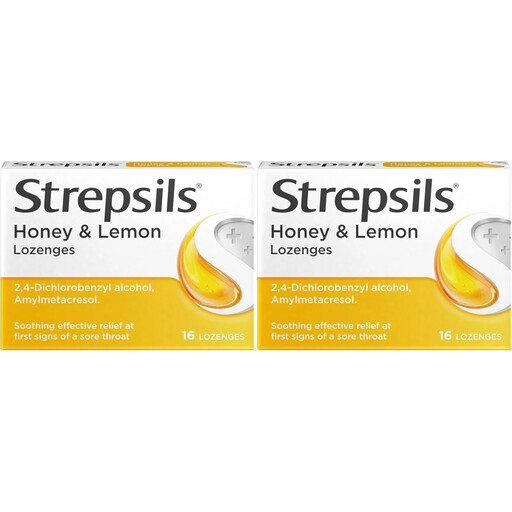
Why This Fits Their Persona: A practical two-pack format for adults who want a familiar medicated option for a home medicine cupboard or work bag.
The listing identifies the two antiseptic active ingredients and provides separate adult and child dosing information, rather than relying only on flavour-led claims.
Honey and lemon flavour; suitable from age six according to the supplied product information; individually packed lozenges.
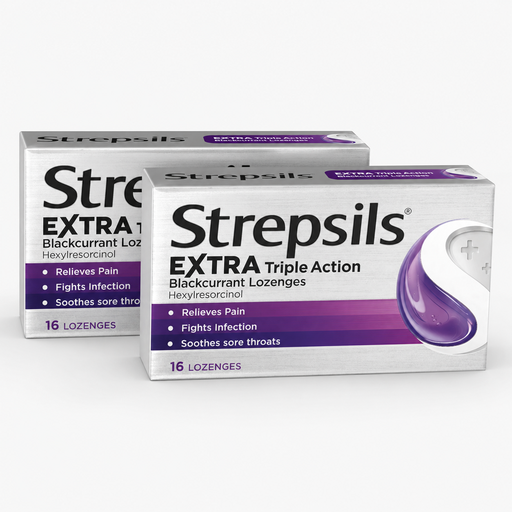
Why This Fits Their Persona: Suits shoppers who want to compare a defined active ingredient and a stated maximum daily dose before purchasing.
The listing specifies hexylresorcinol at 2.4 mg per lozenge and states an eight-lozenge daily maximum, making label comparison easier.
Blackcurrant flavour; suitable for adults, older people and children over six according to the supplied information.
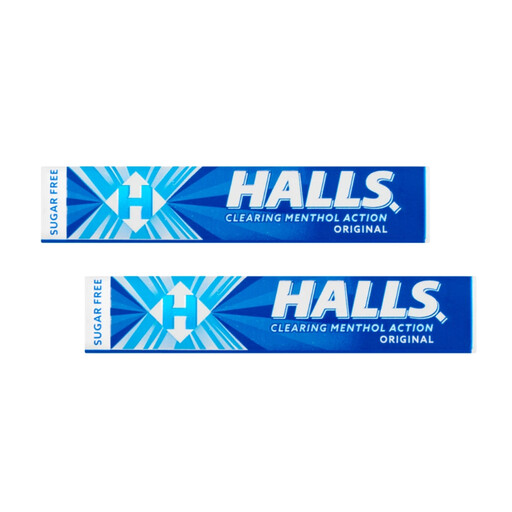
Why This Fits Their Persona: A compact choice for adults who want menthol lozenges available at work, in the car or while travelling around the UK.
The listing clearly identifies the sugar-free polyol recipe and warns about possible laxative effects from excessive consumption.
Sugar-free recipe; menthol flavour; pocket-sized 32g rolls; contains aspartame, so phenylalanine guidance should be checked.
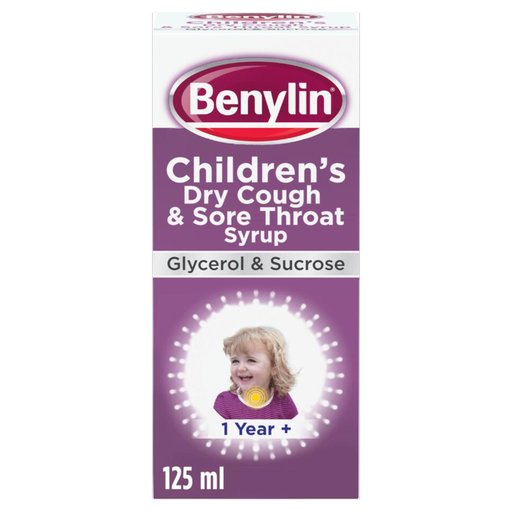
Why This Fits Their Persona: Designed for carers seeking an age-specific liquid option for children aged one to five years with a dry, tickly cough and sore throat.
The product specifies the age range, includes a 5 ml spoon and states its sucrose and carbohydrate content, helping carers check suitability.
Blackcurrant flavour; non-drowsy formulation as listed; one 5 ml spoonful three to four times within 24 hours when required.
We have compiled a complete, real-time list of products that fully satisfy these strict selection criteria and UK safety regulations.
Read the current packaging before use because formulations, allergens, directions and age guidance can change. Do not exceed the stated dose, chew lozenges or give them to children who cannot safely dissolve them. If a sore throat persists beyond the period stated on the label, becomes worse, or is accompanied by breathing difficulty, seek advice from a pharmacist, GP or NHS service promptly.
The suitable format depends on the symptoms and the user. Medicated lozenges may be convenient for adults with throat pain, while menthol drops can provide a cooling sensation for cough or congestion. For children, use only a product labelled for their age and symptom type.
Not automatically. They may help shoppers reduce sugar intake, but polyol sweeteners can cause digestive effects if eaten excessively. Check the sweetener information, daily intake guidance and any phenylalanine warning before buying.
Use the lowest effective amount for the shortest period stated on the label. If symptoms persist, worsen or change, speak to a pharmacist or doctor rather than continuously increasing lozenge or syrup use.