Flat dwellers who watch films late
You want to follow dialogue at restrained volume and need practical control over loud effects, rather than simply more output.


Start with a soundbar whose dialogue controls, low-volume options and TV connection suit your viewing habits, rather than choosing a larger speaker package for its channel count alone. A separate subwoofer or rear speakers make sense when you can position and moderate them; check your TV and film source before choosing a model for Dolby Atmos.
You want to follow dialogue at restrained volume and need practical control over loud effects, rather than simply more output.
You want film sound to work across a combined living area, but the speaker and any additional equipment still need to fit around the TV and furniture.
You want to begin with a soundbar and decide on a subwoofer or rear speakers once you know what the room layout and neighbour considerations allow.
For an open-plan flat, decide whether quiet dialogue, soundtrack scale, TV compatibility or later expansion matters most before choosing how much equipment to accommodate.
Choose when: Floor space is tight or you want one main unit beneath the TV.
Trade-off: Effects may remain more front-focused than with separate rear speakers; immersive-format playback also depends on the TV and source.
Choose when: Bass from film effects matters and you have a workable place for the extra unit.
Trade-off: The subwoofer takes floor space and calls for careful level control around neighbours.
Choose when: The seating area has practical positions behind or beside listeners for rear speakers.
Trade-off: More components need space, power and adjustment; room calibration does not remove the need to manage playback levels.
| Concern | What to check | Who this matters to |
|---|---|---|
| Dialogue and late-night control | Check for speech enhancement and a night or low-volume mode on the TV input. | If I watch after others have gone to bed, I need to hear speech without turning up loud effects. Around 31% of consumers put controlled, intelligible playback first. |
| Scale and bass in the room | Measure space for the bar and any subwoofer; consider shared walls and floors and the available bass controls. | I want film effects to have a sense of scale across the living area, but need to keep bass manageable near neighbours. Soundtrack scale is the primary concern for around 31% of consumers. |
| TV and soundtrack compatibility | Check the TV's HDMI ARC or eARC port, source audio settings and the exact soundbar's supported formats. | If I am choosing a model for Dolby Atmos or multichannel films, I need the whole connection path to carry the format I plan to play. Around 23% of consumers prioritise compatibility. |
| Future surround expansion | Confirm compatible add-ons, power-socket needs and viable rear-speaker positions. | I would rather start with a soundbar and add rear speakers only if they fit around my seating area. For around 15% of consumers, the option to expand comes first. |
An Atmos-capable soundbar alone does not establish what your TV and film source can deliver. Sonos says Beam (Gen 2) needs an HDMI ARC or eARC connection for Atmos content, while some supported higher-bandwidth formats require eARC.
Check the TV port, the device or app you use for films, its audio-output settings and the exact soundbar's format requirements before ordering.
A separate bass unit adds another placement decision, particularly where floors or walls are shared and films are watched late.
Choose one only if you have a workable position and can adjust playback levels; otherwise, consider a single-bar arrangement.
Allow floor space and a suitable mains socket for the additional unit.
A wireless audio connection does not remove the need to position a subwoofer or rear speakers, and those components may still require mains power.
Map the sockets and walking routes around your seating area, then confirm which components come with the exact package.
Electrical equipment needs an appropriate collection route when it is replaced.
GOV.UK advises using a household waste recycling centre; you can also ask about like-for-like retailer take-back when buying a replacement electrical item.
These examples show how particular soundbar lines address different room and listening needs; the features described are model-specific.
Beam (Gen 2) is a compact, app-connected route for viewers interested in dialogue and low-volume controls.
HT-A3000 offers a starting point for viewers considering an integrated-subwoofer bar with an optional route to wireless surrounds.
DHT-S517 is a soundbar-and-subwoofer option for viewers willing to place a separate bass unit.
Its Q-Series examples include soundbars with room-calibration features and packages with rear speakers.
These soundbars cover single-bar setups and models supplied with a wireless subwoofer. Choose between them according to the space around your TV, your connection needs and how much bass equipment you want to manage.
 No image available
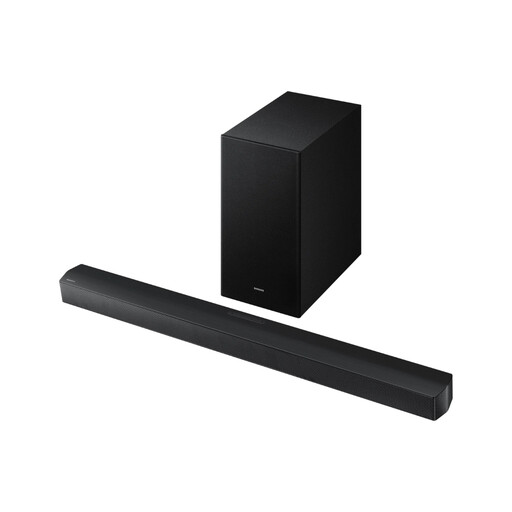
Consider this setup if you have space for a separate bass unit and want to adjust its level for film viewing in a flat.
The stated configuration is 3.1ch with a wireless subwoofer. Check the TV connection and low-volume controls against your intended setup.
 No image available
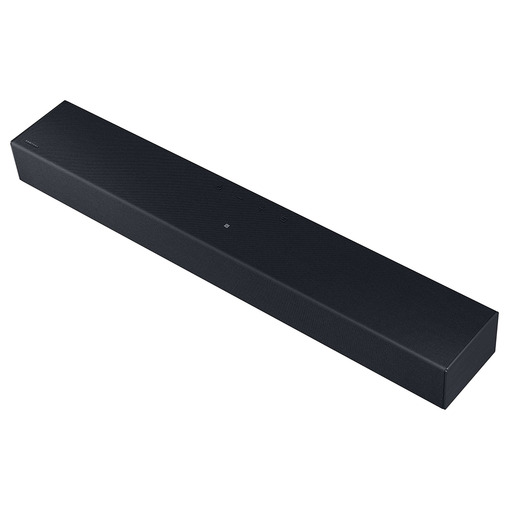
Consider a 2.0-channel soundbar if you favour a simpler TV-area arrangement over placing a separate bass unit.
Confirm the exact TV connection before ordering, particularly if you need HDMI ARC, and check its controls for late viewing.
 No image available
Consider this soundbar if you want a single main unit and are comparing how models handle dialogue and film formats.
Check its low-volume controls for evening viewing and confirm that your TV and source can deliver any audio format you intend to use.
 No image available
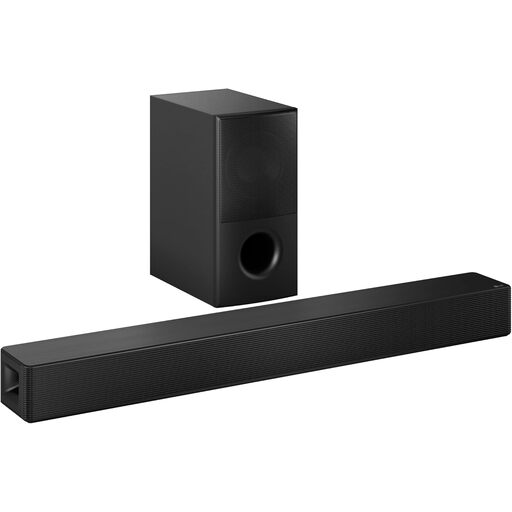
Consider this package if you can place a separate subwoofer and want the option to moderate bass for your room.
The title specifies a 320W, 2.1-channel soundbar with a wireless subwoofer. Confirm its TV connection and whether its low-volume controls suit late viewing.
 No image available
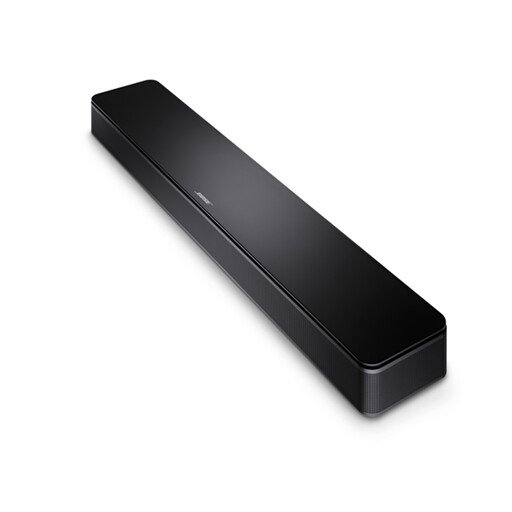
Consider this TV speaker if your priority is a straightforward soundbar arrangement rather than a multi-piece surround setup.
Check the connection to your TV and whether its dialogue and low-volume controls meet your film-viewing needs.
Not for every Atmos implementation, but the requirement depends on the model and audio format. Sonos says Beam (Gen 2) needs HDMI ARC or eARC for Atmos content, while some higher-bandwidth formats require eARC; check the soundbar, TV and source settings together.
Look for a night or low-volume mode alongside dialogue enhancement, then check how those controls work with TV audio. Sonos says Beam's Night Sound reduces loud-effect intensity and enhances quieter sounds; Denon lists Night mode and Dialog Enhancer for DHT-S517. Neither feature makes loud playback inaudible to neighbours.
Not necessarily: it depends on whether you can place the unit and manage its level, especially near shared floors and walls. If keeping equipment to a minimum matters more, compare a single-bar setup instead.
Yes, loud playback can prompt a complaint, but whether it amounts to a statutory nuisance depends on the circumstances. For England, GOV.UK says the assessment includes whether noise unreasonably and substantially interferes with the use or enjoyment of a home; check local council guidance and your tenancy or lease terms for your situation.
Use an electrical-waste collection route rather than household rubbish. GOV.UK identifies household waste recycling centres and says a retailer must accept an old like-for-like electrical item free of charge when you buy a replacement.