Dialogue-first film watchers
If music and effects make speech hard to follow, particularly at modest volume, look at dialogue controls and night or low-volume settings. Check how those settings work on the exact model.


For film soundtracks in a small living room, a compact soundbar is a practical starting point if dialogue and a tidy TV setup matter most; check its low-volume controls and TV connection before buying. Consider an expandable soundbar if you want to add bass or rear speakers later, or a separate surround system if you can place speakers around the seating area and accommodate the extra equipment. An Atmos label alone does not establish what you will hear in your room.
If music and effects make speech hard to follow, particularly at modest volume, look at dialogue controls and night or low-volume settings. Check how those settings work on the exact model.
If you want film sound without rear-speaker stands, extensive wiring or an AV receiver, a compact soundbar is a starting point. Measure the space by the TV and check its audio connection.
If you can place speakers around the seating area, a separate package lets you plan a physical surround layout. Allow for the additional equipment, cables and setup work.
Choose it when: Clearer dialogue and a low-clutter setup matter more to you than placing speakers around the room.
Trade-off: A standalone bar does not give you the same physical surround-speaker placement as a separate package.
Choose it when: You want to start with a bar but may add compatible bass or rear speakers later.
Trade-off: Added components need their own space, power and setup; check compatibility before planning an expansion.
Choose them when: You can position speakers around the listener and value a distinct physical surround layout.
Trade-off: The layout requires more equipment and placement work, and many systems use an AV receiver.
| Concern | What to check | Who this matters to |
|---|---|---|
| Dialogue and quiet viewing | Check the exact model for speech controls and a night or low-volume setting, including how you access them. | If effects drown out speech or you watch while others are asleep, understanding lines without turning everything up comes first. Around 40% of consumers put dialogue and quiet viewing first. |
| Fit and TV connection | Measure the available width, depth and TV clearance; confirm the TV and soundbar connections you intend to use. | When furniture space is tight, keeping the system manageable without complicating the TV setup is the priority. Roughly 30% of consumers place fit and simple connection first. |
| Bass and surround layout | Decide where additional speakers could sit, and check compatibility before planning an expandable system or Atmos playback. | If I want soundtrack effects around the seating area, I need room for the components rather than relying on a format label alone. Around 30% of consumers prioritise bass and surround possibilities. |
An Atmos-labelled bar still needs compatible content, a suitable source and a supported TV connection. Sonos says its compatible home-theatre models require HDMI ARC or eARC for Atmos playback.
Check the TV ports and audio settings, then confirm the exact soundbar and source device support the format you intend to play.
A standalone soundbar keeps the setup compact; a separate surround system positions multiple speakers around the room. Those are different approaches to the space and layout available.
Choose a bar for a simpler footprint, or plan an expandable or separate system only if you can position its extra components.
Additional speakers may also need stands, power sockets, cables or an AV receiver.
A soundbar can obstruct the TV or extend beyond the furniture, while a bundled or future subwoofer needs a suitable place of its own. Dolby notes that room size and shape affect equipment fit and placement.
Measure the usable space at the TV and identify possible positions for any bass module or rear speakers before choosing a system.
Sonos and Yamaha describe speech-focused controls, but the soundtrack, room and listening level still matter. Which? assesses speech clarity as a separate test consideration.
Use dialogue features to narrow your choices, then look for an independent assessment of the exact model and check the retailer’s applicable return policy before testing it with your TV.
The Beam (Gen 2) is relevant if you want a compact bar with app controls for film viewing.
The SR-B30A is a soundbar to consider if TV connection choices and dialogue controls are priorities.
Bose’s Smart Soundbar is relevant if you want to begin with a bar and consider compatible additions later.
These soundbars offer different starting points for film sound in a small living room. Some include a separate subwoofer, so measure for the complete setup rather than the bar alone; check dialogue controls, quiet-viewing options and TV compatibility on the model you choose.
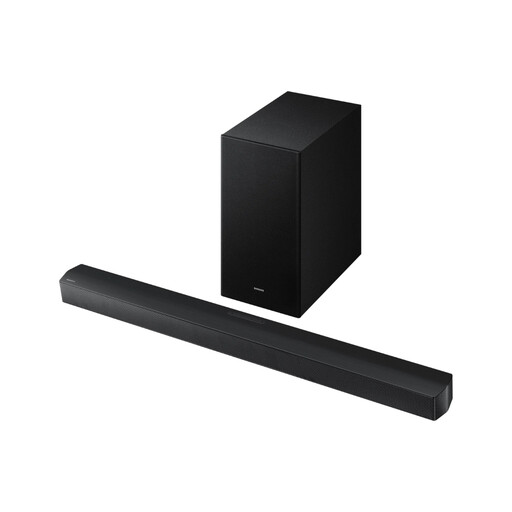 No image available
Consider this soundbar and subwoofer set if you want a separate bass unit for film soundtracks. Check space for both components and confirm that its TV connection and quiet-viewing controls meet your needs.
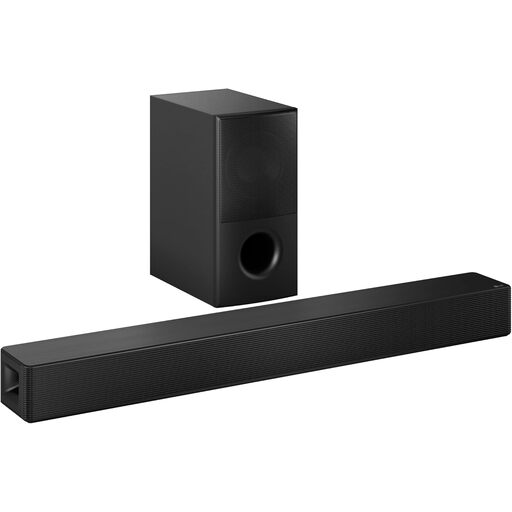 No image available
This soundbar and subwoofer set is worth considering if you have room for a separate bass unit. For dialogue-led or late-night films, check the exact listening controls, your TV connection and the space available for both components.
 No image available
If film dialogue is your priority, check how this model’s dialogue and low-volume controls work before choosing it. Measure its position by the TV and confirm that your intended audio connection is compatible.
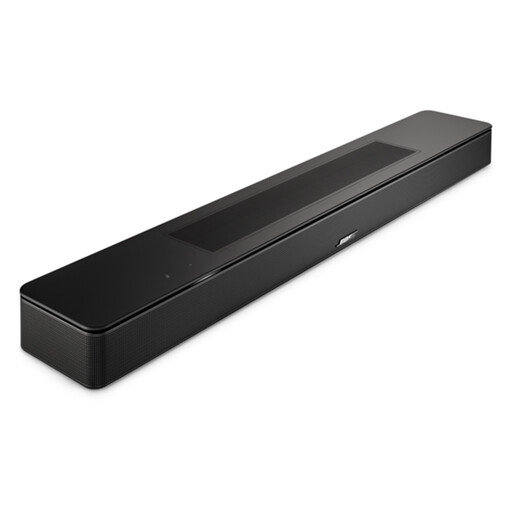 No image available
Consider this bar if fitting it by the TV is a leading concern. Check its dimensions, dialogue and quiet-viewing controls, and TV connection; confirm exact compatibility before planning to add bass or surround components.
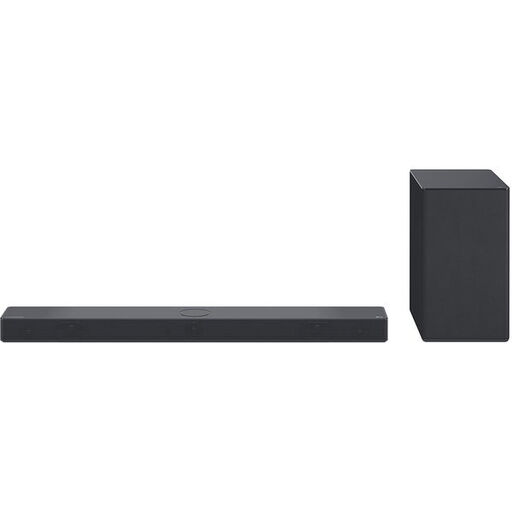 No image available
This soundbar and subwoofer set suits a setup with room for both components. Check dialogue and low-volume controls if they matter to you; if you plan to use an LG OLED C Series TV bracket, confirm compatibility with your exact TV.
No, not for every basic TV-audio connection. Check the requirements of your exact model: Sonos says Beam (Gen 2) and compatible home-theatre models need HDMI ARC or eARC for Atmos playback, while an optical connection on certain models does not offer the same TV-control functions.
No. Atmos playback needs compatible content, equipment and an appropriate connection, while placement and the room affect what you hear. Check the full audio path and where the soundbar will sit rather than judging it by the Atmos label alone.
Not necessarily: it can suit a small living room if you can position speakers around the listening area and accommodate the additional equipment. If those positions are impractical, a compact soundbar avoids that placement burden.