Weekly lunch batch cooks
If you make several lunches at once, start with the hot-fill limit and the volume of your usual containers. You will also need space to cool and store the portions after cooking.


For several packed lunches from one cooking cycle, compare a soup maker’s usable hot-soup capacity with the size of your lunch containers: a 1.6L model offers more room for a batch, while a smaller model may suit fewer portions and tighter storage. Choose sauté or reheat functions only if they remove steps from your routine, and plan how you will portion, cool and refrigerate the soup.
If you make several lunches at once, start with the hot-fill limit and the volume of your usual containers. You will also need space to cool and store the portions after cooking.
If transferring ingredients between appliances is the step you want to avoid, look for the cooking and blending programmes you will actually use. Check the particular model: sauté and reheat are not universal soup-maker functions.
If you make only a few portions at a time, a smaller automatic soup maker may suit your routine. Compare its usable hot capacity with your containers before trading batch size for easier storage.
Work out how much soup you need per cycle, then decide whether extra cooking programmes and the cleaning routine justify space in your kitchen.
| Concern | What to check | Who this matters to |
|---|---|---|
| Hot-soup batch size | Compare the hot-fill limit with your lunch-container volume; do not use a larger cold-blend limit to plan soup portions. | If I want several lunches from one cycle, I need enough usable capacity without overfilling the jug. Around 42% of consumers put batch size first. |
| One-jug workflow | Check for the specific sauté, smooth, chunky or reheat programmes you would use. | When transferring food between a pan and blender slows lunch prep, I want the machine to handle more steps in one jug. For around 33% of consumers, that workflow is the primary concern. |
| Cleaning and storage | Read the jug, lid and blade-cleaning instructions, and check the appliance dimensions against your storage space. | If cupboard space is tight or cleaning the jug takes too much effort, I am less likely to use it regularly. Cleaning and storage come first for around 25% of consumers. |
SharkNinja UK lists the Ninja HB150UK at up to 1.7L for cold blends but up to 1.4L for hot blends. The larger figure would overstate the soup you can plan to make in one cycle.
Compare the stated hot capacity and maximum-fill guidance with your usual lunch containers.
Sauté, chopping and cold-blend modes matter most if they replace steps in your actual lunch-prep routine. They are not necessary for everyone making smooth or chunky soup.
List the tasks you want the machine to perform, then check the programmes on the exact model.
A larger batch also has to be divided and cooled. GOV.UK advises placing cooked food in the fridge within one to two hours; Food Standards Scotland advises cooling it as quickly as possible, ideally within the same period.
Portion soup promptly into suitable containers and make sure there is room to refrigerate it.
Preparing several lunches also means having enough containers and fridge space for the portions.
A clean programme does not tell you how to wash every part of a particular appliance. Which? also treats ease of cleaning as a practical point of difference between soup makers.
Read the model’s instructions for cleaning the jug, lid and blades, including which parts must be washed separately.
Its Total Control 501020 is a dedicated 1.6L soup maker presented by Morphy Richards for family portions and meal preparation.
The Ninja HB150UK takes a multifunction hot-and-cold blender approach to soup making.
The Easy Soup BL841140 is a 1.2L automatic model to consider when smaller batches suit your lunch routine.
The Salter EK5118V2 is a 1.6L digital soup maker with core soup and drinks settings.
These soup makers offer different stated jug sizes for packed-lunch preparation. Check each model’s hot-use fill guidance against the portions you intend to make.
 No image available
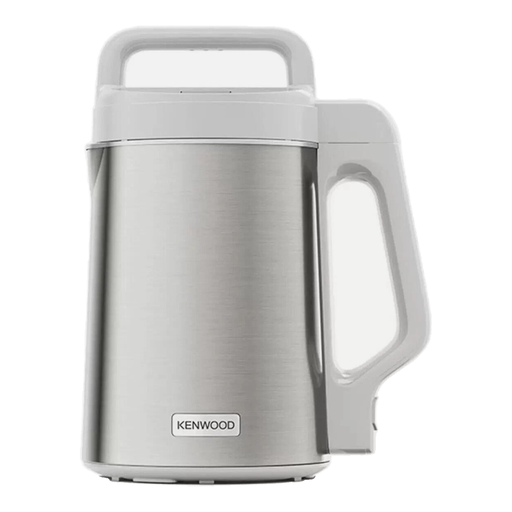
Consider this model if you want to prepare more than one lunch portion in a cycle. The product name states a 1.5L capacity; check the hot-soup fill guidance before deciding how many of your containers one cycle will cover.
 No image available
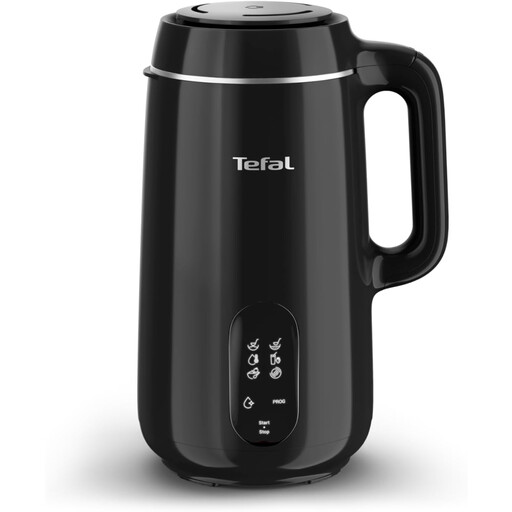
Consider this model if its hot-recipe fill limit matches the smaller lunch batches you prepare. Its product name lists six programmes and six blades; check which programmes suit your soups and how the jug and blades must be cleaned.
Choose by usable hot-soup capacity and the volume of your lunch containers, not jug size alone. A 1.6L model offers more room for several portions per cycle than a 1.2L model, but check the exact maker’s maximum-fill instructions before planning a batch.
Divide cooked soup into smaller portions and cool it promptly before refrigerating it. GOV.UK advises placing cooked food in the fridge within one to two hours, while Food Standards Scotland advises cooling it as quickly as possible, ideally within one to two hours.
Use a soup maker for reheating only when the exact model has a suitable function and its instructions permit it. Morphy Richards lists reheat for the Total Control 501020, but that does not establish the function for other models; follow the applicable food-safety guidance and reheat only the portion you intend to eat.