Solo fresh-soup cook
You want tomato and basil soup for yourself, with a smaller appliance and fewer leftovers. Compact 1L models are relevant, provided their minimum batch size works for you.


For tomato and basil soup mainly for one person, start with a compact 1L model if limiting leftovers and worktop space matters most. Lakeland describes its compact model as making two meal-sized portions, while Morphy Richards says its 1L model makes up to three; neither description confirms that it can make just one bowl. A larger model makes more sense if you deliberately prepare extra portions or want features such as sautéing or reheating, but check the exact manual’s minimum-fill level before choosing either size.
You want tomato and basil soup for yourself, with a smaller appliance and fewer leftovers. Compact 1L models are relevant, provided their minimum batch size works for you.
You cook for one but are happy to refrigerate or freeze extra portions. A larger jug may suit that routine if you have room for both the appliance and the finished soup.
You want to soften onion or garlic in the jug before making tomato soup. Look for a stated sauté function rather than assuming every automatic soup maker has one.
For soup for one, decide on an acceptable batch size before comparing programmes: a compact label alone does not establish that an appliance will run with enough ingredients for just one bowl.
| Concern | What to check | Who this matters to |
|---|---|---|
| Batch size and space | Compare working capacity and dimensions, then check the manual’s minimum fill. Lakeland describes two meal-sized portions from its compact 1L model. | I want fresh soup without making more than I can use or giving up too much worktop space. Around 50% of consumers put smaller batches and space first. |
| Cooking and cleaning effort | Check for a smooth-soup programme and read what the cleaning cycle actually requires. | On a busy day, I would rather let the appliance cook and blend my soup than transfer it between pans and a blender. Around 30% of consumers prioritise a simpler cooking and cleaning routine. |
| Sautéing and planned leftovers | Confirm a sauté function on the exact model and consider whether you will use its larger batch capacity. | I want to soften onion or garlic in the jug, and I am willing to make soup for another meal. Around 20% of consumers put flavour preparation and batch flexibility first. |
Lakeland describes two meal-sized portions from its compact 1L soup maker, while Morphy Richards says its 1L model makes up to three portions. Capacity is not the same as the smallest permitted batch.
Check the exact manual’s minimum and maximum fill levels before buying. If the minimum is more than you want to eat at once, plan how you will store the remainder.
A required larger batch can mean extra ingredients and leftovers to store.
Morphy Richards positions its 1.6L Total Control model for larger batches and provides sauté and reheat functions. Those functions are useful only if they fit how you intend to cook.
Choose a larger model when you regularly prepare extra portions or expect to use its additional functions; otherwise, compare compact models first.
Regularly making more soup than you need also takes storage space and can leave food unused.
A cleaning programme does not replace the model’s care instructions. Morphy Richards specifies water and a small amount of washing-up liquid for the Total Control self-clean cycle.
Read the cleaning instructions for the jug, lid, blades and seals before choosing a model, particularly if easy clean-up is a priority.
Electrical product requirements depend on where the appliance is supplied. GOV.UK guidance dated August 2026 discusses product marking for Great Britain and distinguishes Northern Ireland’s market processes.
Before buying, check that the seller supplies instructions and an appliance intended for your part of the UK, with the applicable documentation and marking.
Its range includes a Compact 1L model and a 1.6L Total Control model with additional cooking functions.
Its Compact Soup Maker has a 1L working capacity, smooth and chunky settings, and a clean function.
Its Easy Soup and Multisoup models offer automatic soup programmes, including smooth and chunky options.
These soup makers suit cooks considering automatic preparation and willing to check whether a larger batch fits their one-person routine. Neither should be assumed to make just one bowl without checking its minimum-fill instructions.
 No image available
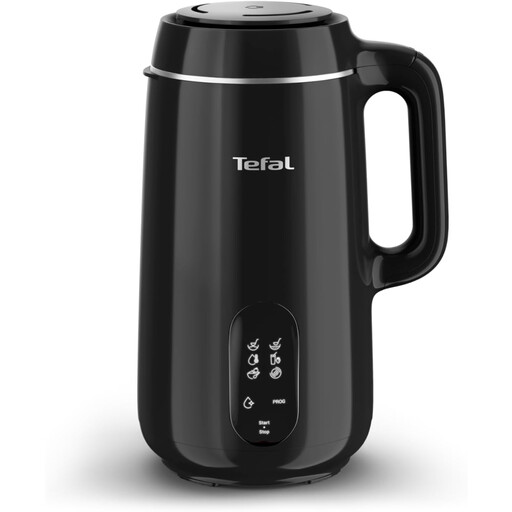
Consider this model if you want an automatic route to smooth tomato soup and are comfortable planning for leftovers; check the manual’s minimum fill before relying on it for one bowl.
The product name specifies six programmes and six blades. Tefal states a 1L working capacity for hot recipes on the Multisoup BL5628G0.
 No image available
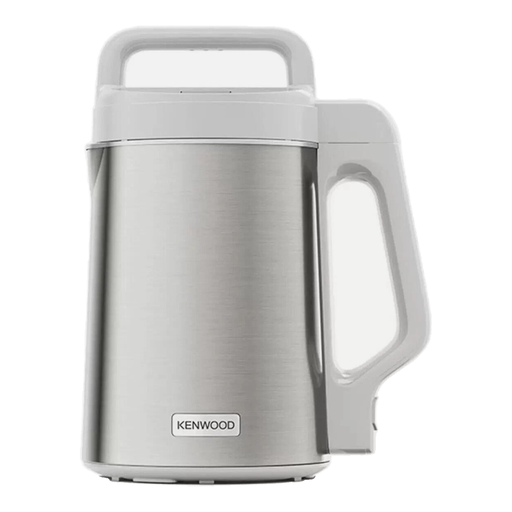
Consider the 1.5L Soupeasy if you intend to make tomato soup for another meal as well as today’s serving. Check the exact manual’s minimum fill before choosing it for smaller batches.
Not necessarily: Lakeland describes two meal-sized portions from its compact 1L model, and Morphy Richards says its 1L model makes up to three portions. Check the exact appliance manual’s minimum fill before assuming it can make one bowl.
Look for a dedicated smooth-soup programme on the model you choose. Morphy Richards lists one on its Compact 1L model, while Lakeland and Tefal list smooth settings on their compact or automatic soup makers; follow the chosen appliance’s instructions for preparing ingredients and filling the jug.
No: a clean cycle is an aid, not a substitute for the appliance’s care instructions. For example, Morphy Richards specifies water and a small amount of washing-up liquid for its Total Control cycle; check how the exact model’s lid, blades and seals should be cleaned.
No, not if a straightforward smooth-soup programme meets your needs. A sauté function is worth considering if you specifically want to soften onion or garlic in the same jug before cooking; Morphy Richards lists that function on its 1.6L Total Control model, alongside the trade-off of a larger batch capacity.