Weekly soup meal preppers
If you want several portions ready to store after one cycle, the usable hot-fill limit matters more than the jug’s overall size. Plan how you will divide and cool the soup after cooking, too.


For several portions of tomato and basil soup in one cycle, start by checking usable hot-soup capacity; a model around 1.6 L may suit larger batches, while a smaller jug may be enough for fewer portions. Choose integrated sautéing if you want to soften onion or garlic in the same jug, and check the smooth-soup programme, maximum-fill instructions and cleaning requirements on the exact model.
If you want several portions ready to store after one cycle, the usable hot-fill limit matters more than the jug’s overall size. Plan how you will divide and cool the soup after cooking, too.
If your recipe starts by softening onion or garlic, an integrated sauté mode lets you do that step in the soup-maker jug rather than a separate pan. Check the operating instructions for the exact model.
If you make fewer portions at a time, a compact model with an automatic smooth-soup programme may fit your routine. Check what still needs washing by hand after its cleaning cycle.
Decide how many portions you need from one hot-soup cycle before weighing up sautéing and automatic programmes. Jug capacity, usable hot capacity and maximum-fill marks are not necessarily the same figure.
| Concern | What to check | Who this matters to |
|---|---|---|
| Hot-soup capacity | Compare the exact model’s hot maximum-fill mark with the portions you want from one cycle. | I want enough tomato and basil soup to put several portions away without starting another cycle; around 42% of consumers put batch capacity first. |
| Smooth soup and clean-up | Look for a smooth-soup programme and read what its cleaning cycle does and what must still be washed manually. | When I make soup regularly, I would rather use an automatic programme than manage each cooking and blending step; roughly 33% of consumers prioritise this lower-effort routine. |
| One-jug sautéing | Confirm that the model has a dedicated sauté mode and follow its lid and safety instructions. | If I soften onion or garlic before adding the tomatoes, I want to avoid a separate pan; about 25% of consumers place that one-jug workflow first. |
Hot and cold limits can differ. Ninja specifies 1.4 L for hot use and 1.7 L for cold use on the compatible jug listed for its HB150UK; Morphy Richards warns that filling above a soup maker’s maximum line can trigger its overfill sensor.
Plan portions using the hot maximum-fill mark and instructions for the exact model, not its cold-blending capacity or the jug’s physical volume.
Cooking and blending soup does not establish that a machine can fry onion or garlic first. Morphy Richards specifies sautéing as a separate function on its 501014 model.
If that step matters to your recipe, check for a dedicated sauté mode; otherwise, use a separate pan when you want to cook aromatics first.
An automatic cleaning programme does not replace the model’s instructions for handling its lid, blades and removable parts.
Read the manual’s cleaning steps and immersion restrictions before choosing a model for frequent batches.
Dividing cooked soup into smaller portions makes it easier to cool and store. GOV.UK’s guidance for food businesses recommends portioning food before freezing and reheating food until it is steaming hot throughout; that guidance is not a statement of household legal requirements.
Portion the soup for storage and reheat the portion you intend to eat until it is steaming hot throughout.
Its dedicated soup-maker range includes the 1.6 L 501014 Sauté & Soup, a model for buyers considering a larger batch and one-jug preparation.
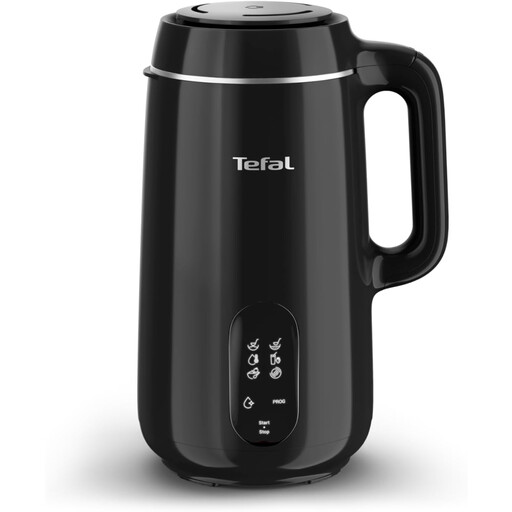
The Easy Soup BL841140 is a compact automatic model with a 1.2 L jug, distinct from the Tefal Multi-soup product shown below.
Ninja describes the HB150UK as a hot-and-cold blender and soup maker for buyers who also want cold blending.
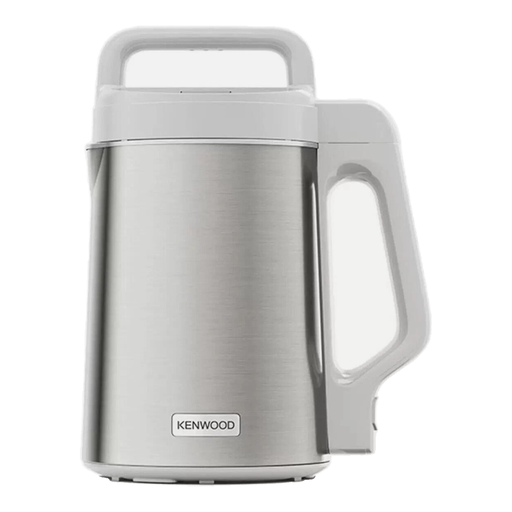
These choices include a six-programme Tefal for smaller batches and a Kenwood with a 1.5 L jug. For either one, check the hot maximum-fill instructions before deciding how many portions to make per cycle.
 No image available
Consider this model if you make smaller batches and want automatic settings. Its title specifies six programmes and six blades; check the exact programme names for the smooth soup you want, along with the hot maximum-fill mark.
 No image available
If you want several portions from one cycle, the stated 1.5 L jug capacity is a starting point, not a guarantee of 1.5 L of usable hot soup. Check the hot maximum-fill guidance, smooth-soup setting and cleaning instructions; if you want to cook aromatics in the jug, confirm whether this model has a sauté mode.
Choose by the portions you need from one hot-soup cycle, using the model’s maximum-fill mark rather than jug volume alone. Morphy Richards positions its 1.6 L 501014 for batch cooking, while Tefal says its 1.2 L Easy Soup BL841140 makes up to four servings; serving size and the soup you make will affect your own portion count.
No: integrated sautéing is a choice for cooks who want to soften aromatics in the same jug before the soup cycle. Morphy Richards specifies that function on its 501014 and says fitting the lid disables sauté mode, so follow that model’s operating instructions.
No. A cleaning programme may simplify part of the job, but follow the exact model’s manual for its lid, blades and removable parts. Tefal specifies an easy-cleaning programme for Easy Soup BL841140; that feature alone does not describe every cleaning step.
Divide the cooked soup into smaller portions so it can cool and be stored more manageably, then reheat the portion you intend to eat until it is steaming hot throughout. GOV.UK gives portioning and reheating advice in its guidance for food businesses; it should not be read as a household-specific legal rule.