Choose a specialist croissant explicitly sold as sourdough when that detail is essential, as the supermarket examples considered here are all-butter rather than confirmed sourdough products. For supper on the same evening, ready-to-eat all-butter croissants are the immediate option, while frozen bake-at-home croissants suit a planned warm serving if you can allow about 20 minutes in the oven.
Who this suits
Sourdough-first late-night shoppers
You want a croissant sold specifically as sourdough rather than a conventional buttery pastry, and are open to buying from a specialist bakery instead of assuming a supermarket croissant aisle will meet that requirement.
Warm-pastry supper planners
You want a warm croissant later in the evening and can plan ahead with freezer storage and an oven. Bake-at-home options in this comparison state a 20-minute cooking time from frozen.
Allergen-aware pastry buyers
You need to check wheat or gluten, milk, egg, nuts and possible cross-contact information before choosing a croissant, particularly for loose bakery products or pastries with fillings.
What to check before buying
Start with the product description, then match the preparation format to when you plan to eat. Sourdough wording, storage instructions and allergen information matter more here than a premium or slow-fermented label.
Specialist sourdough croissant
Choose it when: You specifically want a croissant sold as sourdough and can use a specialist-bakery route.
Trade-off: It may not offer the same immediate, local availability as a supermarket pastry.
Ready-to-eat all-butter croissant
Choose it when: You need a croissant to serve without baking later that evening.
Trade-off: The supermarket examples are conventional all-butter croissants, not confirmed sourdough products.
Frozen bake-at-home croissant
Choose it when: You have freezer space, an oven and time for a warm planned supper.
Trade-off: It is not an instant option and the examples considered are all-butter rather than sourdough.
| Priority |
What to check |
Your needs |
| Sourdough identity |
Look for “sourdough croissant” in the product name or description. Treat “all butter” and “slow-fermented” as separate descriptions, not proof of sourdough. |
I want the sourdough element to be explicit, rather than choosing a conventional butter croissant by mistake. |
| Serving time |
Check whether the pastry is ready to eat or requires frozen storage and oven cooking. The frozen examples state 20 minutes from frozen. |
For food needed tonight, I need something ready to serve; for a planned warm supper, I can allow oven time. |
| Allergen information |
Read the current ingredients and allergen declaration for wheat, milk and egg. Check any nut, sesame or soya warning where shown. |
I need clear information before serving a pastry to someone avoiding particular ingredients. |
| Storage plan |
Follow the pack instructions for freezing, defrosting and use-by guidance. Confirm that you have freezer capacity before choosing bake-at-home pastries. |
I want a croissant I can keep for a later supper without relying on an immediate shop visit. |
Common buying mistakes
-
Treating “all butter” or “slow-fermented” as proof of sourdough
These descriptions can apply to a conventional croissant. The Pret product listed below, for example, is all-butter and slow-fermented but includes yeast in its ingredients.
Use “sourdough croissant” as a required product description, then read the listing and ingredient information before buying.
-
Buying frozen croissants when food is needed immediately
Frozen bake-at-home pastries need freezer storage and oven cooking, so they do not solve an immediate late-night supper need.
Choose a ready-to-eat croissant for tonight, or keep frozen croissants as a planned backup and allow the stated cooking time.
-
Assuming a plain-looking croissant is free from major allergens
Conventional all-butter croissants can contain wheat, milk and egg, while recipes and cross-contact warnings may differ between products.
Read the current pack label or bakery allergen information every time, especially for loose pastries, filled pastries and recipe changes.
Relevant brand references
M&S
M&S Food offers in-store bakery croissants alongside a separate sourdough bread assortment.
- Its croissant listing includes an All Butter Croissant.
- Its shown sourdough range covers bread, baguettes and loaves rather than a confirmed sourdough croissant.
Tesco Finest
Tesco’s croissant category includes Tesco Finest All Butter Croissants alongside Tesco and branded alternatives.
- The Finest product is a ready-to-eat supermarket all-butter option.
- The category information does not identify it as sourdough, and availability can vary by store.
Sainsbury's Taste the Difference
Taste the Difference includes a four-pack of butter croissants made with French butter.
- The product instructions state that the croissants can be frozen before the best-before date.
- It is described as a conventional all-butter croissant rather than sourdough.
Waitrose No.1
Waitrose No.1 offers butter croissants prepared in France, while Waitrose also sells frozen all-butter croissants.
- The frozen own-label product is stated to bake from frozen in 20 minutes.
- The ready-to-eat and frozen examples are all-butter products, not sourdough products.
Lidl
Lidl GB lists an in-store All Butter Croissant as part of its bakery offering.
- Its product page directs shoppers to select a local store for local offers.
- The available product information identifies an all-butter croissant, not a sourdough croissant.
Joybuy product options
A Joybuy option for the frozen bake-at-home alternative: suitable for a planned warm late-night supper with freezer and oven access, rather than a strict sourdough choice.
 No image available
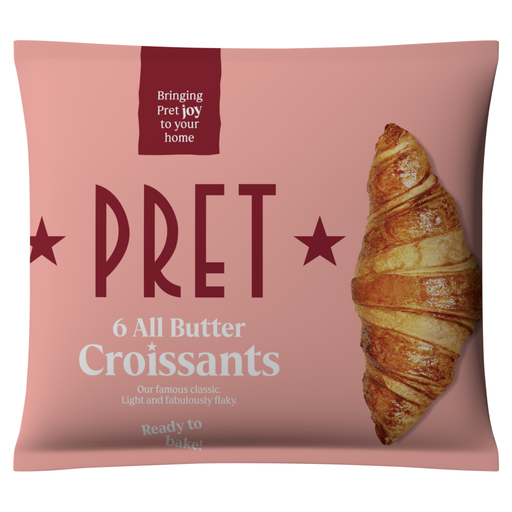
Pret A Manger Butter Croissants 330g
For a planned warm supper, these all-butter croissants are stated to bake from frozen in 20 minutes.
Contains wheat or gluten, milk and egg; the product information also notes possible nuts, sesame and soya. This is not a confirmed sourdough croissant.
Joybuy
Frequently asked questions
Are slow-fermented croissants automatically sourdough croissants?
No. A croissant can be described as slow-fermented and still be a conventional yeast-leavened all-butter product. For a strict sourdough choice, select one explicitly sold as a sourdough croissant and check its product and ingredient information.
What is the fastest option for a late-night croissant supper?
A ready-to-eat supermarket croissant is the immediate option. Frozen croissants are better for a planned warm serving: Waitrose and Pret product listings state that their frozen all-butter croissants bake from frozen in 20 minutes.
Can I assume a croissant suits a vegan or allergy-aware diet?
No. The conventional all-butter croissants considered here contain wheat, milk and egg. In England, Wales and Northern Ireland, the Food Standards Agency states that prepacked-for-direct-sale food must show the food name and a full ingredients list with allergens emphasised; check the pack or bakery information before eating.
Can I freeze supermarket croissants for another late-night supper?
Follow the individual product instructions. Sainsbury's Taste the Difference Butter Croissants state that they can be frozen as soon as possible after purchase and within the best-before date; once defrosted, they should be used the same day.


