Holiday hosts serving several people
Choose a practical pastry for a shared summer breakfast or travel-day spread, while separating a listed multi-pack all-butter croissant from an unconfirmed sourdough claim.


Choose a sourdough croissant only when the bakery or retailer confirms that the exact croissant is sourdough and provides current ingredient, allergen and storage information. Tesco, M&S, Sainsbury’s and Waitrose list conventional butter or all-butter croissants, while several also list sourdough bakery products separately; for a dependable group breakfast, an all-butter option may be the more straightforward choice if sourdough is not essential.
Choose a practical pastry for a shared summer breakfast or travel-day spread, while separating a listed multi-pack all-butter croissant from an unconfirmed sourdough claim.
If fermentation or an artisan-style croissant matters, check the exact item carefully: supermarkets may list sourdough bakery goods and croissants as separate products.
Check the current ingredient and allergen declaration before choosing a bakery item, especially for loose or counter-served pastries. The Food Standards Agency states that allergen information must be available for prepacked and non-prepacked food.
Choose it when: The sourdough process matters more than supermarket convenience and the bakery can confirm the exact pastry, ingredients and collection conditions.
Consider: Availability may depend on advance ordering or a collection slot, and the product name alone does not settle allergen suitability.
Choose it when: You need a straightforward breakfast pastry for several people and sourdough is not a requirement.
Consider: A butter or all-butter description does not confirm sourdough fermentation; check local stock and the current product label.
Choose it when: Your breakfast or picnic needs a sourdough bread element, but no confirmed sourdough croissant is available.
Consider: This is a mixed bakery option, not a substitute for a sourdough croissant; check each item’s ingredients and storage instructions separately.
Start with the exact pastry identity, then check whether the pack, collection arrangement and storage instructions suit your holiday plans.
| Priority | What to check | Your needs |
|---|---|---|
| Sourdough identity | Check that the croissant itself is described as sourdough. Read the item description and ingredients rather than relying on a retailer’s wider sourdough range. | I want a sourdough-fermented croissant, not simply a butter croissant sold alongside sourdough bread. |
| Pack and local availability | Check pack size, selected-store stock and delivery or collection timing. Confirm availability again before travelling or ordering food for a group. | I need enough pastries for a breakfast gathering, picnic or travel day without depending on a catalogue listing alone. |
| Ingredients and allergens | Read the current allergen declaration and full ingredients for the exact variant. Ask for current information when buying loose bakery pastries. | Someone eating the croissants may need to avoid particular ingredients. The Food Standards Agency notes that wheat, rye, barley and oats are cereals containing gluten. |
| Storage and date marking | Follow the individual pack or bakery storage instructions. Check whether the product has a use-by or best-before date and keep chilled items chilled where directed. | I need the pastries to remain suitable for a delayed breakfast, journey or warm-weather picnic. |
M&S, Tesco Finest and Waitrose list sourdough bakery products separately from croissants in their catalogues. An all-butter croissant may not meet a specific sourdough requirement.
Check the name, description and ingredients for the exact croissant. If it is not described as sourdough, treat it as a conventional croissant.
Sourdough pastry can contain gluten-containing cereals. One UK bakery’s vegan sourdough croissant listing includes wheat, rye and oats among its ingredients.
For allergies or coeliac disease, use the current ingredient and allergen information for the exact product and follow medical advice.
Stock, offers and bakery availability can vary by selected store or delivery slot. Lidl, for example, asks shoppers to select a store for local availability of its seeded sourdough loaf.
Check the chosen store or delivery slot before travelling. A conventional all-butter croissant with a separate sourdough loaf or baguette can be a practical fallback.
Storage requirements and shelf life are product-specific. Food Standards Agency guidance distinguishes a best-before date, which concerns quality, from a use-by date, which concerns safety.
Read the individual product instructions, keep chilled products chilled where directed and do not use food beyond its use-by date.
M&S lists all-butter croissants and separately offers crafted, slow-proved sourdough products in its in-store bakery range.
Tesco lists Tesco Finest All Butter Croissants in a four-pack and separately lists Tesco Finest sourdough breads and bakery products.
Sainsbury’s lists Taste the Difference Butter Croissants x4 and standard Croissants x6 in its breakfast-bakery category.
Waitrose lists regular croissants, eight all-butter croissants and No.1 butter croissants, while its No.1 bakery range also includes a sourdough baguette.
Lidl’s UK bakery pages show pastries and a freshly baked seeded sourdough loaf.
Asda has an indexed grocery listing for bake-from-frozen all-butter croissants.
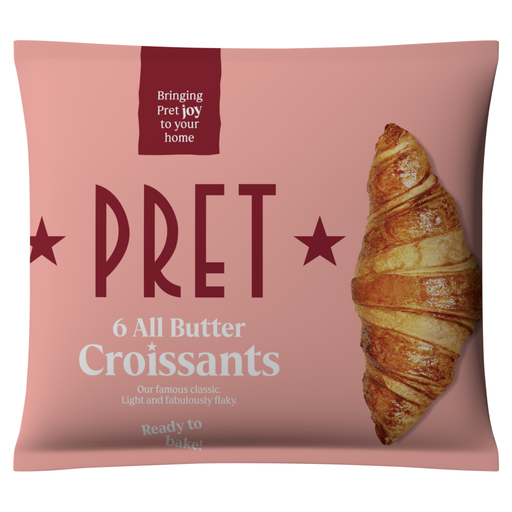
Joybuy product options for the conventional all-butter croissant route, suited to a holiday breakfast where freezer storage and an oven are available.
 No image available
A conventional bake-at-home option for a holiday breakfast where freezer storage and an oven are available.
All-butter and slow-fermented; bake from frozen for 20 minutes. Keep frozen at -18°C or cooler and do not refreeze after thawing.
Contains wheat/gluten, milk and egg; may contain nuts, sesame and soya. It is not described as a sourdough croissant.
No. All-butter describes a recipe characteristic, not proof of sourdough fermentation. Tesco, M&S, Sainsbury’s and Waitrose list butter or all-butter croissants while several also list sourdough bakery products separately, so buy a croissant as sourdough only when that exact product is identified as such.
No. Sourdough is not a gluten-free claim. The Food Standards Agency identifies wheat, rye, barley and oats as cereals containing gluten, so check the exact product’s allergen declaration rather than inferring suitability from the word “sourdough”.
Food businesses in the retail and catering sector must provide allergen information for both prepacked and non-prepacked food and drink, according to the Food Standards Agency. For a loose bakery croissant, ask for current allergen and ingredient information; for a packaged item, check the pack.
Follow the exact product’s storage instructions and date marking. Food Standards Agency guidance says a best-before date concerns durability and quality, while a use-by date concerns safety and should not be exceeded; keep any chilled product at its stated storage temperature.