Who this shop suits

Christmas brunch hosts seeking a distinctive pastry

For shoppers serving a smaller festive breakfast or brunch who specifically want the tangy, long-fermented character associated with a verified sourdough pastry rather than simply a premium all-butter croissant.

Supermarket shoppers feeding several guests

For shoppers who need readily listed multipacks and straightforward supermarket availability. Tesco, Sainsbury’s and Waitrose list conventional croissant packs rather than verified sourdough croissants.

Allergy-aware pastry buyers

For shoppers who need to check the ingredients and allergen information for each exact product rather than assuming that sourdough, vegan, artisan or bakery-counter wording makes a croissant suitable.

Buying priorities

Verified artisan sourdough croissant

Choose it when: Sourdough fermentation is the priority and the bakery labels the pastry itself as a sourdough croissant with suitable ingredient and fulfilment details.

Consider: Availability can be bakery-specific, and a sourdough pastry may have a different ingredient profile from a conventional butter croissant.

Conventional all-butter supermarket croissants

Choose it when: You want a familiar buttery pastry with listed pack sizes, serving guidance or supermarket collection options for a larger breakfast.

Consider: All-butter wording does not establish sourdough fermentation.

Sourdough bread with conventional croissants

Choose it when: Your table needs both a tangy sourdough element and flaky pastries, but a verified sourdough croissant is not available locally.

Consider: This is a mixed bakery choice, not a substitute for a sourdough croissant.

Priority What to check Your needs
Verified sourdough status Look for the exact phrase “sourdough croissant” on the product title or pack. Check that the description relates to the pastry itself, not a separate sourdough loaf or bakery range. I want confirmation that the croissant itself is sold as a sourdough pastry.
Pastry style Compare all-butter wording, the stated ingredient list and any bakery preparation description. Do not treat artisan, slow-proved and sourdough as interchangeable terms. For my festive breakfast, I am choosing between a familiar butter-rich croissant and a sourdough pastry with a different formulation.
Allergens and dietary suitability Read the current ingredients, declared allergens and any “may contain” statement for the exact pack or counter item. Ask for current information where it is not visible. I need information for the actual croissant if wheat, gluten, milk, egg, nuts or oat-related ingredients matter.
Serving and availability Check the selected store, collection or delivery option, storage requirements and reheating instructions. Treat displayed promotions as short-term information rather than a Christmas commitment. I want to avoid planning brunch around a pastry that is unavailable locally or needs oven time I have not allowed for.

Common buying pitfalls

  • Assuming a supermarket with sourdough bread also has sourdough croissants

    Sourdough bread and croissants can appear as separate bakery ranges, so a Christmas menu based on sourdough croissants can fail if the exact pastry is not confirmed.

    Search or ask for the exact phrase “sourdough croissant”. If a listing says only all-butter croissant, treat it as a conventional croissant or look to a specialist bakery.

  • Treating butter, vegan and artisan wording as interchangeable

    Different pastry styles can have different ingredients and dietary implications. A vegan sourdough example may use plant-based butter, while a conventional butter croissant can contain dairy butter, milk and egg.

    Decide whether verified sourdough fermentation, dairy-butter richness, vegan suitability or a particular allergen profile matters most, then read the exact ingredients.

  • Using displayed promotional pricing as a Christmas budget guarantee

    Retailer offers can have stated end dates, so a current offer may not apply when you place a Christmas collection or delivery order.

    Use current pack size and per-item information for short-term comparisons, then check the retailer again close to purchase.

    Time-limited supermarket offers may end before the Christmas food shop.

  • Relying on a generic online allergen description

    Recipes can change, and bakery-counter products can involve cross-contact considerations. Lidl states that it cannot guarantee other allergens are absent.

    For an allergy or intolerance, inspect the current label or obtain retailer-confirmed information before buying; do not substitute another croissant’s ingredients.

Relevant brand references

M&S

A supermarket bakery option with separate in-store croissant and sourdough-bread ranges for shoppers who want a conventional pastry alongside a sourdough loaf for a Christmas spread.

  • M&S describes its croissants as made with real butter and offers all-butter, reduced-fat and filled options.
  • Its sourdough range is listed separately, so it does not confirm a sourdough croissant. Stock and price depend on the selected Foodhall.

Tesco Finest

A premium own-label conventional croissant option for shoppers comparing a four-pack with standard Tesco packs.

  • Tesco lists Tesco Finest All Butter Croissants in a four-pack alongside standard all-butter packs and branded products.
  • The category listing does not identify Tesco Finest croissants as sourdough, and time-limited Clubcard offers should not be treated as Christmas pricing.

Sainsbury’s Taste the Difference

A premium own-label four-pack route for conventional butter croissants in a supermarket Christmas shop.

  • Sainsbury’s lists Taste the Difference Butter Croissants x4 as well as standard six- and eight-pack croissants.
  • Separate sourdough crumpets and bagels do not establish that the butter croissants are sourdough.

Waitrose

A conventional four-pack option for shoppers who want ingredient, nutrition, storage and reheating details before buying.

  • Waitrose lists four butter croissants made with butter and French flour, with 28% unsalted butter in the ingredient list and a 2–3 minute oven instruction.
  • The product contains wheat, milk and egg, may contain nuts, and is not labelled as a sourdough croissant.

Lidl

An in-store bakery route for conventional pastries where shoppers can check the selected branch and product label directly.

  • Lidl promotes an in-store bakery range that includes pastries.
  • Its public bakery information does not verify a sourdough croissant, and Lidl advises checking the product-box label or Customer Care for ingredients and additives information.

Joybuy product options

Joybuy product options for a conventional all-butter croissant route in a Christmas breakfast or brunch plan.
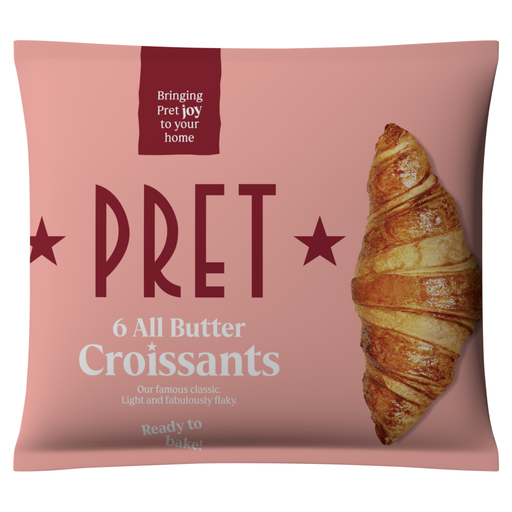
Pret A Manger Butter Croissants 330g

Pret A Manger Butter Croissants 330g

A bake-from-frozen option for a Christmas breakfast or brunch where a conventional butter croissant suits the plan.

The listing states 24% French-sourced butter, 27 layers and an approximately 20-minute bake time.

Store frozen at -18°C or cooler; once thawed, do not refreeze. It contains wheat/gluten, milk and egg, and may contain nuts, sesame and soya.

It is not explicitly identified as a sourdough croissant, so check the exact pack if sourdough is essential.

Joybuy

Frequently asked questions

Are sourdough croissants currently verified at M&S, Tesco, Sainsbury’s, Waitrose or Lidl?

Not from the current public UK category and product pages for these retailers. They show conventional croissants and, in several cases, separate sourdough bread or other sourdough bakery products, so buy only when the exact pastry listing or pack identifies it as a sourdough croissant.

Does artisan, slow-proved or all-butter automatically mean a croissant is sourdough?

No. These terms describe different product characteristics or bakery claims and do not by themselves establish a sourdough process. Look for an explicit sourdough product name and information about that pastry.

How should I warm supermarket croissants for Christmas breakfast?

Follow the instructions for the exact pack. Waitrose instructs shoppers to remove the packaging and heat its four-pack chilled croissants in a preheated oven for 2–3 minutes at 200°C conventional, 180°C fan or Gas Mark 6; other products may differ.

What allergen information should I check for loose or bakery-counter croissants?

For prepacked-for-direct-sale food in England, Wales and Northern Ireland, the Food Standards Agency says the label must show the food name and a full ingredients list with allergenic ingredients emphasised. For loose or counter bakery food, obtain allergen information for the exact item from the retailer or staff.

Can I rely on an online recipe or allergen panel for a Christmas shop?

No. Product recipes can change, so check the exact pack or counter information at purchase, especially where an allergy, intolerance or dietary requirement is involved.