What matters when choosing naan?
Start with readiness for solids, then compare the pack label and the texture of the naan you would actually serve.
| Priority | What to check | Your needs |
|---|
| Readiness for solids |
The NHS describes three signs: sitting with a steady head, coordinating eyes, hands and mouth to pick up food, and swallowing it rather than spitting it out. These signs matter more than a naan’s packaging. |
I’m considering finger foods and need to know whether my baby is ready to pick up and swallow them. |
| Serving texture |
After preparing naan as directed and letting it cool, check whether it tears easily. East London NHS Foundation Trust suggests finger-food strips about the length of an adult finger; set aside sections that remain hard or difficult to break. |
A strip my baby can grasp matters more to me than whether the pack calls the bread artisan. |
| Salt and ingredients |
Compare salt on the same per-100g basis and read the full ingredients on each current pack. The NHS advises that babies should not eat much salt; a plain name or sourdough description does not establish the salt level. |
I want to compare actual labels, rather than assume that plain or sourdough naan has less salt. |
| Sourdough wording |
Check whether the pack describes the naan as sourdough or as made with a sourdough ingredient, and confirm what the ingredient list says. The Federation of Bakers sets out that distinction in its voluntary industry code. |
If I’m looking specifically for sourdough naan, I need the wording and ingredients to match what I mean by sourdough. |
| Allergens and food policies |
Read the exact pack’s allergen declaration, including wheat and gluten information. If packing food for nursery or school, check that setting’s current rules as well. |
I need to know what is in this pack and whether it is appropriate for my child or the setting where it will be eaten. |
Brand and retailer references
These references help distinguish a named sourdough-containing naan from retailer naan ranges; they are not a list of products available on Joybuy.
La Boulangerie
Country Choice lists a Plain Naan Made With Sourdough in its foodservice range.
- The listed ingredients include sourdough culture made from wheat flour and water.
- The listing also includes kalonji seeds and declares wheat and gluten. Check the current pack before use.
Tesco
Tesco Groceries lists plain and flavoured naan in its range.
- Plain and mini plain listings provide starting points for comparing individual packs.
- A category listing does not establish an individual naan’s sourdough ingredients, salt or allergens.
M&S Food
M&S Food lists mini plain naan alongside filled and flavoured formats.
- The named plain formats can be compared with the other varieties on their own pack labels.
- Check product-level ingredients, nutrition and allergens rather than using the range description to judge a baby-led-weaning meal.
Asda
Asda Groceries has separate naan-bread and sourdough-bread categories.
- The categories offer places to check current naan and sourdough-bread products separately.
- A sourdough-bread category does not establish that an individual naan is made with sourdough; check the exact product.
Plain naan options on Joybuy
These Humza products are conventional plain naan options to compare, not confirmed sourdough naan choices. For a baby-led-weaning meal, check each current pack’s salt and allergen information and assess its texture before deciding whether to serve it.
 No image available
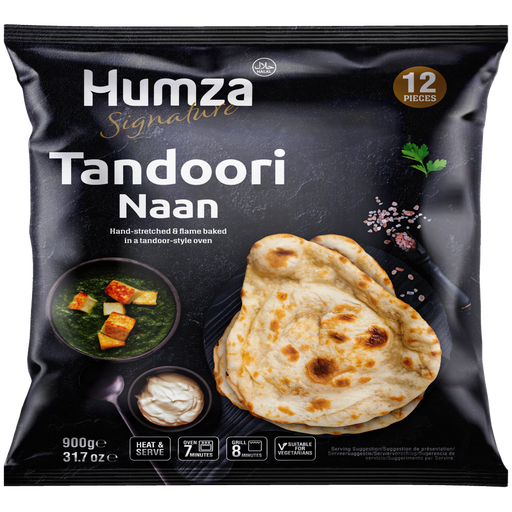
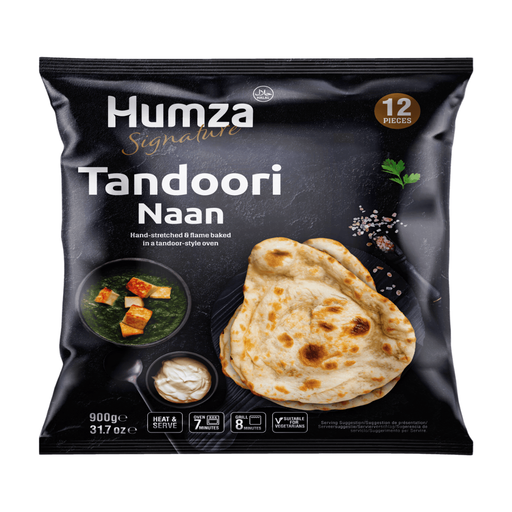
Humza Plain Naan Family Pack 900g (12pcs)
A plain naan option for comparing pack labels, rather than a confirmed sourdough choice. The family pack is 900g (12pcs); check the current salt and allergen declarations before considering it for a baby.
View on Joybuy
 No image available
Humza Plain Tandoori Naan 300g 4pcs
A plain tandoori naan option for comparing pack labels, rather than a confirmed sourdough choice. The pack is 300g (4pcs); check its current salt and allergen declarations and the texture of a prepared piece before considering it for a baby.
View on Joybuy
Common questions
When can a baby have naan as a finger food?
Consider it only once your baby shows the NHS signs of readiness for solids, usually around six months: sitting with a steady head, coordinating eyes, hands and mouth to pick up food, and swallowing rather than spitting it out. The naan’s texture and ingredients still need checking.
Does sourdough naan make a better choice for a baby?
The sourdough name alone does not establish that it is suitable. The Federation of Bakers’ voluntary code distinguishes sourdough from products made with sourdough ingredients; check the exact pack’s wording, ingredients, salt, allergens and serving texture.
How should I prepare naan for baby-led weaning?
Prepare it according to the pack, let it cool and check that it is soft enough to tear. East London NHS Foundation Trust suggests finger-food strips about the length of an adult finger; set aside sections that remain hard or difficult to break.
Does fermentation make wheat or gluten irrelevant?
No. Country Choice’s La Boulangerie naan made with sourdough lists wheat flour and declares wheat and gluten. Check the current allergen declaration rather than assuming fermentation changes what a child needs to avoid.
Can I pack naan for nursery or school?
Check the setting’s current food-allergen rules and the exact pack label first. Whether a particular naan is appropriate depends on the child’s needs, its declared ingredients and that setting’s requirements.


