Families considering sourdough wraps
If wheat and rye are suitable, check what “made with sourdough” means on the particular pack. Tesco Groceries and Mission list fortified wheat flour and 2.6% inactive rye sourdough in the identified Mission wrap.


Choose a wrap made with sourdough if the child can eat wheat and rye, likes that type of wrap, and the pack size and storage directions suit your lunches. The identified Mission wrap is a wheat tortilla containing 2.6% inactive rye sourdough; if fibre is the deciding factor, compare wholemeal wraps by their stated serving values instead. When gluten must be avoided, choose a specifically labelled gluten-free tortilla and check the fillings and preparation arrangements too.
The useful starting point is whether the child can eat the ingredients, followed by what matters most in the finished lunch.
If wheat and rye are suitable, check what “made with sourdough” means on the particular pack. Tesco Groceries and Mission list fortified wheat flour and 2.6% inactive rye sourdough in the identified Mission wrap.
Compare the stated serving sizes and fibre figures rather than relying on the word “sourdough” or “wholemeal”. Consider the fillings and whether the child will eat the packed lunch.
The identified wheat-and-rye sourdough wrap is not suitable when gluten must be avoided. Look for a specifically labelled gluten-free tortilla, check the fillings and take care to prevent cross-contact during preparation.
Start with ingredients and allergens, then compare nutrition on a consistent serving basis and choose a pack you can store as directed.
| Priority | What to check | Your needs |
|---|---|---|
| Sourdough ingredients | Read the ingredient order and sourdough proportion. Tesco Groceries and Mission list fortified wheat flour and 2.6% inactive rye sourdough for Mission’s four-pack. | I’m choosing this style of wrap for its stated ingredients, not assuming sourdough is its main ingredient. |
| Fibre and serving size | Compare per-wrap values at similar serving weights, or use per 100g figures. Tesco Groceries lists 1.2g fibre per approximately 61g Mission sourdough wrap and 5.1g per 61g Tesco wholemeal tortilla. | If fibre matters more than a sourdough label, I can compare the figures for the wraps my child would eat, alongside the planned fillings. |
| Gluten and school arrangements | Check the exact pack’s allergen declaration and every filling. For gluten avoidance, select a suitably labelled tortilla and prevent cross-contact; confirm the relevant school’s packed-lunch and allergy arrangements. | My child needs a lunch that fits their food requirements and the arrangements at their school. |
| Pack and storage | Match the quantity to planned lunches and follow the purchased pack’s opened-storage directions. Tesco Groceries says to use the Mission sourdough four-pack within two days of opening; ASDA Groceries specifies refrigeration and 24 hours for its identified wholemeal pack. | Will we use the opened pack in time? If I add perishable fillings, I also need to keep the filled lunch cool; Norfolk and Norwich University Hospitals NHS Foundation Trust suggests a cool bag or ice pack. |
The identified Mission wrap lists wheat flour first and contains inactive rye sourdough. Its name does not make it suitable for someone who must avoid gluten.
Read the purchased pack’s ingredients and allergen declaration. Where gluten avoidance is necessary, choose a suitably labelled alternative and prevent cross-contact when preparing it.
Opened-pack instructions differ: Tesco Groceries lists two days in a cool, dry place for Mission sourdough wraps, while ASDA Groceries specifies refrigeration and use within 24 hours for its identified wholemeal wraps. Those directions do not replace the need to keep perishable fillings cool.
Check the exact pack before planning several lunches, and pack filled wraps according to the fillings’ storage needs.
An opened pack may leave unused wraps if the household cannot use it within its stated period.
A sourdough label does not tell you the fibre value. Tesco Groceries lists 1.2g fibre for an approximately 61g Mission sourdough wrap and 5.1g for a 61g Tesco wholemeal tortilla.
Compare values using the same per-wrap or per 100g basis, then check the fillings and the child’s preferences.
These identified products show different ingredient, allergen and storage details; a brand name alone does not establish that every wrap in its range has the same characteristics.
Its identified sourdough and wholemeal wraps offer two distinct label comparisons.
Its specifically labelled gluten-free tortillas provide an alternative to the identified wheat-and-rye sourdough wrap.
Its identified wholemeal tortilla eight-pack offers a non-sourdough comparison.
Its identified wholemeal tortilla eight-pack has nutrition figures stated per prepared tortilla.
Its identified wholemeal eight-pack has different opened-storage directions from the Mission sourdough pack.
Its identified tortillas blend white and wholemeal flour rather than being presented as sourdough wraps.
This gluten-free tortilla option is relevant when the school lunch needs an alternative to the identified wheat-and-rye sourdough wrap.
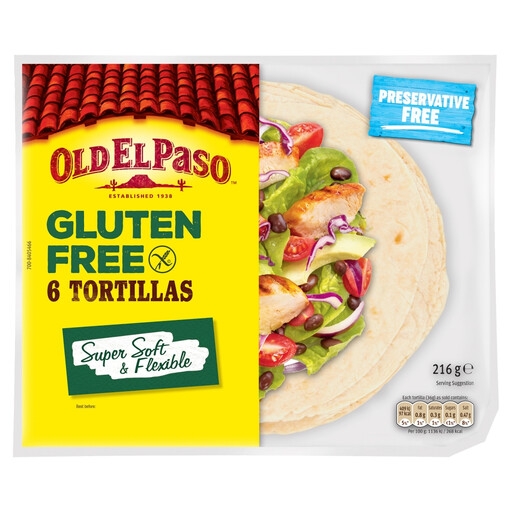 Image unavailable
For a school lunch that needs a gluten-free tortilla, check the purchased pack and fillings, and prevent cross-contact during preparation. This 216g product is described as containing tapioca starch and corn flour; it is not the sourdough or wholemeal option discussed above.
Follow the directions on the purchased pack, then consider the filling separately. Tesco Groceries says to reseal the identified Mission sourdough pack, keep it in a cool, dry place and use it within two days; ASDA Groceries specifies refrigeration and use within 24 hours for its identified wholemeal pack. For a lunch with perishable fillings, Norfolk and Norwich University Hospitals NHS Foundation Trust advises a cool bag or ice pack.
No. Tesco Groceries and Mission list wheat and rye in the identified Mission sourdough wrap. Choose a suitable, specifically labelled gluten-free tortilla instead, check every filling and prevent cross-contact during preparation.
No; confirm the arrangements at the child’s school before packing the lunch. The Department for Education’s allergy guidance applies to England, while a school or trust’s packed-lunch policy has its own stated scope.