For a fussy eater, start with a plainly labelled, unfilled all-butter croissant where a familiar buttery flavour matters most. Treat sourdough as a separate flavour choice: Marks & Spencer describes its sourdough bread as tangy, so check the exact product label and try a small quantity only if that flavour is already accepted.
Who this may suit
Fussy eaters who prefer familiar bakery flavours
For households choosing between a plain croissant and a more distinctive filled or sourdough-style pastry. A plain all-butter option with a clear ingredient list is a practical starting point; try a small sourdough option only where tangy bread flavours are already accepted. Marks & Spencer distinguishes its all-butter croissants from its tangy sourdough bread range.
Parents and carers checking allergens before serving
For shoppers who need to check cereals containing gluten, milk, egg, nuts or precautionary statements on the exact pack rather than assuming every croissant has the same allergen profile. Sainsbury’s and Lidl product information highlights the importance of checking individual declarations.
Shoppers seeking a small first-try pack
For anyone who would rather not buy a large quantity before knowing whether the pastry will be accepted. Tesco lists a two-pack all-butter option, while Waitrose lists two-piece and four-piece croissant formats.
What to check before buying
Plain, unfilled all-butter croissant
Choose this when: familiar buttery pastry is more likely to be accepted than fruit, nut, chocolate or custard fillings.
Keep in mind: all-butter does not mean sourdough, gluten-free, dairy-free or suitable for every allergy.
Sourdough-labelled pastry after a small trial
Choose this when: the eater already enjoys tangier sourdough bread flavours or is open to a new taste.
Keep in mind: fermentation can bring a distinct tang, and the item should be labelled specifically as a sourdough croissant.
| Priority |
What to check |
Your needs |
| Predictable flavour and texture |
Choose plain or all-butter rather than filled variants; check whether the exact product is labelled sourdough; avoid assuming sourdough tastes the same as mild buttery pastry. |
I am looking for a familiar pastry without chocolate, fruit, almond or custard flavours. A tangy sourdough-style flavour is better saved for a willing trial. |
| Allergen and ingredient clarity |
Read the current physical pack; check cereals containing gluten, milk and egg; ask for allergen information when buying loose bakery goods. |
I need to identify the ingredients and allergen statement on the exact croissant before it is served. |
| Low-waste first trial |
Look for a two-pack or another small format; check the pack count before buying; move to a larger multipack only after the pastry is accepted. |
I would rather test a new croissant in a small quantity than be left with several unwanted pastries. |
| Serving warmth |
Check whether the pack is ready to eat or can be heated; follow its stated oven or air-fryer instructions; do not reheat if the pack advises against it. |
A warm pastry may suit the serving preference, but I want to follow the chosen product’s directions for preparation and leftovers. |
Common buying mistakes
-
Assuming sourdough is a neutral upgrade over a plain croissant
Sourdough can bring a tangy fermented flavour. For a fussy eater, that sensory change may matter more than an artisan-style description.
Start with a familiar plain all-butter croissant, then try a specifically labelled sourdough croissant in a small quantity only if sourdough flavours are already accepted.
-
Treating all croissants as having the same allergen profile
Croissants can contain cereals containing gluten, milk and egg, while loose bakery goods may also have precautionary allergen information.
Read the ingredients and allergen statement on the exact pack every time, and ask the retailer for loose-bakery information where needed.
-
Buying a large multipack before testing acceptance
If an unfamiliar pastry is rejected, a larger pack can lead to unnecessary food waste.
Where available, begin with a two-pack or another small format, then consider multipacks after it has been accepted.
-
Relying on an online listing after a recipe change
Ingredients, nutrition information and allergen details can change when a food product is reformulated. Tesco advises shoppers to read the product label rather than rely solely on online information.
Use a retailer page to shortlist products, but make the final serving decision from the current physical label.
Relevant retailer references
M&S
UK retailer with all-butter, reduced-fat and filled croissant choices, alongside a separate sourdough bread range.
- M&S says its croissants and pains au chocolat are made with real butter and lists an all-butter croissant.
- Its sourdough range is presented as bread, so this does not establish that an M&S croissant is sourdough.
Tesco Finest / Tesco
UK supermarket with standard all-butter croissants, Tesco Finest all-butter croissants and branded options in its croissant category.
- The catalogue includes two-pack and larger-pack choices, which can help with a small first trial.
- Tesco notes that food products may be reformulated, so the current pack label remains the key check.
Sainsbury’s
UK supermarket with a clearly specified own-label four-pack all-butter croissant as a plain baseline option.
- The product page gives ingredients, allergen emphasis, nutrition, storage and heating information.
- Its all-butter croissant contains wheat, butter from milk and egg.
Waitrose
UK supermarket with plain, all-butter, No.1 and filled croissant formats, including two-piece options.
- Small-format plain and all-butter choices can be useful for trial purchasing.
- Check the selected product page or pack for its full ingredient and allergen declaration.
Lidl
UK discount retailer with an in-store all-butter croissant and store-specific availability.
- Lidl lists milk, wheat and egg for its all-butter croissant.
- It also flags possible traces of several allergens, so the exact in-store information should be checked.
Joybuy product options
Joybuy product options for a familiar plain, unfilled all-butter croissant route, with freezer storage and baking considered before serving.
 No image available
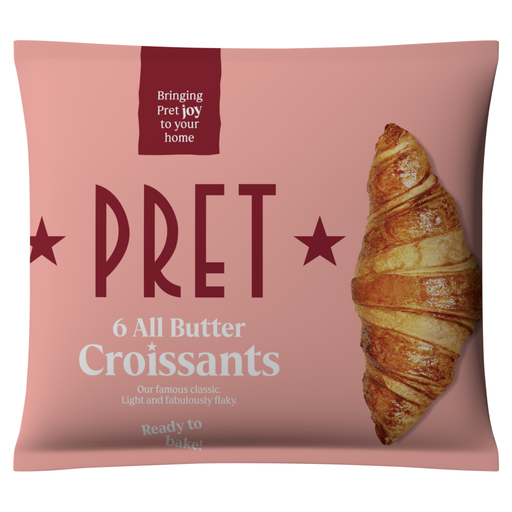
Pret A Manger Butter Croissants 330g
A plain all-butter option for a household able to store the product frozen and bake it before serving.
Stated details include 24% butter, an unfilled ingredient list and a 20-minute bake-from-frozen method.
Contains wheat/gluten, milk and egg, and may contain nuts, sesame and soya. It requires freezer storage and should not be reheated once cooled; slow fermentation does not by itself confirm a sourdough croissant.
View on Joybuy
Frequently asked questions
Are sourdough croissants automatically better for a fussy eater?
No. Sourdough is not a universal suitability marker: Marks & Spencer describes sourdough bread as having a distinct tang from fermentation, which may suit someone who already likes sourdough but can be unfamiliar for a person who prefers mild buttery pastry. Check that the exact item is labelled as a sourdough croissant before buying it as a trial.
Do plain all-butter croissants contain common allergens?
Often, yes. Sainsbury’s all-butter croissant lists wheat, butter from cows’ milk and whole egg, while Lidl flags milk, wheat and egg for its all-butter croissant. The relevant declaration is the one on the exact product being bought.
Can I warm a croissant for a fussy eater?
Yes, if the chosen pack says it can be heated and its instructions are followed. Sainsbury’s states that its all-butter croissants are ready to eat but may be heated in an air fryer or oven, and it advises against reheating once cooled.
Is a supermarket webpage enough to check ingredients and allergens?
No. Use a webpage to shortlist products, then read the pack before serving. Tesco warns that products can be reformulated and advises shoppers not to rely solely on online information.


