Sourdough-curious lunch packers
Parents and carers choosing a wrap for a secondary pupil who likes sourdough flavour. The ingredients matter more than assumptions about how a sourdough-labelled tortilla was made.


Choose a sourdough tortilla if the pupil likes its flavour and the particular wrap suits the planned filling. The label alone does not establish a wholemeal recipe, a particular fibre content or gluten-free suitability: compare the pack’s ingredients and nutrition panel, consider a wholemeal wrap if that is the priority, and use an appropriately labelled gluten-free alternative when gluten must be avoided. Check the school’s allergy arrangements and how the filled lunch will be kept cool.
Parents and carers choosing a wrap for a secondary pupil who likes sourdough flavour. The ingredients matter more than assumptions about how a sourdough-labelled tortilla was made.
If wholemeal ingredients matter more than sourdough flavour, compare the actual wraps and choose a filling the pupil will eat. NHS lunchbox guidance advises choosing wholegrain where possible and adding salad to wraps.
The Mission and Deli Kitchen sourdough tortillas described here contain wheat, so the choice for a pupil with coeliac disease is an appropriately labelled gluten-free alternative, with attention to preparation and school arrangements.
Start with ingredients and any dietary requirements, then compare the wrap with the filling, storage and number of lunches you plan to make.
| Priority | What to check | Your needs |
|---|---|---|
| Sourdough recipe | Read the ingredients on the exact pack. Tesco Groceries lists Mission’s wheat tortilla with 2.6% inactive rye sourdough; Waitrose & Partners lists fermented wheat flour and sourdough culture in Deli Kitchen’s different tortilla. | I’m choosing for sourdough flavour, but I don’t want the name to stand in for the recipe. |
| Wholemeal and filling | Compare wholemeal ingredients and the fibre figures on the packs rather than assuming sourdough determines either. Mission describes its separate wholemeal wrap as containing 60% wholemeal wheat flour; consider what filling and vegetables the pupil will eat. | If wholemeal ingredients are my priority, I can consider a wholemeal wrap instead. The filling still needs to work as a school lunch. |
| Gluten | Check wheat, rye and gluten-free labelling on the purchased pack, along with preparation arrangements. Coeliac UK says people with coeliac disease must avoid gluten from wheat and rye. | For a pupil with coeliac disease, I need an appropriately labelled gluten-free option rather than either of these wheat-based sourdough tortillas. |
| Storage | Follow the pack’s after-opening instructions and plan how many lunches it will make. If the filled lunch contains food that needs to stay cool, Norfolk and Norwich University Hospitals NHS Foundation Trust advises refrigerating it beforehand and using a cool bag and ice pack. | I want the opened pack to fit our lunch plans and the prepared wrap to be stored appropriately until lunchtime. |
Tesco Groceries lists Mission’s sourdough wrap as a wheat tortilla containing 2.6% inactive rye sourdough. The word on the front does not establish its production method or make it equivalent to a wholemeal wrap.
Read the ingredients and compare fibre figures on the particular packs you are considering.
The Mission and Deli Kitchen sourdough tortillas listed by Tesco Groceries and Waitrose & Partners contain wheat; Mission’s also contains rye. Coeliac UK identifies wheat and rye as grains to avoid with coeliac disease.
Choose an appropriately labelled gluten-free alternative when required, account for cross-contact during preparation and check the school’s arrangements.
The listed after-opening instructions differ: Tesco Groceries says to use Mission’s sourdough wraps within two days, while Waitrose & Partners says to consume Deli Kitchen’s within 24 hours.
Check the purchased pack and match its size and storage instructions to the lunches you plan to prepare.
An opened pack may leave unused wraps if those lunches are not planned.
Mission has a sourdough-labelled tortilla and a separate wholemeal wrap relevant to this lunch choice.
Its sourdough-labelled tortilla offers another recipe to compare with Mission’s.
A reference for conventional flour tortillas and a separately listed gluten-free alternative, rather than a sourdough choice.
This gluten-free tortilla is an alternative for a packed lunch that cannot use the wheat-based sourdough wraps discussed above; it is not a sourdough option.
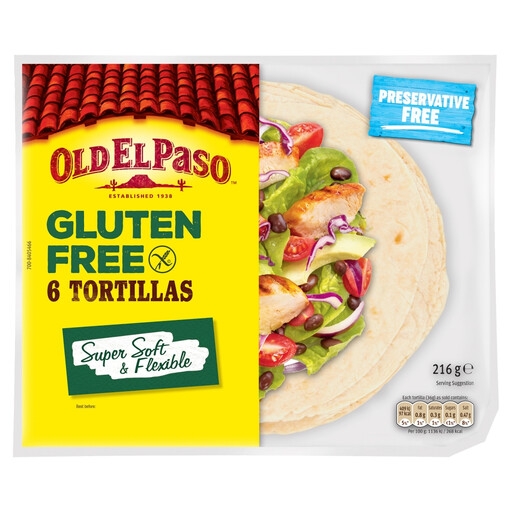 Image unavailable
A gluten-free-labelled tortilla alternative when the pupil cannot have the wheat-based sourdough wraps. This 216g product is not sourdough; check the purchased pack’s ingredients and the pupil’s preparation and school arrangements.
Check the chosen pack: Waitrose & Partners says its listed Deli Kitchen sourdough tortilla can be eaten cold. The storage needs of a completed packed lunch also depend on its filling.
Fold in the edges before rolling to help contain the filling, as shown in an NHS wrap recipe. If the lunch contains food that needs to stay cool, Norfolk and Norwich University Hospitals NHS Foundation Trust advises refrigerating it beforehand and packing it with a cool bag and ice pack.
Follow the particular pack. Tesco Groceries lists two days after opening for Mission’s sourdough wraps when resealed and stored in a cool, dry place; Waitrose & Partners lists 24 hours after opening for Deli Kitchen’s tortilla.
The Mission and Deli Kitchen sourdough tortillas described here are not suitable: both list wheat, and Mission also lists rye. Coeliac UK says people with coeliac disease must avoid gluten from those grains. Choose an appropriately labelled gluten-free alternative and account for cross-contact during preparation.
Check the individual school’s packed-lunch and allergy arrangements, particularly if the pupil needs allergen controls. Department for Education allergy-safety guidance applies to schools in England, but the school’s own policy is needed to understand its particular arrangements.