
24/7 Customer Support

Free returns

Same-day & Next-day Delivery

Quality Guaranteed

Unlock Your Welcome Offers: FREE Delivery | Up to 80% OFF | Free 30-day JoyPlus trial
Download the APP
Navigating the soy sauce aisle can be surprisingly complex. With bottles labelled light, dark, mushroom, tamari and more, it is easy to grab the wrong one and find your stir-fry is either too salty or your braised dish lacks that rich, deep colour. As the Joybuy Product Recommendation Officer, my role is to help you understand the key differences so you can choose with confidence and avoid common shopping pitfalls.
Many home cooks in the UK fall into a few simple traps. The first is assuming all soy sauce, or soya sauce, is the same and can be used interchangeably. This often leads to disappointing results. Another common oversight is not checking the brewing method; a naturally fermented sauce offers a depth of flavour that a chemically produced one simply cannot replicate. Finally, misunderstanding the distinct profiles of Japanese and Chinese soy sauce can alter the authentic taste of a recipe.
To ensure you are getting the right product for your culinary needs, focus on a few core parameters. These details will tell you everything you need to know about the flavour, colour and intended use of the sauce.
The most significant factor affecting a soy sauce's quality is how it is made.
Understanding the two primary types of Chinese soy sauce is crucial for authentic cooking.
Beyond the basics, you will find sauces tailored to specific dietary needs or flavour profiles.
To simplify your choice, we have matched a few standout products to common user profiles.
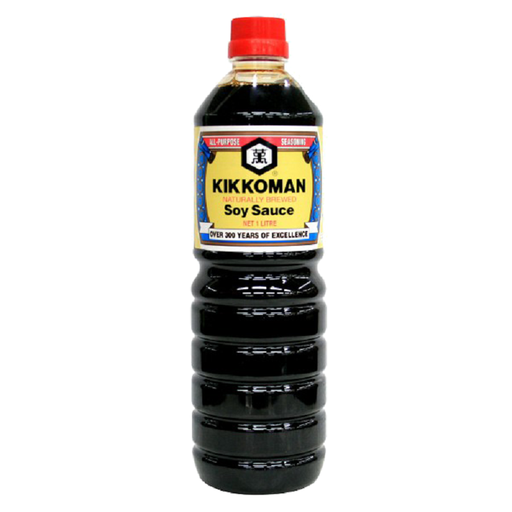
Why This Fits Their Persona: This is a classic all-purpose Japanese soy sauce, ideal for the UK home cook who needs a single, reliable bottle for everything from weeknight stir-fries and marinades to a dipping sauce for dumplings. The large 1-litre bottle is practical for regular use.
It is naturally brewed from just four ingredients, avoiding the harsh, one-dimensional taste of chemically produced sauces. Its versatile flavour profile makes it a safe and effective choice for most recipes calling for light soy sauce.
A balanced, complex umami flavour that enhances rather than overpowers food. Contains no artificial additives.

Why This Fits Their Persona: For anyone who loves making rich, slow-cooked dishes like Chinese braised pork belly or soy sauce chicken, this dark soy sauce is essential. Its purpose is to impart a deep, glossy, caramel colour and a subtle sweetness.
This is a dedicated dark soy sauce, preventing the common mistake of using a light soy sauce and failing to achieve the signature colour and richness of braised dishes. It is designed specifically for colouring and adding depth.
Provides excellent colour with just a small amount. Less salty than light soy sauce, allowing for better flavour control in slow-cooked meals.

Why This Fits Their Persona: This sauce is specifically for those in the UK who require a gluten-free diet but do not want to miss out on the authentic flavour of soy sauce. It is perfect for seasoning and dipping, providing a safe and flavourful alternative.
Its clear gluten-free formulation removes the risk and label-reading guesswork for those with coeliac disease or gluten intolerance. It directly addresses a specific dietary need without compromising on the core function of a light soy sauce.
Made without wheat, it still delivers a rich, savoury umami flavour suitable for a wide range of dishes. A trusted brand for speciality dietary products.
We have compiled a complete, real-time list of products that fully satisfy these strict selection criteria and UK safety regulations.
While both are fundamental Asian condiments, they have distinct characteristics. Japanese soy sauce (shoyu) is typically brewed with an equal ratio of soybeans and roasted wheat, giving it a slightly sweeter, more aromatic and nuanced flavour. It is often used as an all-purpose seasoning and dipping sauce. Chinese soy sauce has more variety; the standard light version is generally saltier and used for seasoning, while dark soy sauce is thicker, less salty and used for adding colour.
Due to its high salt content, soy sauce is very stable. However, to preserve its optimal flavour and aroma, it is recommended to store it in the refrigerator with the cap tightly sealed after opening. While it will not spoil at room temperature, its quality will degrade more quickly. For the freshest taste, try to use an opened bottle within 6 to 12 months.
It is generally not advisable. They serve very different culinary functions. Using dark soy sauce in a recipe that calls for light will make the dish much darker than intended and may add an unwanted sweetness. Conversely, using light soy sauce in place of dark will leave your braised dishes looking pale and lacking that characteristic rich flavour and colour. Keeping both in your pantry is the ideal approach for authentic results.