Hosts seeking simple guest use
If guests will make their own drinks, straightforward controls and a manageable milk-cleaning routine matter more than a hands-on espresso process.


For guests making their own soya cappuccinos, consider an automatic bean-to-cup machine with a milk system that the manufacturer explicitly says works with plant-based milk. A manual machine suits a host willing to practise milk texturing; a capsule machine with a separate frother avoids grinding and tamping, but requires compatible capsules and another item to clean.
If guests will make their own drinks, straightforward controls and a manageable milk-cleaning routine matter more than a hands-on espresso process.
If the owner prepares the drinks, grinding, tamping and manually texturing soya milk can be part of the routine rather than instructions left for guests.
A capsule machine and frother avoid fresh-bean preparation, provided the host is willing to maintain a supply of compatible capsules.
Decide who will make the cappuccinos before choosing the controls: a guest-facing machine and a host-operated manual machine place very different demands on the person preparing the milk.
Choose when: Guests need an automatic milk drink, and the exact milk system is stated to work with plant-based milk.
Allow for: Milk-system cleaning and routine maintenance; similar-looking models may have a manual frother instead.
Choose when: A host or confident repeat user wants to adjust the espresso and texture the milk by hand.
Allow for: Practice and more preparation and cleaning steps than an automatic milk-drink routine.
Choose when: Avoiding grinding and tamping matters more than preparing espresso from fresh beans.
Allow for: A compatible capsule supply and, with a separate frother, another appliance to use and clean.
| Concern | What to check | Who this matters to |
|---|---|---|
| Soya-milk foam | Check plant-milk guidance for the exact milk system. For manual steaming, Sage advises keeping non-dairy milk at or below 55°C. | If I want a soya cappuccino, I need a milk-making method I can use without the milk separating. Around 31% of consumers put soya-milk foam first. |
| Guest use and cleaning | Check whether cappuccino is automatic or needs a steam wand, and how milk-contact parts are cleaned. | When different guests use the cottage, I want drink preparation to need little instruction and the kitchen to be straightforward to reset. Low-effort use comes first for around 31% of consumers. |
| Hands-on control | Check the grinding, tamping and steaming steps, and whether the person making drinks will practise them. | If I make the coffee myself, I may prefer adjusting the espresso and milk texture over pressing a preset-drink button. Around 23% of consumers prioritise that hands-on control. |
| Capsule convenience | Confirm the capsule format, how capsules will be replenished and whether the frother is separate. | For occasional use, I would rather skip grinding and tamping, even if I must keep a particular capsule type on hand. That convenience is the primary need for around 15% of consumers. |
The milk attachment changes with the exact model. De’Longhi describes soy compatibility for LatteCrema, but another Magnifica Evo configuration has a traditional manual frother.
Check the model’s milk-system name and its plant-milk instructions, rather than relying on the brand or machine range alone.
Grinding, preparing the coffee and steaming milk take more involvement than selecting an automatic milk drink. Sage also advises brewing before steaming on machines with a single heating element.
Reserve a manual setup for someone willing to learn the process, or leave clear instructions if guests will use it.
Check whether a grinder, milk jug and cleaning tools are included; a manual setup may need them separately.
Milk-contact parts and coffee residues need attention even when drink preparation is automatic. Sage links regular cleaning and maintenance to coffee taste and machine longevity.
Follow the exact machine instructions for milk-system cleaning, descaling and other maintenance, and add the relevant tasks to the cottage changeover routine.
Capsule systems are not interchangeable: Nespresso states that the Vertuo Creatista uses Vertuo capsules only.
Confirm the chosen machine’s capsule format and plan how compatible capsules will be kept available at the cottage.
Its range includes automatic bean-to-cup machines with different milk attachments.
Its LatteGo-equipped automatic machines offer a route for buyers who want fewer milk-assembly parts to handle.
Its hands-on machines suit an operator who wants to prepare espresso and texture milk manually.
Its capsule machines and separate milk frothers offer a coffee-and-foam route without fresh-bean preparation.
These choices cover automatic bean-to-cup machines, a capsule-and-frother bundle and machines for more hands-on milk preparation. For a soya cappuccino, check the exact model’s milk instructions and the cleaning routine before choosing one for guest use.
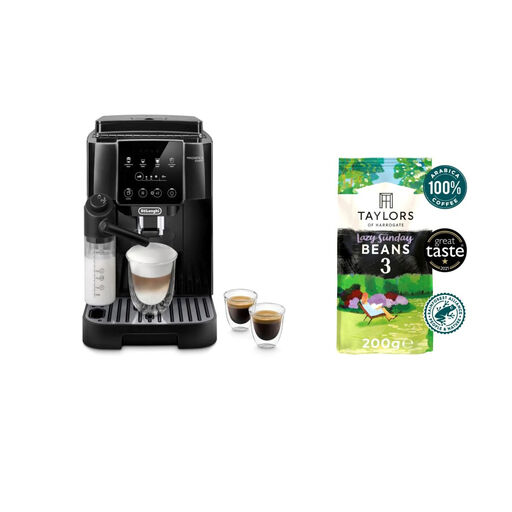 Image unavailable
Consider this automatic bean-to-cup bundle if guests need a simpler milk-drink routine. The listed configuration has automatic milk preparation and four one-touch recipes; check its exact soya-milk and milk-system cleaning instructions before use.
 Image unavailable
This bean-to-cup configuration suits a cottage where an automatic milk drink is preferable to manual steaming. Confirm the exact variant’s plant-milk guidance and follow its milk-system cleaning instructions; features documented for another Magnifica Evo variant should not be assumed to apply.
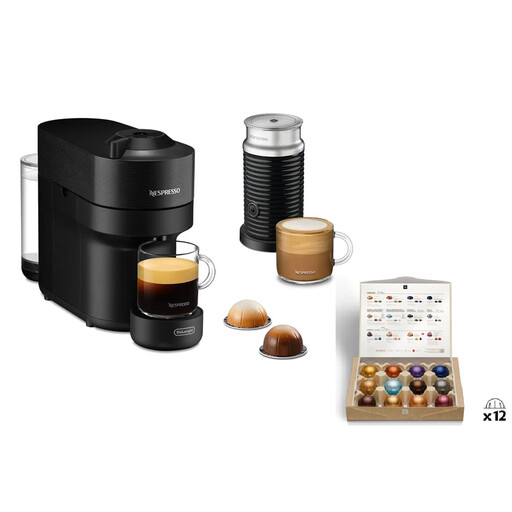 Image unavailable
This bundle suits a coffee-and-foam routine without grinding beans. It includes a separate Aeroccino frother; check the supplied frother variant and its dairy-free milk instructions, and keep compatible Vertuo capsules available for guests.
 Image unavailable
Consider this configuration when someone is willing to prepare the milk rather than rely on an automatic milk carafe. Its name specifies a milk nozzle and four one-touch recipes; check which drinks use the nozzle and how it should be cleaned before leaving instructions for guests.
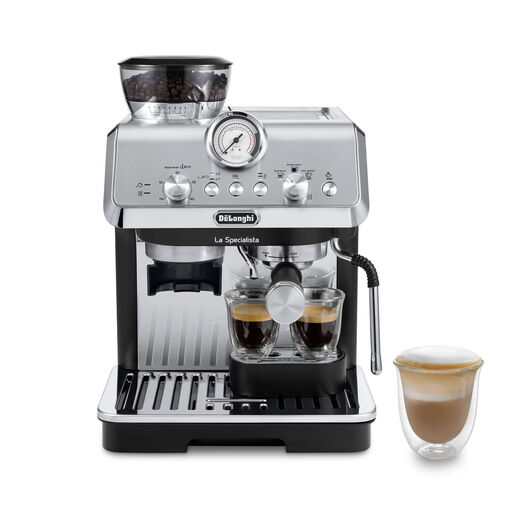 Image unavailable
This manual espresso machine suits a host prepared to practise milk preparation rather than offer guests a one-touch cappuccino. Check its instructions for using and cleaning the milk frother with soya milk.
Yes, with a suitable milk system or careful manual steaming. De’Longhi says LatteCrema supports plant-based alternatives including soy, while Philips says LatteGo froths plant-based alternatives; check that the exact machine has the named system. For manual steaming, Sage advises keeping non-dairy milk at or below 55°C to reduce separation or curdling.
An automatic machine with a plant-milk-capable milk system avoids asking guests to texture milk by hand. A capsule machine and automatic frother also avoid grinding and tamping, but guests need the right capsules and instructions for the separate frother.
Clean milk-contact parts after milk drinks as directed by the exact machine manual, and include the prescribed maintenance in the changeover routine. Sage advises weekly cleaning of most parts when making two to five cups a day; that usage example does not replace a different model’s instructions.
Check that the appliance is suitable for the property’s electrical supply and include its use in the property’s safety arrangements. Cumbria Fire and Rescue Service’s guidance for self-catering holiday lets calls for a fire-risk assessment; duties should be checked for the cottage’s location and operating circumstances. GOV.UK’s cited electrical-equipment requirements concern products placed on the Great Britain market, rather than certifying any particular machine for guest use.