Dairy-free breakfast shoppers
If you pour soya drink over cereal or muesli, start with the flavour you want, then check the carton’s sugars and fortification. A plant-based drink should not be assumed to have the same nutrient profile as dairy milk.


For cereal or porridge, choose an unsweetened soya drink if you do not want the drink to add sweetness; choose a sweetened version when you prefer that flavour. If soya drink regularly replaces dairy milk, compare calcium, iodine and vitamin labelling alongside sugars and protein: the UK Office for Health Improvement and Disparities notes that plant-based drinks vary considerably in nutrient composition.
If you pour soya drink over cereal or muesli, start with the flavour you want, then check the carton’s sugars and fortification. A plant-based drink should not be assumed to have the same nutrient profile as dairy milk.
For porridge or cereal that already has its own flavour, an unsweetened or no-sugars version may suit your preference. Compare the nutrition panel rather than relying only on words such as ‘original’ on the front.
If soya drink is a regular breakfast staple, check whether the exact carton lists calcium, iodine, vitamin D, riboflavin and vitamin B12. The British Dietetic Association identifies these as nutrients commonly added to soya drinks, but formulations differ.
Decide whether you want an unsweetened cereal drink or a sweeter breakfast flavour, then compare the details on the cartons you are considering.
| Priority | What to check | Your needs |
|---|---|---|
| Sugars and flavour | Read sugars on the nutrition panel using the same per-100 ml or per-100 g basis when comparing products. Check whether the carton is labelled unsweetened, no sugars, original or sweetened. | I want cereal or porridge without extra sweetness from the drink, or I would deliberately choose a sweeter flavour. |
| Fortification | Look for calcium, iodine, vitamin D, riboflavin and vitamin B12 on the exact carton. According to the UK Office for Health Improvement and Disparities, nutrient composition varies considerably between plant-based drinks. | If soya drink regularly replaces dairy milk in my breakfast, I want to know which nutrients this particular carton lists. |
| Protein | Compare the labelled protein value on the same per-100 ml basis where possible. Consider how much drink you actually use: a splash and a full bowl are different portions. | When I use more than a splash on breakfast, the carton’s protein figure matters to my comparison. |
| Allergens | Read the current ingredients and allergen declaration for the exact product. A flavoured variant may have ingredients beyond soya. | I need to check the carton against the ingredients my household must avoid, rather than assume every soya drink has the same recipe. |
| Storage and format | Check carton size, unopened storage instructions and the stated refrigeration and use-within period after opening. | For an occasional breakfast drink, I want a pack size I can use within the carton’s instructions. |
The UK Office for Health Improvement and Disparities reports considerable variation in plant-based drinks’ nutrient composition. A familiar brand name or an unsweetened label does not tell you which nutrients the exact carton lists.
If the drink regularly replaces dairy milk, compare its nutrition panel and added-nutrient information before choosing a variant.
Original, sweetened and unsweetened describe different product variants; the front-of-pack name alone does not give you a like-for-like sugar figure.
Read the nutrition panel and choose sweetness as a matter of breakfast taste, not an assumption about the range.
Soya drinks contain soya, and individual variants may have other ingredients. Storage instructions after opening also differ between cartons.
Check the current allergen label, refrigerate when directed and follow that product’s stated use-within period.
These ranges illustrate why the variant matters: a brand name alone does not establish sweetness or fortification for every carton.
Alpro has original and no-sugars soya drinks among the products listed by Tesco. A Waitrose listing describes Alpro’s long-life No Sugar drink as containing added calcium, iodine and vitamins B2, B12 and D2.
Waitrose lists its Essential Unsweetened Soya Drink as a long-life product with added calcium, iodine and vitamins D, B12 and B2.
M&S lists both a sweetened Plant Kitchen soya drink and an unsweetened soya drink; their product descriptions list added calcium, iodine and vitamins D and B12.
Tesco’s soya-drink category lists its own-label sweetened and unsweetened long-life drinks alongside Alpro products.
These soya drinks cover cereal-oriented, coffee-oriented and ready-to-drink breakfast choices. Compare the exact variant and carton label against the priorities above.
 No image available
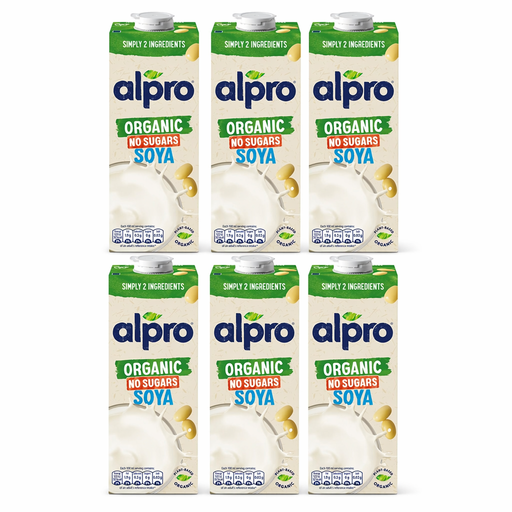
A no-sugars-labelled option to consider for cereal when you do not want a sweetened variant. For regular dairy replacement, check the current carton’s fortification details; also follow its soya allergen and after-opening instructions.
 No image available
An organic soya-drink option to compare for cereal. If added calcium, iodine or vitamins matter to your choice, check the current carton for them rather than treating the organic description as a fortification claim.
No image available
Consider this variant for a coffee-centred breakfast rather than choosing it solely by its soya-drink category. Check its sugars and fortification on the current carton if you also plan to use it regularly in place of dairy milk.
 No image available
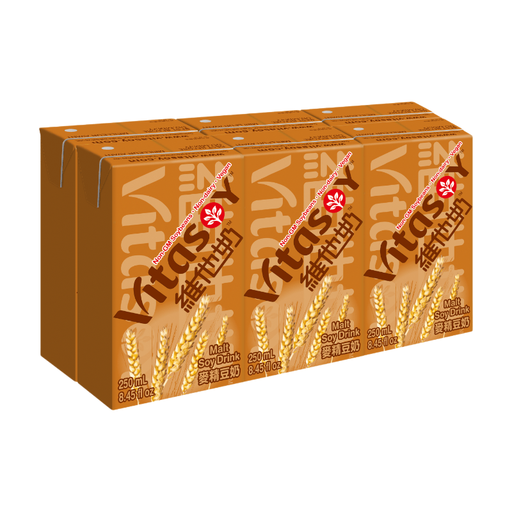
Individual 250 ml cartons may suit a ready-to-drink breakfast. Compare the malted variant’s sugars with an unsweetened drink, and check the current allergen information for both soya and barley.
 No image available
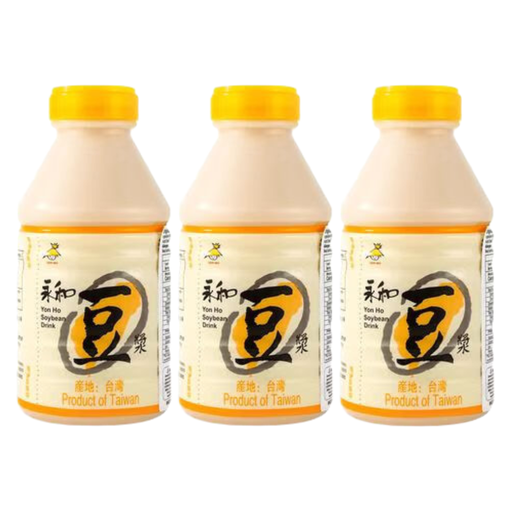
A three-pack of 300 ml cartons to consider for a ready-to-drink breakfast. Check the current label for sugars and added nutrients if it will regularly replace dairy milk, and follow its instructions after opening.
Choose unsweetened if you do not want the drink to add sweetness to your cereal; choose a sweetened variant if you prefer that flavour. Check sugars on the exact carton, because a range may include several differently named recipes.
Check the carton for calcium, iodine, vitamin D, riboflavin and vitamin B12, as well as its protein and sugars. The British Dietetic Association describes these as nutrients commonly added to soya drinks, while the UK Office for Health Improvement and Disparities notes that plant-based drinks vary considerably.
Follow the unopened storage instructions on the particular long-life carton. After opening, refrigerate it and use it within that product’s stated period rather than applying the same timetable to every brand.
No: a soya drink contains soya. Read the current ingredients and allergen declaration for every variant, including flavoured drinks that may contain other ingredients you need to avoid.