Parents replacing dairy milk after age 1
If a soya drink will be served regularly instead of dairy milk, check whether it is unsweetened and calcium-fortified. NHS guidance allows this type of milk alternative from age 1 as part of a balanced diet.


For a child aged 1 or over who can have soya, an organic soya drink may suit occasional tea-time use if the child’s wider diet supplies the nutrients it does not provide through fortification. If the drink regularly replaces dairy milk, an unsweetened calcium-fortified alternative is the more relevant option to check: the UK government’s SACN and COT assessment says organic plant-based drinks in the UK cannot be nutrient-fortified, while NHS guidance allows unsweetened calcium-fortified milk alternatives from age 1 as part of a balanced diet. A soya drink should not replace breast milk or first infant formula before age 1.
The child’s age, the drink’s place in their diet and any allergies change what needs checking before tea time.
If a soya drink will be served regularly instead of dairy milk, check whether it is unsweetened and calcium-fortified. NHS guidance allows this type of milk alternative from age 1 as part of a balanced diet.
An organic soya drink can fit an occasional tea-time serving for a child who tolerates soya, provided the wider diet supplies the relevant nutrients. The UK government’s SACN and COT assessment says organic plant-based drinks in the UK cannot be nutrient-fortified.
A soya drink is not automatically suitable for a child with cow’s milk allergy. Ashford and St Peter’s Hospitals NHS Foundation Trust notes that some children with cow’s milk allergy may also have a soya allergy; seek individual clinical or dietetic advice if soya allergy is suspected.
Consider when: A child aged 1 or over tolerates soya, and an organic drink is wanted for occasional tea time rather than regular dairy replacement.
Trade-off: The UK government’s SACN and COT assessment says organic plant-based drinks in the UK cannot be nutrient-fortified.
Consider when: A drink regularly replaces dairy milk for a child aged 1 or over; NHS guidance identifies unsweetened calcium-fortified milk alternatives as an option within a balanced diet.
Trade-off: A nutrient-fortified plant-based drink will not meet an organic-only preference in the UK, and soya allergy still needs to be considered.
| Priority | What to check | Your needs |
|---|---|---|
| Age and use | Check the child’s age, any age statement on the pack and whether the drink is occasional or a regular dairy replacement. NHS guidance allows unsweetened calcium-fortified milk alternatives from age 1 as part of a balanced diet. | I’m choosing a tea-time drink for a child aged 1 or over, or I need to replace dairy milk regularly. For a baby under 1, a soya drink is not a replacement for breast milk or first infant formula. |
| Organic and fortification | Check for an organic label or a stated calcium content, depending on the drink’s role. The UK government’s SACN and COT assessment says organic plant-based drinks in the UK cannot be nutrient-fortified; check the pack for other relevant nutrients when comparing fortified options. | Organic ingredients matter to me for an occasional serving. If this is replacing dairy milk regularly, calcium fortification matters more to my choice. |
| Sugars and ingredients | Compare the ingredients and sugars per 100ml on the exact pack. Alpro UK describes its Organic Soya drink as having two ingredients and no sugars; Tesco lists spring water, organic soybeans and 0g sugars per 100ml for Plenish Organic Soya. | I’d like to compare unsweetened drinks without assuming that a short ingredient list tells me which nutrients they contain. |
| Soya allergy | Check the child’s known allergies and the current ingredient and allergen label. Ashford and St Peter’s Hospitals NHS Foundation Trust notes that some children with cow’s milk allergy may also have a soya allergy. | We avoid cow’s milk, but I need to establish whether soya is suitable before making it a regular drink. |
The UK government’s SACN and COT assessment says organic plant-based drinks in the UK cannot be nutrient-fortified. That distinction matters if the drink regularly replaces dairy milk.
For regular use after age 1, compare an unsweetened calcium-fortified alternative and consider how the child gets relevant nutrients across their wider diet.
Age changes the decision: NHS guidance places unsweetened calcium-fortified milk alternatives from age 1, not as a replacement for breast milk or first infant formula before then.
For a baby under 1, continue breast milk or first infant formula as appropriate, and discuss medically required dairy avoidance with a health professional.
Soya is an allergen in its own right. Ashford and St Peter’s Hospitals NHS Foundation Trust notes that some children with cow’s milk allergy may also have a soya allergy.
Check the current pack and the child’s allergy history. If a soya reaction is suspected, seek clinical or paediatric dietetic advice before using it as a regular alternative.
Age-labelled and other soya drinks can have different formulations. Alpro UK lists 2.0g sugars per 100ml for its Soya Growing Up Drink 1–3+, alongside stated nutrient fortification.
Compare the age statement, sugars per 100ml and declared nutrients on the exact pack rather than assuming all soya drinks serve the same purpose.
These product lines illustrate the organic-versus-fortified decision; the details apply to the named drinks, not every drink from either brand.
Alpro UK describes a two-ingredient Organic Soya drink and a separate, fortified Soya Growing Up Drink 1–3+.
Plenish describes an organic soya drink made with spring water and organic soybeans.
These options cover an organic soya drink for occasional tea time and a separate no-sugars soya drink to consider when comparing fortified alternatives. Check the current pack and the child’s needs before serving either.
 No image available
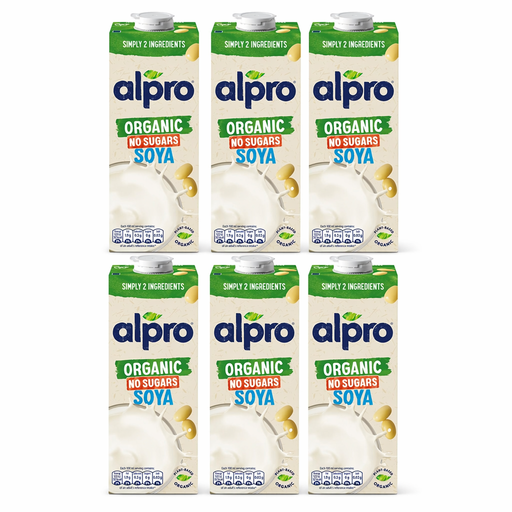
An organic soya option to consider for occasional tea time if the child can have soya. Alpro UK describes its Organic Soya drink as containing water and hulled soya beans, with no sugars. Check the current pack and seek appropriate advice on introducing this particular drink to a child; an organic plant-based drink in the UK is not nutrient-fortified.
 No image available
For a child aged 1 or over who needs a regular dairy alternative, compare the current pack’s calcium and vitamin declarations with NHS guidance on unsweetened calcium-fortified milk alternatives. This is an 8 x 1L long-life soya drink; check the pack if organic status or a child-specific age statement matters to your choice. It is not a replacement for breast milk or first infant formula before age 1.
NHS guidance says children can have unsweetened calcium-fortified milk alternatives, including soya, from age 1 as part of a balanced diet. Before age 1, do not use a soya drink to replace breast milk or first infant formula.
Do not assume it provides the same fortified nutrients. The UK government’s SACN and COT assessment says organic plant-based drinks in the UK cannot be nutrient-fortified; if a drink regularly replaces dairy milk, compare an unsweetened calcium-fortified option and consider how the child gets relevant nutrients elsewhere.
Alpro UK’s Organic Soya ingredients and Tesco’s listing for Plenish Organic Soya do not list dairy milk. Check the current pack for the exact product: soya is itself an allergen, and a child avoiding cow’s milk may also need to avoid soya.
Follow the instructions on the individual pack. Tesco’s listing for Plenish Organic Soya says to refrigerate it at 0–6°C after opening and consume it within 4 days; instructions for other products may differ.