For a child aged 1 to 3, the Alpro Growing Up Drink 1-3+ multipack is an age-specific option, not a general family soya drink. For other lunchboxes, weigh the convenience of a sealed carton against its nutrition label: Waitrose & Partners lists 19g sugars per 250ml carton for Alpro’s chocolate multipack. An unsweetened 1L carton is an alternative when you can portion it at home and refrigerate it after opening.
Who is each format for?
Start with who will drink it: a toddler-specific pack, a flavoured individual carton and an unsweetened family-sized carton answer different lunch-packing needs.
Parents packing for children aged 1 to 3
Alpro identifies its Growing Up Drink 1-3+ 3 x 250ml pack as age-specific. For a different soya drink, check the product’s own age guidance rather than assuming that every plant-based carton has the same intended use.
Older children and adults wanting an individual carton
A sealed 250ml pack is straightforward to put in a lunchbox. If choosing a flavoured soya drink, read its per-carton sugar figure as well as any dairy-free or added-calcium description.
Households pouring drinks at home
A 1L long-life carton can be portioned into a suitable bottle or cup before leaving. It needs a different routine from an unopened individual pack: follow the carton’s refrigeration and use-by instructions once opened.
What should you check before buying?
Choose the intended age and drink type first, then compare the nutrition label and decide whether your lunch routine calls for sealed portions or a carton you can pour at home.
| Priority | What to check | Your needs |
|---|
| Age and intended use |
Read the stated age range and whether the drink has a toddler-specific purpose. For other drinks, check the exact product’s guidance; the NHS says unsweetened calcium-fortified milk alternatives, including soya drinks, can be given from age 1 as part of a balanced diet. |
I’m packing for a young child and need to know whether this is an age-specific drink or a standard soya drink. Sainsbury’s says its unsweetened 1L carton is not suitable as a main milk-drink alternative for children under 2. |
| Sugars and flavour |
Compare sugars per 100ml and per carton, and distinguish chocolate-flavoured from unsweetened variants. Waitrose & Partners lists 7.6g sugars per 100ml, or 19g per 250ml serving, for Alpro Silky Smooth Chocolate Flavour. |
If I want a flavoured individual drink, I need to account for the sugar in the whole carton rather than judging it by its pack size or plant-based description. |
| Ingredients and allergens |
Read the current ingredients and allergen declaration on the pack. Dairy-free wording does not establish suitability for someone with a soya allergy. |
Someone packing a dairy-free lunch may still need to avoid soya, so I would check the particular drink’s label before including it. |
| Pack format |
Check the number and volume of cartons, and whether each portion is individually sealed. A multipack of 1L cartons is different from a multipack of 250ml lunchbox cartons. |
For a lunch prepared away from home, I may want a sealed single serving; when I can pour a drink before leaving, a larger carton is another option. |
| Storage after opening |
Read the exact pack’s storage instructions, including refrigeration and the period for using an opened carton. Waitrose & Partners instructs shoppers to refrigerate its listed Alpro long-life soya drink after opening and use it within five days. |
I need a plan for storing the remaining drink if I open a 1L carton, rather than treating it like an unopened lunchbox pack. |
Common lunchbox mistakes
-
Treating every soya drink as interchangeable
Alpro Growing Up Drink 1-3+ is labelled for ages 1 to 3, while the Alpro chocolate multipack and standard unsweetened cartons have different product descriptions and nutrition information.
Check the intended age, flavour, sugars per serving and fortification on the exact pack you plan to buy.
-
Assuming dairy-free means suitable for every allergy
A soya drink can be dairy-free while still containing soya. A change to a recipe or pack design also makes an older listing a poor substitute for the current label.
Check the physical pack’s ingredients and allergen declaration; do not give a soya drink to someone with a soya allergy.
-
Using an opened carton like a sealed individual pack
A long-life 1L carton loses its unopened storage convenience once opened. The Waitrose & Partners listing for Alpro’s long-life soya drink says to refrigerate it after opening and use it within five days.
If you plan to pour portions for several lunches, check how you will refrigerate the opened carton and transport each portion.
-
Relying on an old product listing
Pack sizes, recipes and retailer availability can change. A listing alone cannot settle what is on the shelf or printed on the carton you receive.
Confirm the current pack size, nutrition and allergen information when choosing the drink.
Relevant brand and own-label options
These references describe particular drinks and formats, not every product sold under each name or what a retailer currently has in stock.
Alpro
Alpro’s UK range includes the age-specific Growing Up Drink 1-3+ 3 x 250ml and a chocolate-flavoured 3 x 250ml soya drink, alongside standard long-life cartons.
- Individual 250ml cartons offer a sealed portion for a packed lunch; choose the variant by age and flavour.
- Waitrose & Partners lists 19g sugars per 250ml serving for the chocolate multipack. The Growing Up product’s stated age range is 1 to 3.
Sainsbury's own-label
Sainsbury’s lists an unsweetened 1L soya drink as a larger-carton alternative to individual lunchbox packs.
- The listing identifies added calcium and vitamin D.
- It is a 1L carton, not a single-serve multipack. Sainsbury’s says this product is not suitable as a main milk-drink alternative for children under 2.
Tesco own-label
Tesco lists Longlife Soya Drink Unsweetened in a 1L carton for households that can pour a lunch portion at home.
- Tesco describes it as a UHT unsweetened soya drink with added calcium, iodine, vitamin B12, riboflavin and vitamin D2.
- The 1L format does not provide individually sealed lunch portions; check the current carton for its full ingredients and storage directions.
Joybuy products for portioning or packing
These Joybuy options cover two different lunch routines: eight larger Alpro cartons for pouring at home and six individual Vita cartons for packing separately. Check the current label for age guidance and allergens before choosing a drink for a child.
 No image available
Alpro Soya No Sugars Long Life Drink 8 x 1L
Eight 1L cartons suit a routine in which you pour a lunch portion at home, rather than put a sealed single serving straight into a lunchbox. Refrigerate an opened carton according to its label, and check the product’s age guidance before buying it for a child.
View on Joybuy
 No image available
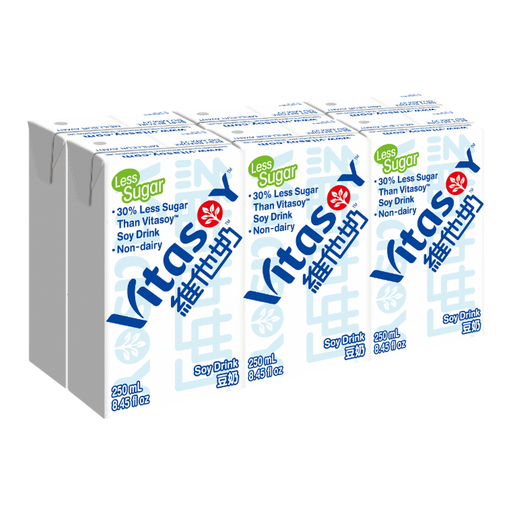
Vita Low-Sugar Soy Milk 6 x 250ml
Six individual 250ml cartons provide separately packed lunch portions. The listing’s sugar wording conflicts with its nutrition figures, so use the current pack’s nutrition panel to assess sugars; also check its age guidance and soya allergen declaration.
View on Joybuy
Frequently asked questions
Can a child aged 1 or over have a soya drink in a lunchbox?
The NHS says unsweetened calcium-fortified milk alternatives, including soya drinks, can be given from age 1 as part of a balanced diet. Check the particular product’s age guidance: Alpro Growing Up Drink 1-3+ is intended for ages 1 to 3, while Sainsbury’s says its unsweetened 1L soya drink is not suitable as a main milk-drink alternative for children under 2.
How much sugar is in the Alpro chocolate multipack?
Waitrose & Partners lists 19g sugars in each 250ml carton of Alpro Silky Smooth Chocolate Flavour, equivalent to 7.6g per 100ml. Compare the whole-carton figure with the current label when deciding whether that flavoured drink fits the lunch you are packing.
Can I store an opened long-life carton in the cupboard?
No. The Waitrose & Partners listing for Alpro’s long-life soya drink says to refrigerate it after opening and use it within five days. Follow the instructions on your particular carton, and do not treat a poured portion like an unopened shelf-stable pack.
Does dairy-free mean a soya drink is suitable for someone with a soya allergy?
No. These soya drinks contain soya; dairy-free describes a different ingredient concern. Check the current pack’s ingredients and allergen declaration rather than relying on the front-of-pack description or an older retailer listing.


