Who is this choice for?
The amount you use and the way you use it matter as much as whether a carton is chilled or long-life.
Households replacing dairy in everyday meals
If soya drink regularly goes into cereal, tea, coffee or cooking, compare its fortification and protein as well as its taste. The UK SACN and COT assessment notes that nutrient content varies considerably across plant-based drinks.
One- or two-person households planning around opened cartons
Long-life cartons offer cupboard storage before opening, but the refrigerated use-within period still matters if you get through a carton slowly. Check that period against how much you normally pour.
Shoppers comparing sweetness
An unsweetened or no-sugars name helps narrow the choice, but the nutrition panel gives the sugars figure to compare with a sweetened version. Consider which flavour works in the foods and drinks you make most often.
What should you check on the carton?
Start with the nutrition and allergen information for the exact drink, then check whether its format and opening instructions fit your household’s pace of use.
| Priority |
What to check |
Your needs |
| Fortification |
Look for calcium, iodine, vitamin B12 and vitamin D on the exact carton. Check the listed amounts rather than relying on words such as vegan or unsweetened: the UK SACN and COT assessment says plant-based drinks vary considerably in nutrient content. |
I use soya drink regularly instead of cows’ milk and want to know which nutrients this particular carton contains. |
| Protein |
Compare protein per 100ml on products measured on the same basis. Tesco lists 3.5g per 100ml for its reviewed unsweetened drink, while Waitrose & Partners lists 3.4g per 100ml for Essential Unsweetened Soya Drink. |
If protein content matters to my choice, I want a figure I can compare without assuming every soya drink has the same formulation. |
| Sugars |
Read sugars per 100ml, even when the front of the carton says unsweetened. Sainsbury’s lists less than 0.5g per 100ml for its reviewed unsweetened drink and 2.3g per 100ml for its sweetened version. |
For cereal and cooking, I may prefer a less sweet drink; for another use, I may deliberately choose a sweeter flavour. |
| Storage |
Distinguish storage before opening from instructions afterwards. Waitrose & Partners says to refrigerate its Essential drink below 5°C and consume it within three days of opening; Tesco gives five days for its reviewed chilled drink. |
With only one or two people using the carton, I want its size and opened-carton period to fit how quickly we finish it. |
| Allergens |
Read the soya declaration and any nut or peanut warning on the current pack. The Food Standards Agency identifies soya as an allergen, and product-specific precautionary statements differ. |
If an allergy is relevant in my household, dairy-free or vegan wording cannot replace checking this product’s allergen information. |
| Hot drinks |
Check the product’s preparation directions before heating it or adding it to tea or coffee. Waitrose & Partners advises gentle heating for its Essential drink because overheating can make it separate or curdle. |
My usual tea or coffee routine should work with the carton’s directions, not just its flavour. |
Brand and own-label references
These examples show why the exact variant matters: a brand name alone does not establish its sugars, fortification, allergens or opened-carton instructions.
Alpro
Alpro has chilled and UHT soya variants, including Soya Light and Soya No Sugars, described on Sainsbury’s product pages.
- Sainsbury’s describes Soya Light as reduced-fat and Soya No Sugars as UHT; both reviewed listings identify added calcium, iodine and vitamins B2, B12 and D2.
- Check which variant you are buying and read its current carton rather than carrying one variant’s details over to another.
Tesco
Tesco’s reviewed chilled Unsweetened Soya Drink provides a labelled point of comparison for protein and fortification.
- Tesco lists 3.5g protein, 120mg calcium and 22.4µg iodine per 100ml for that drink.
- Its product instructions say to refrigerate after opening and consume within five days; check the carton if your use is slower.
Sainsbury’s
Sainsbury’s reviewed own-label range includes distinct unsweetened and sweetened soya drinks.
- Its unsweetened listing identifies added calcium, iodine, vitamin D and B12 and lists 2.2g protein per 100ml.
- The sweetened listing gives 2.3g sugars per 100ml; compare the nutrition panels if sweetness is a deciding factor.
Asda
ASDA’s reviewed Plant Based Soya Unsweetened drink is a UHT own-label option.
- ASDA lists 2.0g protein, 122mg calcium and 35µg iodine per 100ml for this product.
- The listing says it contains soya, may contain nuts and should be refrigerated and consumed within four days of opening.
M&S
M&S has reviewed unsweetened and sweetened soya drinks, so check the variant rather than treating them as interchangeable.
- Marks & Spencer describes its reviewed unsweetened drink as fortified with calcium, iodine, vitamin D and vitamin B12.
- The reviewed M&S drinks state that they are not suitable for people with nut or peanut allergies.
Waitrose
Waitrose Essential Unsweetened Soya Drink is a long-life option for cupboard storage before opening.
- Waitrose & Partners lists 3.4g protein, 0.0g sugars, 120mg calcium and 22.4µg iodine per 100ml.
- Its instructions specify refrigeration below 5°C and consumption within three days after opening; its guidance also cautions against overheating.
Joybuy soya drink options
These Alpro cartons are options to consider for everyday soya-drink use and cupboard storage before opening. Compare the pack quantities and current carton labels against your household’s use rather than assuming the two products have identical fortification.
 Image unavailable
Alpro Soya No Sugars Long Life Drink, 8 × 1L
A long-life option for regular use if an eight-carton pack fits your household’s plans. The product information lists 0.0g sugars and 3.3g protein per 100ml; the reviewed Alpro Soya No Sugars listing from Sainsbury’s identifies added calcium, iodine and vitamins B2, B12 and D2. Check the current cartons for those details. The pack contains 8 × 1L, and its product instructions say to refrigerate between +1°C and +7°C after opening and use within five days. It contains soya.
View on Joybuy
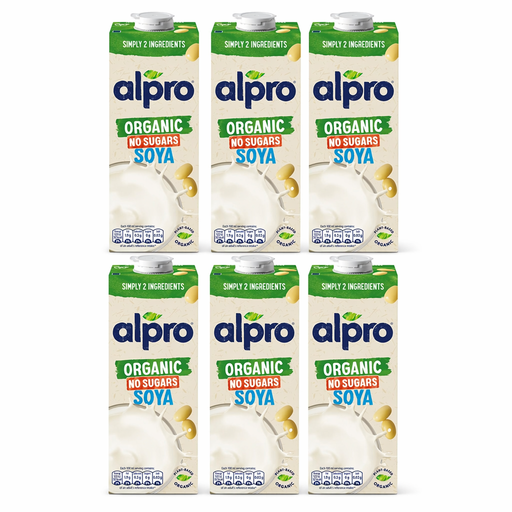 Image unavailable
6 Alpro Soya Drink OG
This UHT soya drink is described for cereal and hot drinks, with 0.0g sugars and 3.3g protein listed per 100ml. If it will regularly replace dairy, check the current carton for calcium, iodine, vitamin B12 and vitamin D before deciding whether its fortification meets your needs. The product information says to refrigerate after opening and use within five days. It contains soya.
View on Joybuy
Questions about choosing and using soya drink
Does every soya drink have the same nutrients as cows’ milk?
No. The UK SACN and COT assessment says nutrient content varies considerably across plant-based drinks. If you use soya drink routinely instead of cows’ milk, check the individual carton for calcium, iodine, vitamin B12 and vitamin D rather than assuming it is fortified.
When might I choose an unsweetened soya drink?
Choose one if you prefer less sweetness in cereal, cooking or drinks, then check its sugars figure. Sainsbury’s lists less than 0.5g sugars per 100ml for its reviewed unsweetened drink, compared with 2.3g per 100ml for its reviewed sweetened version.
Is long-life soya drink easier to manage in a small household?
It can make cupboard storage easier before opening, but choose the carton quantity with your use after opening in mind. Waitrose & Partners instructs buyers to use its reviewed Essential drink within three days of opening; the reviewed Tesco drink gives five days. Follow the instructions on the carton you buy.
Can I put soya drink in tea, coffee and cooking?
These are common intended uses, but follow the directions for the particular drink, especially in hot liquids. Waitrose & Partners advises gentle heating for its Essential drink because it can separate or curdle if overheated.
What if someone in the household has a soya, nut or peanut allergy?
A soya drink is not suitable for someone with a soya allergy; the Food Standards Agency identifies soya as an allergen. Nut and peanut statements vary by product: the reviewed M&S drinks state they are not suitable for people with those allergies, while ASDA’s reviewed unsweetened drink says it may contain nuts. Read the current pack’s allergen information before buying.


