Shoppers comparing fat and sugar
If you use soya drink in cereal, tea, coffee or cooking, compare total fat, saturated fat and sugars for the exact variant. An unsweetened name does not tell you its total-fat value.


For lower total fat, start with a reduced-fat soya drink, then compare the exact variants’ nutrition panels using the same units. An unsweetened, calcium-fortified drink addresses sugar and fortification priorities, while a long-life carton offers cupboard storage before opening; neither label alone establishes the lowest total fat. For an online order, check that any substitute still meets your nutrition, allergen and storage requirements.
If you use soya drink in cereal, tea, coffee or cooking, compare total fat, saturated fat and sugars for the exact variant. An unsweetened name does not tell you its total-fat value.
If fortification matters, check the carton for the nutrients you want rather than assuming every soya drink contains them. The NHS identifies unsweetened, calcium-fortified plant drinks as dairy alternatives.
If a change in ingredients, allergens or nutrition would make a substitute unsuitable, review the retailer’s substitution setting. Tesco and Sainsbury’s say they may offer alternatives when substitutions are allowed.
Decide whether total fat, sugar, fortification or storage format matters most, then check the exact carton rather than treating those features as interchangeable.
| Priority | What to check | Your needs |
|---|---|---|
| Total fat | Compare total fat using like-for-like per 100 ml or per 100 g figures. Check reduced-fat wording against the exact variant; low saturated fat is a different measure. | Lower total fat is my main aim, so a no-sugars or plant-based label alone will not settle the choice. |
| Sugars | Read the sugars figure on the current panel and distinguish an unsweetened or no-sugars variant from a sweetened one. | I want an everyday drink for cereal, tea or cooking and also care about its sugar content. |
| Fortification | Check the exact product for added calcium and, if relevant, iodine and vitamins. A short ingredient list does not establish fortification. | When I use soya drink regularly instead of dairy, I want to know which nutrients the carton actually lists. |
| Allergens and substitutes | Read the exact product’s allergen declaration. Review substitution settings and inspect any replacement before accepting it. | A different carton may not meet my ingredient, allergen or nutrition requirements, even if it is also a soya drink. |
| Storage | Distinguish chilled from UHT cartons and follow the delivered pack’s instructions before and after opening. | I need a format that fits when I will use the delivery and how quickly I will finish an opened carton. |
The Alpro No Sugar listing describes low saturated fat, while Sainsbury’s describes Alpro Soya Light as reduced fat. Those descriptions answer different questions.
For a total-fat decision, compare the total-fat figures for the exact variants using the same panel units.
The Waitrose listing for Plenish Organic Soya names spring water and organic soybeans, whereas the cited Alpro and M&S drinks explicitly list nutrient additions.
If you need fortification, check for the particular nutrients on the listing and delivered carton.
A substitute can differ in fat, sugars, fortification, allergens or storage format. Tesco and Sainsbury’s both describe circumstances in which they may offer one.
Turn off substitutions if the exact specification is essential, or inspect the offered carton before deciding whether to accept it.
Chilled and long-life formats need different handling before opening, and the stated period for using an opened carton varies by product.
Put chilled drinks away promptly and follow each delivered pack’s refrigeration and after-opening instructions.
These ranges illustrate different label and format choices; a brand name alone does not establish the nutrition of a particular carton.
The cited Sainsbury’s listings distinguish a chilled Soya Light drink from a long-life Soya No Sugar drink.
Its cited unsweetened soya drink lists calcium, iodine, vitamin D and vitamin B12 fortification.
Waitrose lists Plenish Organic Soya with spring water and organic soybeans as its ingredients.
Tesco’s online soya-drinks shelf lists unsweetened own-label options in long-life and other formats.
These options cover a regular soya drink in smaller cartons and a no-sugars long-life drink. Compare the delivered labels if lower total fat is your deciding requirement.
 No image available
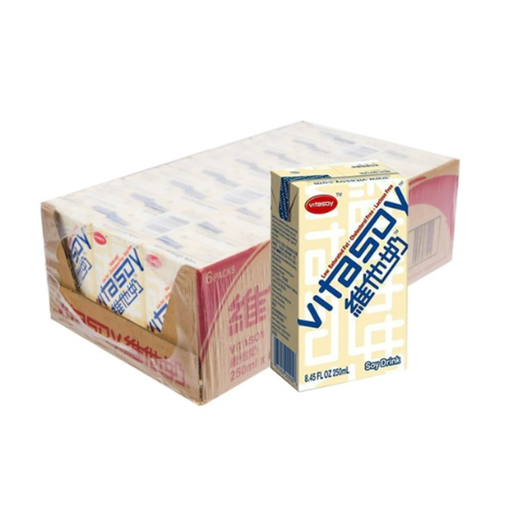
The 250 ml carton format may suit households planning individual servings. Compare total fat and sugars per 100 ml on the delivered pack if either determines your choice, and check its allergen declaration.
 No image available
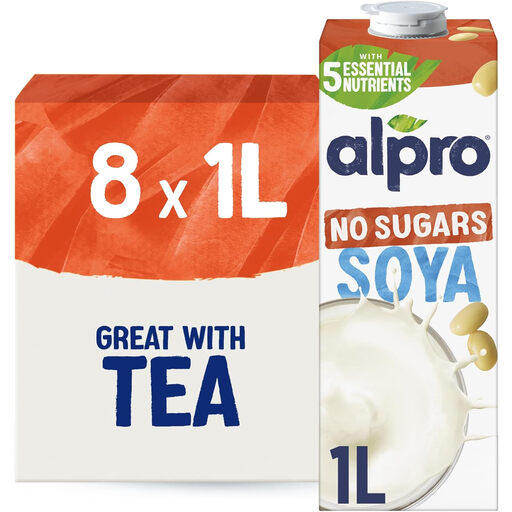
The long-life format suits an order intended for cupboard storage before opening. Its no-sugars name does not answer a total-fat comparison: check fat per 100 ml, any fortification you require and after-opening instructions on the delivered pack.
No. Unsweetened describes a different characteristic from total fat. Compare total fat and saturated fat on the exact products’ nutrition panels, using like-for-like units; if you use the drink as a dairy alternative, the NHS also identifies unsweetened, calcium-fortified plant drinks as an option.
No. The cited Alpro and M&S listings name added nutrients, while Waitrose lists only spring water and organic soybeans as ingredients for Plenish Organic Soya. Check the exact delivered carton for any fortification you require.
Accept it only if its fat, sugar, fortification, allergens and format still meet your requirements. Tesco and Sainsbury’s say they may offer substitutions when allowed and describe ways to refuse an unsuitable replacement at delivery.
Soya drink is not suitable for someone with a soya allergy: the Food Standards Agency identifies soya as an allergen. Check the declaration on the exact product and on any proposed substitute.
Follow that carton’s instructions. Put chilled drinks away promptly; for a long-life carton, check its unopened storage directions and refrigerate it after opening as directed. Do not assume two products have the same after-opening use period.