Families packing school-holiday lunches
Compare carton size and after-opening storage with how often the drink will be used. Sugar, fortification and the child’s ability to have soya also matter when choosing a drink for packed meals or outings.


For a school-age child who can have soya, an unsweetened drink with calcium, vitamin D, vitamin B12 and iodine declared on the carton is a useful starting point; then compare the sugar and protein figures, taste and storage instructions for the lunch routine. UK government guidance notes that plant-based drinks vary considerably in nutrient composition, so check the exact product and its age and allergen information rather than treating all fortified or longer-life cartons as interchangeable.
Compare carton size and after-opening storage with how often the drink will be used. Sugar, fortification and the child’s ability to have soya also matter when choosing a drink for packed meals or outings.
Check the nutrients declared on the particular soya drink rather than assuming one plant-based drink has the same composition as another. The UK Office for Health Improvement & Disparities notes considerable variation between plant-based drinks.
A dairy-free label does not remove soya as an allergen. Check the child’s allergen requirements and, when a drink is being supplied to school, its individual policy.
Start with the child’s age and allergen requirements, then compare the nutrition panel and choose a carton format that fits the planned lunches.
| Priority | What to check | Your needs |
|---|---|---|
| Age and allergens | Read the soya allergen declaration and the exact carton’s age wording. Check any individual allergy plan and relevant school arrangements. | If the child has a known soya allergy, I need a drink without soya. For a younger child, I also need to check the product’s age instructions. |
| Fortification | Look for declared calcium, vitamin D, vitamin B12 and iodine. Compare protein using the same basis, such as per 100ml. The UK Office for Health Improvement & Disparities reports considerable variation in plant-based drinks’ nutrient composition. | If this is replacing cows’ milk, I want to know which nutrients the particular carton declares rather than relying on the words ‘plant-based’ or ‘fortified’. |
| Sugars | Compare ‘unsweetened’ or ‘no sugars’ wording with sugars per 100ml on the nutrition panel; check the ingredients too. Keep per 100g and per 100ml figures on their stated bases. | For a regular lunch drink, I want to distinguish an unsweetened option from one with a sweeter formulation. |
| Carton and storage | Check whether an unopened carton is chilled or longer-life, then read its refrigeration and use-within directions after opening. Asda’s listing for Alpro Soya No Sugar, for example, specifies refrigeration at +1°C to +7°C and use within five days once opened. | Some holiday lunches are at home and others are packed. I need a carton size and storage routine that work for both. |
The UK Office for Health Improvement & Disparities notes that their nutrient composition varies considerably. A category name alone cannot tell you what a particular carton contains.
Compare the declared calcium, vitamin D, vitamin B12 and iodine on the drink you intend to use.
A soya drink contains an allergen even when it contains no dairy. That distinction matters for a child with a known soya allergy.
Read the current ingredient and allergen statements, and follow the child’s individual allergy plan and any applicable school arrangements.
Fortification and sugar content are separate label details. Waitrose describes its Essential Original Soya Drink as sweetened and lists 2.5g sugars per 100ml.
Check the sugar figure as well as the added nutrients when choosing between sweetened and unsweetened cartons.
Longer-life describes an unopened product; it does not replace that carton’s directions after opening.
Read the refrigeration and use-within instructions before choosing a carton size for irregular holiday lunches.
These product examples show why the exact variant and label matter; a retailer listing does not describe every drink sold under that retailer’s name.
Alpro’s Soya No Sugars is a specific no-sugars option, not a description of every Alpro drink.
Its Unsweetened Soya Drink is an own-label option with calcium, iodine, vitamin D and vitamin B12 listed.
Waitrose lists Essential Unsweetened and sweetened Essential Original soya drinks.
M&S lists unsweetened and sweetened soya-drink options with declared fortification.
Tesco lists the branded Alpro Soya No Sugar Long Life drink.
Asda lists Alpro Soya No Sugar Long Life drink with product-specific storage directions.
These Joybuy options cover a long-life Alpro No Sugars pack, another Alpro soya drink and individual Vita cartons. Compare each exact variant with the label checks above; the three formats do not answer the same lunch need.
 No image available
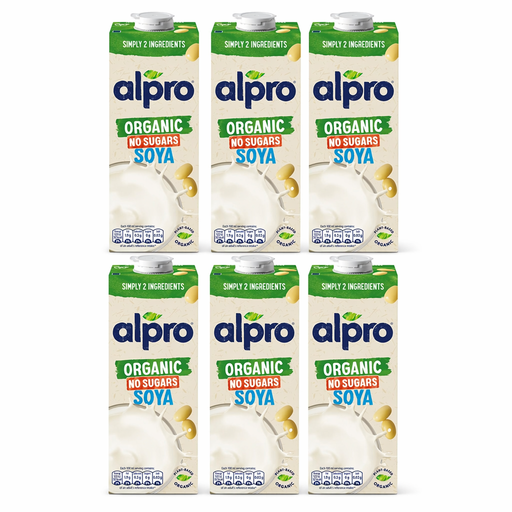
The eight 1L cartons suit a household planning several lunches. For the named Soya No Sugars drink, Alpro UK lists 0g sugars, 3.3g protein, 120mg calcium and 22.5µg iodine per 100ml; Tesco’s long-life listing also names added vitamins B12 and D2. Check the current carton’s age, allergen and storage directions before serving.
 No image available
For this Alpro variant, compare the carton’s sugar line and declared nutrients with the lunch you are planning. In particular, check calcium, vitamin D, vitamin B12 and iodine on the exact drink rather than applying figures from Alpro Soya No Sugars to it. Soya allergen and age information also need checking.
 No image available
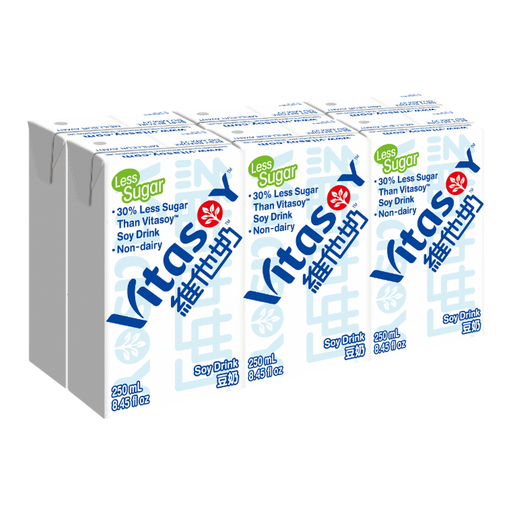
The six 250ml cartons offer individual lunch portions. The listing’s low-sugar wording conflicts with its nutrition information, so check sugars per 100ml on the current carton before choosing it on that basis. Check the fortification, soya allergen declaration, age wording and storage instructions as well.
NHS guidance says unsweetened calcium-fortified alternatives, including soya drinks, can be given from age one as part of a balanced diet. Check the particular product too: Sainsbury's says its Unsweetened Soya Drink is not suitable as a main milk-drink alternative for children under two, while Waitrose warns that its Essential Unsweetened drink is not suitable for under-twos. Seek individual professional advice for a child with a restricted diet or diagnosed allergy.
Check the allergen and age wording first, followed by sugars, declared calcium, vitamin D, vitamin B12 and iodine, and the storage directions. The UK Office for Health Improvement & Disparities’ 2025 assessment notes considerable variation in plant-based drinks’ nutrient composition, so use the exact carton rather than a general ‘soya drink’ description.
No: dairy-free does not mean soya-free. Do not give a soya drink to a child with a known soya allergy; check the current allergen label and follow their individual allergy plan. If supplying a drink to school, also check that school’s arrangements.
A longer-life format helps with storage before opening, but does not override the carton’s instructions once opened. Check whether the packed portion will remain unopened until use and follow its stated refrigeration and use-within directions; these vary by product.