Runners using dairy-free porridge or smoothies
If soya drink regularly replaces dairy milk in your meals or snacks, compare the pack’s protein and added nutrients rather than relying on the dairy-free description alone.


For dairy-free porridge or smoothies eaten regularly, compare soya drinks by their declared protein and added calcium, iodine, vitamin D and vitamin B12. An unsweetened drink can suit a meal that already contains carbohydrate from oats or fruit; sweetened soya drink is another meal ingredient, but neither replaces a separate long-run or race-fuelling plan.
If soya drink regularly replaces dairy milk in your meals or snacks, compare the pack’s protein and added nutrients rather than relying on the dairy-free description alone.
Consider the whole meal when choosing a drink. An unsweetened soya drink may go into porridge made with oats and fruit, but the drink itself is not a complete long-run or race-fuelling plan.
If organic certification matters to you, check the particular drink’s ingredient and nutrition labels for the nutrients you expect from a regular dairy replacement.
Choose the drink for the meal it will go into, then consider long-run and race fuelling separately.
| Priority | What to check | When it matters |
|---|---|---|
| Added nutrients | Look for calcium, iodine, vitamin D and vitamin B12 on the current pack. The Office for Health Improvement & Disparities notes that plant-based drinks vary considerably in nutrient content. | “I use soya drink instead of dairy milk most days and want to know which nutrients this particular carton provides.” |
| Protein | Compare protein per 100 ml on like-for-like labels. Alpro UK lists 3.3 g per 100 ml for Soya Original; check the rest of the meal as well as the drink. | For a post-run snack, I want to see what the drink contributes alongside the food I am eating. |
| Sugars and carbohydrate | Read both carbohydrate and sugars per 100 ml, not just a front-of-pack name. Waitrose lists 0 g sugars per 100 ml for Alpro Soya No Sugars; check the carbohydrate supplied by the whole meal. | “My porridge already contains oats and fruit, so I can choose the drink according to how I want that meal to taste.” |
| Long-run fuelling | Keep a drink used in meals separate from your carbohydrate-and-fluid plan for running. World Athletics describes carbohydrate intake of up to 90 g per hour for endurance events lasting over 2.5 hours. | When planning a long run or race, I need to consider fuelling beyond the soya drink in breakfast or a recovery snack. |
| Organic choice | Check the ingredients and nutrition panel of the specific organic drink, including whether it lists added calcium, iodine or vitamins. | “I prefer an organic product, but I still want to know how it compares with the fortified drink I usually add to cereal.” |
| Allergens | Read the current ingredient and allergen information. Dairy-free soya drink still contains soya. | If I need to avoid soya, a dairy-free label does not make a soya drink suitable for me. |
The Office for Health Improvement & Disparities reports considerable variation in the nutrient content of plant-based drinks. Two soya cartons may list different added nutrients.
If the drink regularly replaces dairy milk, compare calcium, iodine, vitamin D, vitamin B12 and protein on the current packs.
A drink chosen for porridge or a snack does not, by itself, address carbohydrate and fluid intake throughout a long event. World Athletics describes carbohydrate intake of up to 90 g per hour for events lasting over 2.5 hours.
Plan and practise your approach to long-run and race fuelling separately from choosing an everyday soya drink.
Choosing a drink with no sugars does not tell you how much carbohydrate the complete breakfast or snack contains.
Consider the oats, cereal, fruit, bread or other foods you are having with it when planning a training meal.
A soya drink contains soya, even when it contains no dairy. GOV.UK identifies soya beans among the allergens that food businesses must declare when used as ingredients.
If you need to avoid soya, do not choose a soya drink; read the current ingredient and allergen label.
These examples show label details worth comparing; a brand or retailer name alone does not establish the composition of every variant.
Alpro lists original and no-sugars soya drinks, giving shoppers two different sugars labels to compare.
Waitrose describes its Essential Unsweetened Soya Drink as a UHT drink with added nutrients.
Tesco lists an own-label unsweetened long-life soya drink alongside branded choices.
These soya drink options cover a no-sugars long-life drink for everyday meals and an organic option. Check each pack against the nutrients and meal ingredients that matter to you.
 Image unavailable
A no-sugars soya drink to consider for cereal or smoothies. If it will regularly replace dairy milk, check the current pack for its added nutrients, including iodine; soya is an allergen.
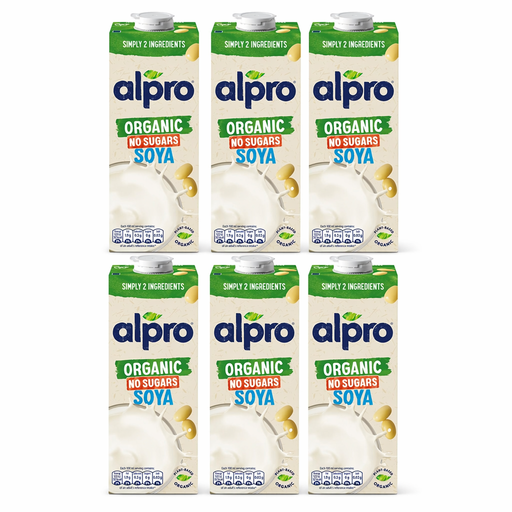 Image unavailable
An organic soya option to consider with cereal or in shakes. Compare the current pack’s protein and added-nutrient declarations if it will regularly replace dairy milk; soya is an allergen.
No: use a soya drink as part of a meal or snack, not as your sole race-fuelling plan. World Athletics describes carbohydrate intake of up to 90 g per hour for endurance events lasting over 2.5 hours, so plan and practise carbohydrate and fluid intake separately.
Choose according to the whole meal and your taste preference. An unsweetened drink may suit porridge or a smoothie that already contains oats or fruit; if you prefer an original drink, check its sugars and carbohydrate per 100 ml. Neither choice replaces long-run fuelling planning.
Check the particular drink’s protein and whether it lists added calcium, iodine, vitamin D and vitamin B12. The Office for Health Improvement & Disparities reports that the nutrient content of plant-based drinks varies considerably, so do not assume every soya drink supplies the same nutrients.
No. Check its own ingredients and nutrition panel rather than transferring the details of a fortified drink to an organic variant. This matters particularly when you use it regularly instead of dairy milk.
No. Dairy-free does not mean soya-free: a soya drink contains soya. GOV.UK identifies soya beans as an allergen that food businesses must declare when used as an ingredient; always check the current label.